

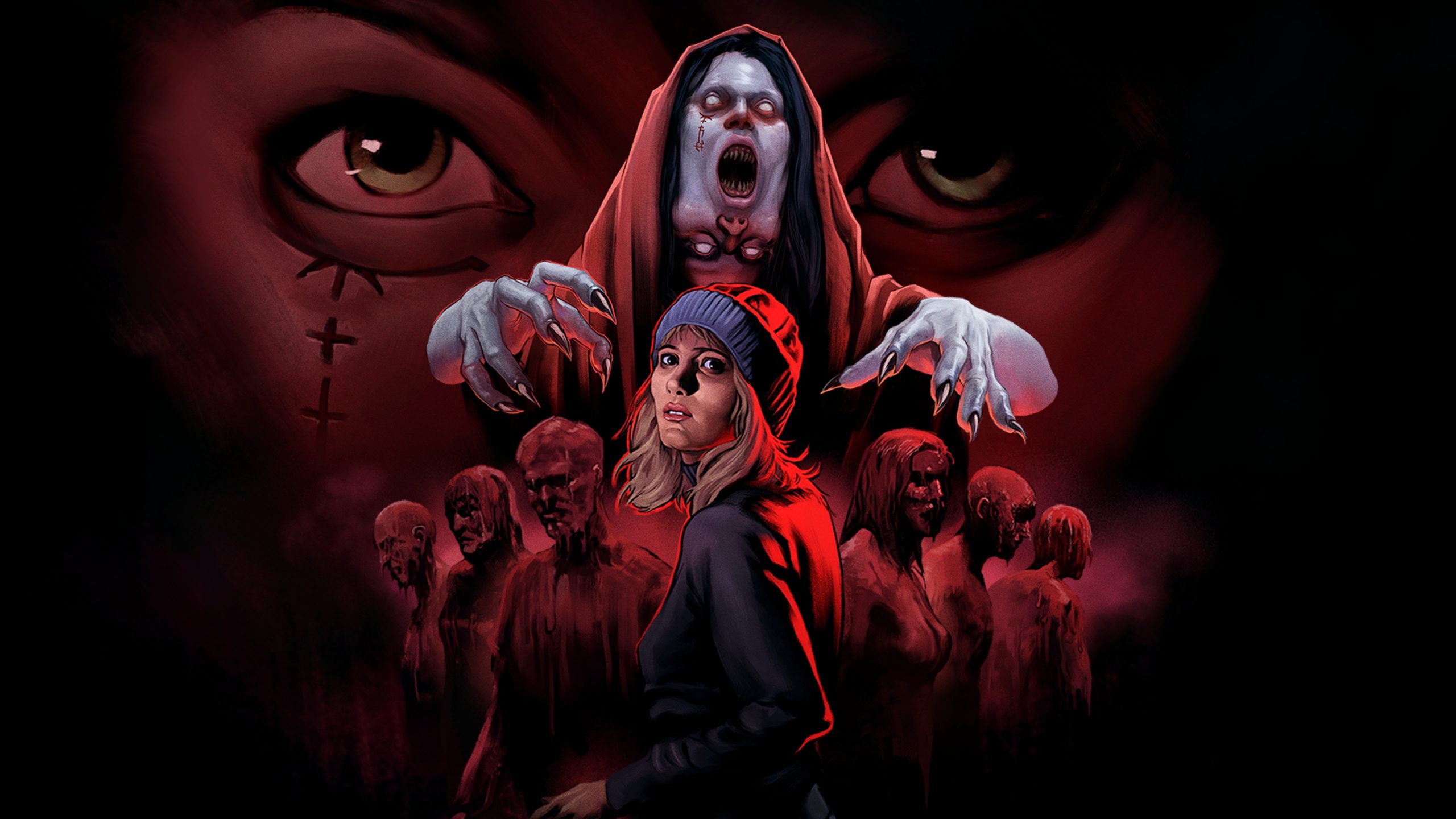
Ambitious is the operative word when I think about Tenebris Somnia. It’s a 2D survival horror adventure that harkens back to the 8-bit era, taking design cues from Alone in the Dark and Monkey Island. Not settled on the idea of it being another retro survival horror, Argentinian-based developer Andrés Borghi, alongside Saibot Studios, has accompanied the gameplay with FMV cutscenes spliced between the playable moments. This immediately negates player interpretation of its art style and instead shows you just how grotesque the monsters can be, for the better(?). On top of that, Tenebris Somnia is executive produced by Airdorf Games (FAITH: The Unholy Trinity infamy), which has the side effect of being a cult game creator’s co-sign.
An exciting premise, context that drums up hype, a genre I’m familiar with; it’s safe to say I was fairly excited to try out Tenebris Somnia. However, I’m not as excited to write about it. It feels like a disclaimer should be made at this point: this is just one person’s opinion. Whilst Tenebris Somnia didn’t completely work for me, I can see this being a great addition to the list of good horror games in 2026. So with that out of the way, let me dissect this psychological occult horror.
After waking from nightmares for weeks, protagonist Julia is compelled to venture to her ex-boyfriend’s apartment to return the keys she’s been holding onto. With no ex in sight upon her visit, Julia is transported to an alternate reality full of the couple’s history and the monsters that creep in it. As I mentioned previously, the story is told through both gameplay and FMV cutscenes, which, if I were to give an arbitrary percentile breakdown, I’d say it’s around 70% gameplay, 30% FMV. The obvious comparison to make is the last handful of games Remedy have put out (most notably Quantum Break’s approach).
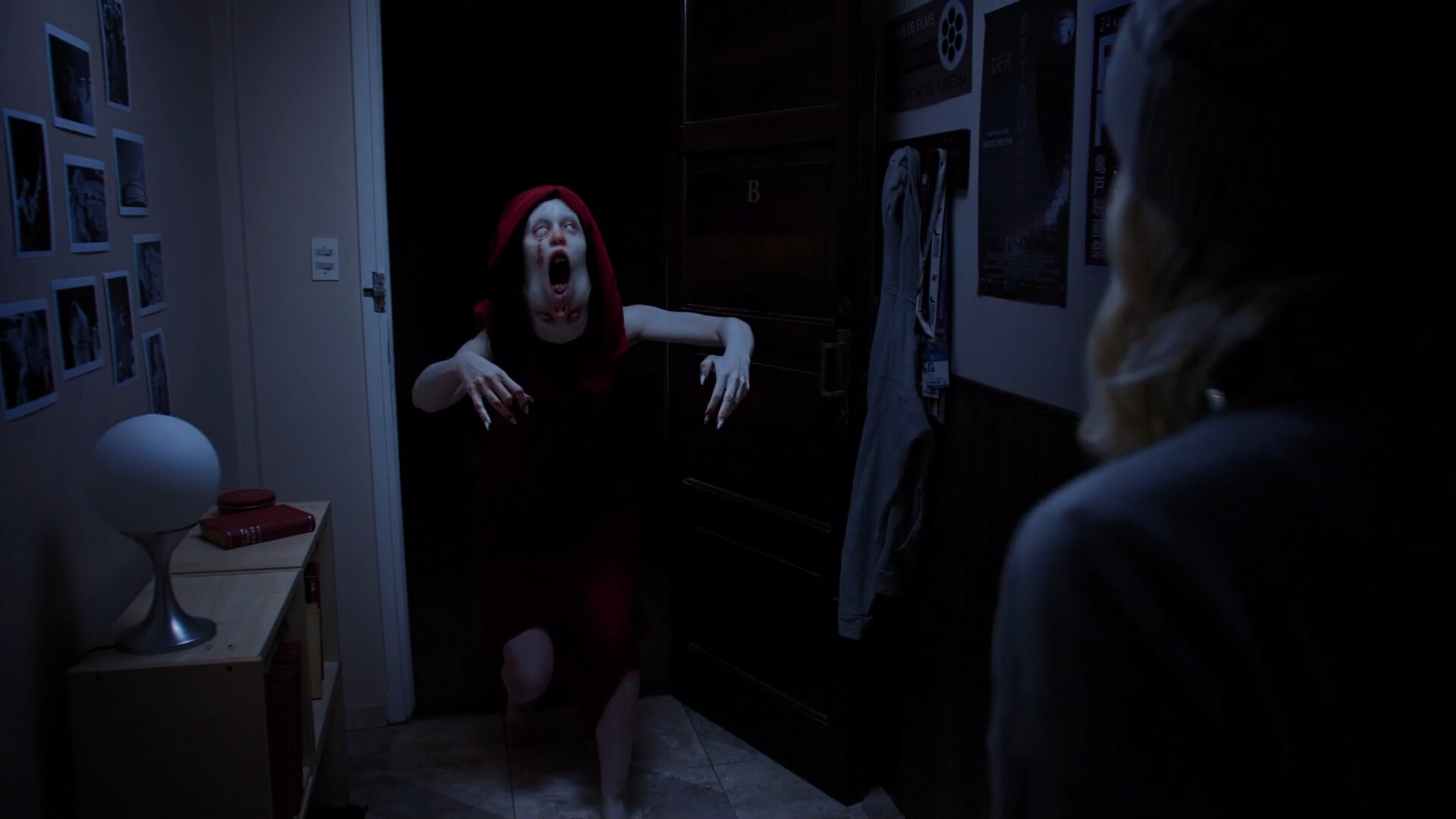
However, it’s almost an unfair comparison to make, as both Remedy and Saibot Studios are dealing with, what I can only imagine, vastly different budgets. That said, there is a seamless nature to the works of Remedy that Tenebris Somnia doesn’t quite capture itself. The FMV cutscenes are a window into the intended aesthetics of the game, but they don’t match the punchy and vibrantly grotesque 8-bit art style of the gameplay moments. The game also really likes to give you all these nouns and backstory to the game’s cult and explanation of what’s going on through the in-game dialogue, but the cutscenes are completely void of spoken acting.
This led to some of the emotional beats feeling a bit flat, as the actors in the FMV cutscenes could only do so much with their faces, making some of the longer cutscenes drag more than create tension. Tenebris Somnia is full of ideas narratively, but neither method of delivery was effective at eliciting much from me, unfortunately. Which is a shame, as some poignant themes are trying to be conveyed here – they just don’t project well. That said, the practical effects in the FMV are undoubtedly cool. The monster designs are creative and disturbing; the blood and gore of it all satiates that B-movie itch, and whilst I mentioned that it negates player interpretation, it does elevate the looks of the 8-bit creatures during the gameplay – you don’t have to imagine how scary they look, you know.
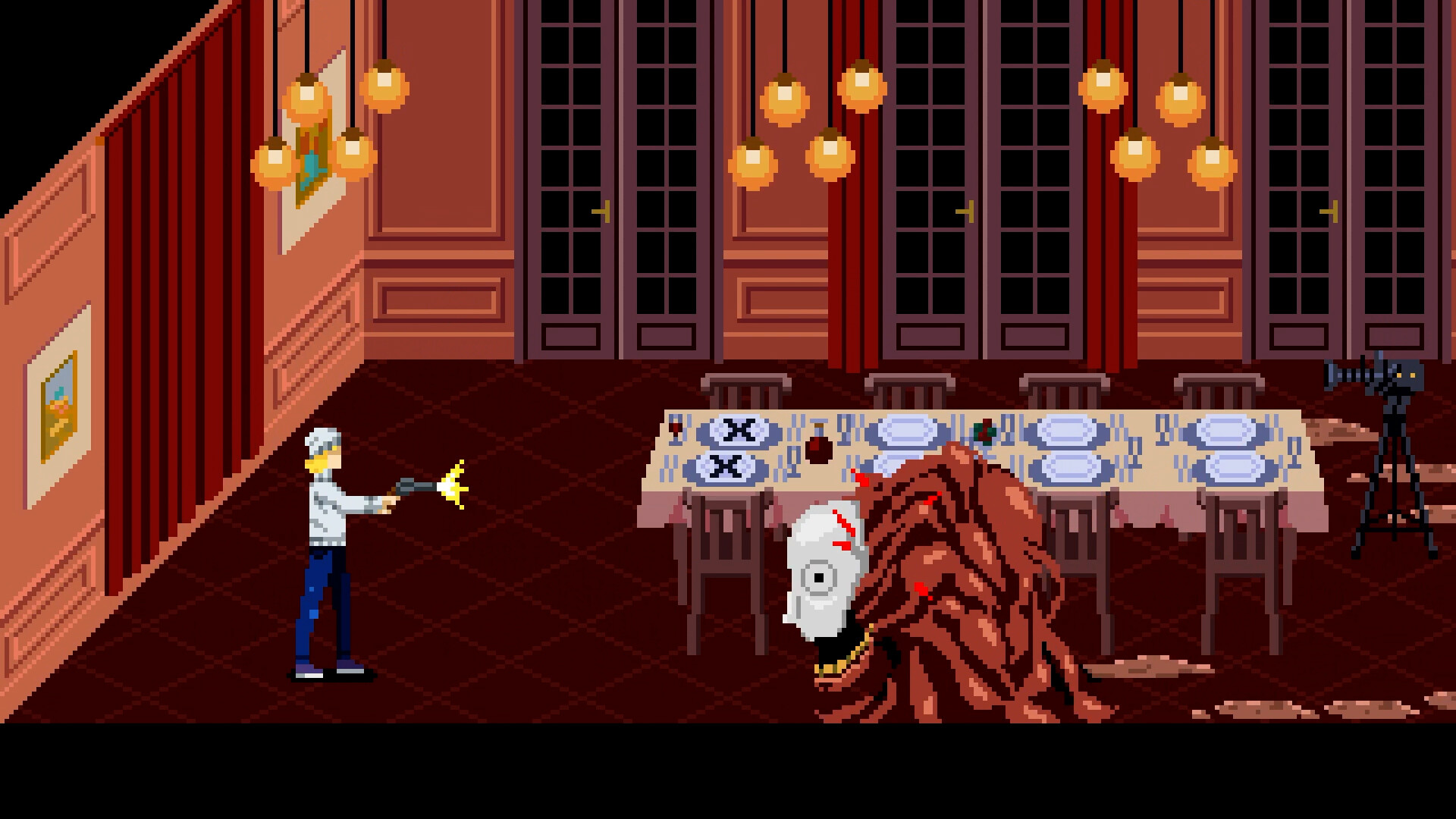
Which, for the most part, is where any of the scares come from, as the gameplay isn’t frightening, maybe more frustrating. Again, this is mostly a me thing. Although, if you’re going to set trophies to have a single-weapon run, don’t expect me to not immediately try that. I succeeded (barely), but it did give me some decent insight into the guts of the gameplay. There’s no dynamic health supply feature – every healing item you find is intentionally placed. This resulted in good chunks of the back-and-forth of finding the nearest save point to mitigate any lost progression whilst being one hit away from death.
Was I being stubborn and could have used the 100+ bullets I accrued for the revolver I found? Yes. And when I did that, the difficulty was immediately alleviated during my second playthrough. However, combat isn’t without its retro sensibilities. L2 readies your weapon, R2 attacks, and whilst you’re readied, you can’t move – classic. This makes positioning and running from oncoming attacks paramount in that clunky survival horror charm. Doesn’t help when you’re playing the game with only a wrench, but we’ve moved past that already. The other way around these encounters is anticipating attacks and running around them whilst holding the dedicated sprint button (square). I can imagine the obtuseness getting tiring for those with modern palettes, but it’s an overall effective way of creating those high-stakes moments in survival horror.
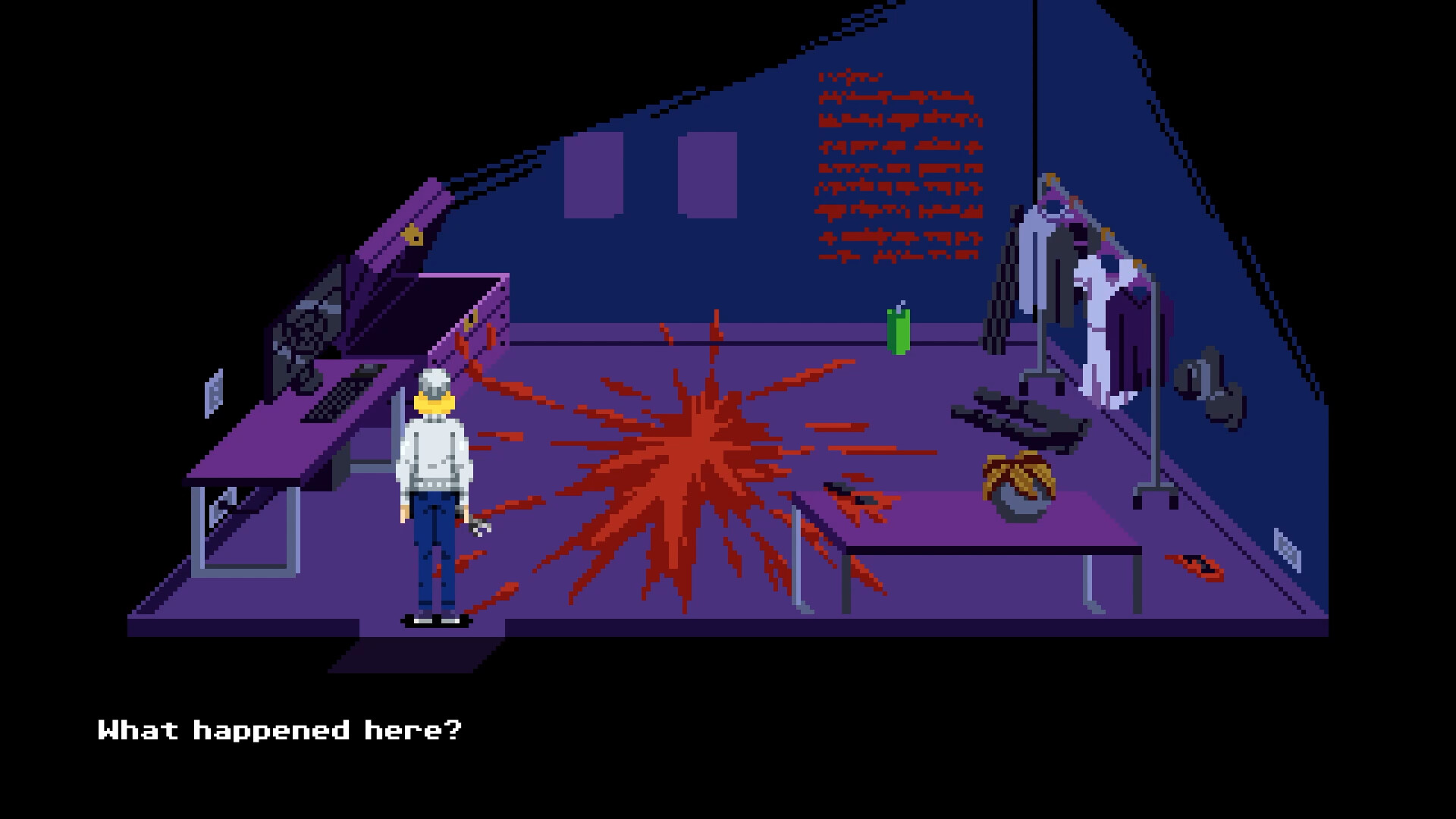
The other half of Tenebris Somnia’s gameplay is the point-and-click adventure-style puzzles. As you roam through the screens, you’ll find objects that’ll either predict a potential puzzle or make your brain light up to solve a previous one. It showcases good game design to limit the spaces you’ll find objects in that relate to somewhere nearby. There’s no finding one thing to then go other end of the map to unlock something or to progress to do that. It’s all confined yet expansive enough to give room for your brain to get to a conclusion. This is helped by a lot of contextual clues for you to walk to and click on, giving you some dialogue to nudge you in a direction.
This isn’t infallible, though. Some of the clues felt like substantial leaps of knowledge to solve. Very retro point-and-click adventure to invite the player to walk up to everything, click on it and hope some context will be given or a key item will be found as the solution. Sometimes you’ll even have to click on them in your menu to combine, and if they’re not key items, it’s the ammo for your weapon. It’s that obfuscation that lends itself to feeling retro, alongside its clunky movement, combat and art style.
Tenebris Somnia sits between the 8-bit and 16-bit era of art direction. It’s too expressive to look as rudimentary as 8-bit, but not brimming with detail to call it 16-bit, which lends itself to a cool and distinctive look. It’s the subtle details that add to its aesthetic. Things like Julia’s portrait in the menu, showcasing her health status or the use of shadows on scenery to display a sense of texture. It’s all really well done, even if the creatures have an impressive amount of detail despite its pixel art confines.
Which is why I mentioned at the top that Tenebris Somnia is ambitious. Saibot Studios are full sending a direction that’s almost a niche within a niche; putting a lot of production value into its FMV whilst turning back the time with its gameplay. Whilst I didn’t like everything it offered and had some problems with a decent portion of the game’s execution, I can admire that it’s going for something. And in a Generative AI hellscape, everything here was crafted by hand. I can’t fault Tenebris Somnia for trying, even if it didn’t fully succeed for me.
Tenebris Somnia is out now for PlayStation 5 (review platform), Xbox Series S|X, Nintendo Switch, Nintendo Switch 2 and PC via Steam.
Developers: Andrés Borghi, Saibot Studios
Publisher: New Blood Interactive
Disclaimer: In order to complete this review, we were provided with a promotional copy of the game. For our full review policy, please go here.
If you enjoyed this article or any more of our content, please consider our Patreon.
Make sure to follow Finger Guns on our social channels. Twitter, Facebook, Twitch, Spotify or Apple Podcasts – to keep up to date on our news, reviews and features.