

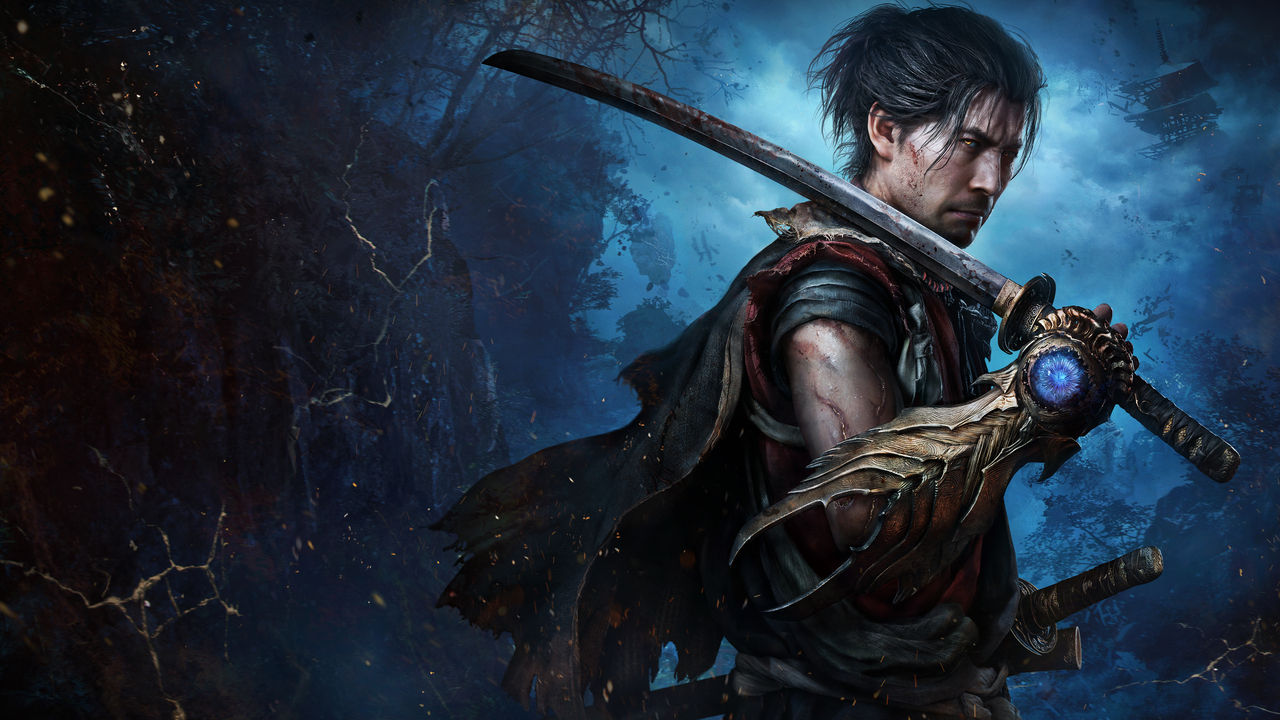
If you’re like me, old and into Resident Evil from its original days, you’ve very likely heard of Onimusha. What started as Capcom essentially tweaking its own formula with “What if Resident Evil but samurai-era Japan?”, it soon evolved into its own legacy. Admittedly yes, it had a lot of Resident Evil’s hallmarks, but it was still amazing in its own right. Now, after many years of quiet, we have Onimusha: Way of the Sword.
A long time in the making, Onimusha: Way of the Sword is both a classic throwback and full of modern tricks to cater to all. Yet it retains its quintessential style: hacking up demons and fighting bigger bosses.
Is it a glorious return to a series thought long dead, or should it have stayed buried in Capcom’s annals? Grab your sword and Oni gauntlet, as we’re about to find out.
A Tale Of Swords And Souls
If you’re not familiar with the series, check out my little retrospective here. The abridged version is that, across four main titles, we had a neat little series in place. We had a stoic samurai hero in Samonosuke Akechi in the first game, as well as his return in the third game to finish off the Nobunaga Oda arc.
The second game had Jubei Yagyu sidelining the story, again taking on the army of Nobunaga and the man himself. Obviously we know now that it didn’t work, because Oda returned in the third one. But that game had Jean Reno in it, and was pretty damn excellent. Still has the best intro FMV ever, by the way.
The fourth canonical title, Dawn of Dreams, was when the series fatigue began to set in. It wasn’t awful, with it getting a little resurgence on PlayStation Premium recently. But with four main entries in five years, the candle had definitely been burning at both ends.
So, what with Capcom riding high again (at least in my opinion, as my Requiem review will tell you), what better time to return to the world of Onimusha. Will a new protagonist, coat of paint and some stylistic changes win us back over?
Brave Swordsman Musashi
This time round, our hero is Miyamoto Musashi. In real world folklore, Musashi was renowned for his double sword technique and undefeated streak in 17th century Japan. In Onimusha lore, he did actually pop up in Onimusha: Blade Warriors as a bonus character. But you’ll be forgiven for not knowing or playing that one, I didn’t either.
In Way of the Sword, we’re put in Musashi’s position as roaming swordsman proving himself as the best. Unfortunately for him, he gets ambushed by Genma (the evil demons) quite early on and dies. But, death is not the finality it appears to be, as he’s soon ressurected by an ominous stranger.
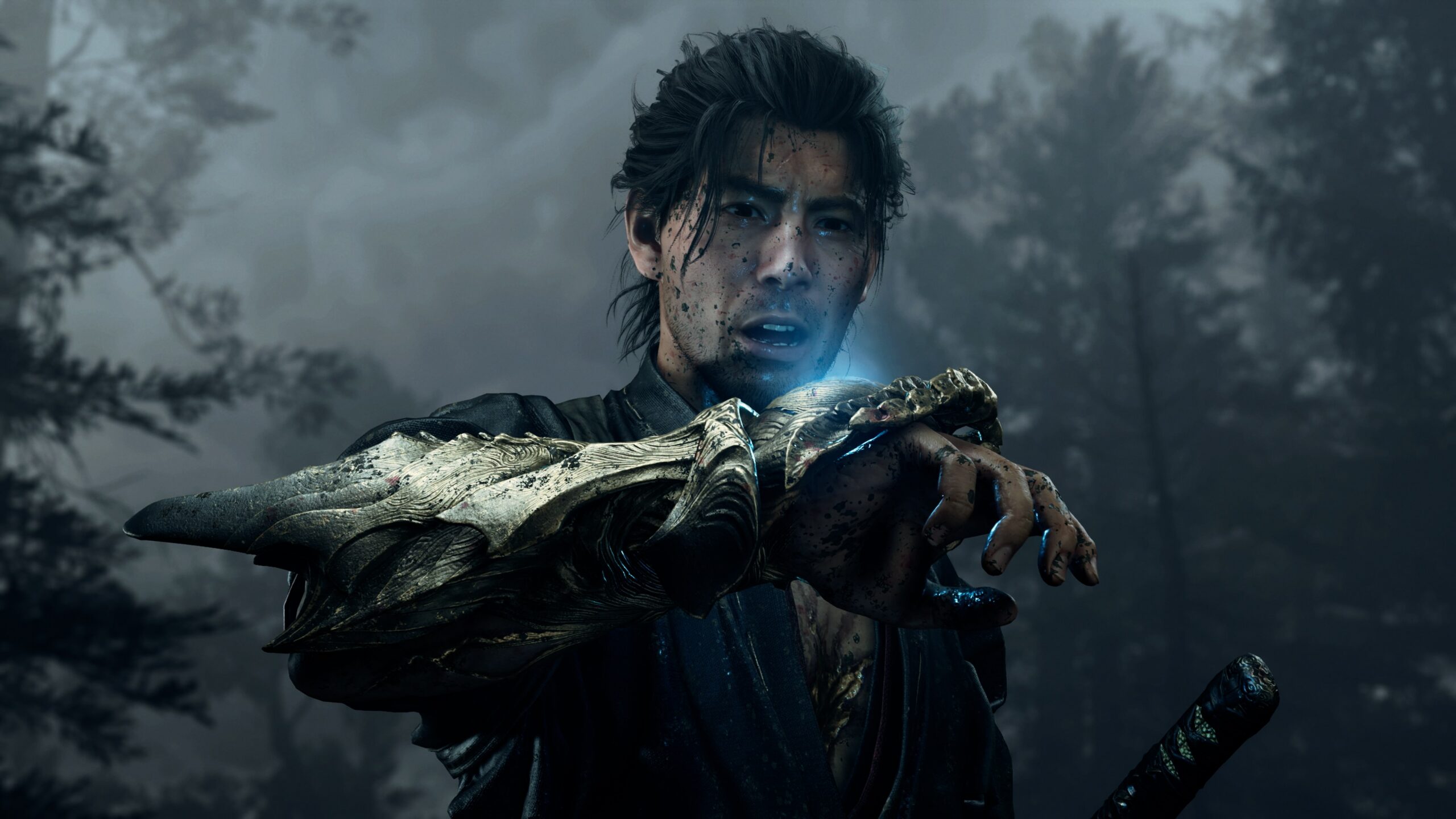
This seemingly benevolent force whacks a gauntlet on Musashi’s right arm, before sending him back to the real world to fight the Genma and feed said gauntlet. But all is not as it seems, as the keeper of the dead also gives one to Musashi’s rival, Ganryu. Who, let’s put it nicely, is a few rice grains short of an onigiri.
Yet whilst it seems to be framed as a standard revenge plot, there’s much more at stake for Musashi. Who, for all of his newly-entrusted demon-slayer status, doesn’t take kindly to his new, life support bangle. Fortunately, he’s not alone, as he meets a host of heroes and support on the way. Takamura, another Onimusha, acts as Musashi’s mentor, whilst the Lady in the Gauntlet (who does get named), is his right hand… err, support Oni.
Whilst Musashi is only interested in power, and feels like he’s cheating with a gauntlet, he soons becomes our unwilling anti-hero. The Genma are up to something, who is the man in white, why did he revive Ganryu too…? Well, that’d be too unfair to spoil, wouldn’t it?
Don’t Call It A Comeback…
One thing you older heads may notice, if you’ve seen any trailers, is that Way of the Sword isn’t a typical Onimusha title. That is to say it has ditched the fixed camera, tank-like gameplay of its virus-riddled stablemate.
We’ve now got full 3D, rotatable camera action-adventuring, as is the style of the time. No longer are players shackled to fixed cameras with enemies hidden, only by the constraints of the player’s camera movements.
The gameplay has also moved from linear corridor progression with backtracking, to more open hubs… also with backtracking. Villages have branching paths and walkways to find, whilst “fight zones” are slightly different. These are more traditional, in the sense that doors will open from one side, or a key needs to be found.
It has hints of older gameplay in there, as if in homage, but has become more streamlined for the way most 3D adventures are now. It has hints of Metroidvania, with certain skills being used to unlock paths, which bulks out areas.
So with new camera work, how does the combat fare?
I Like Souls But I’m Not A Soulslike…
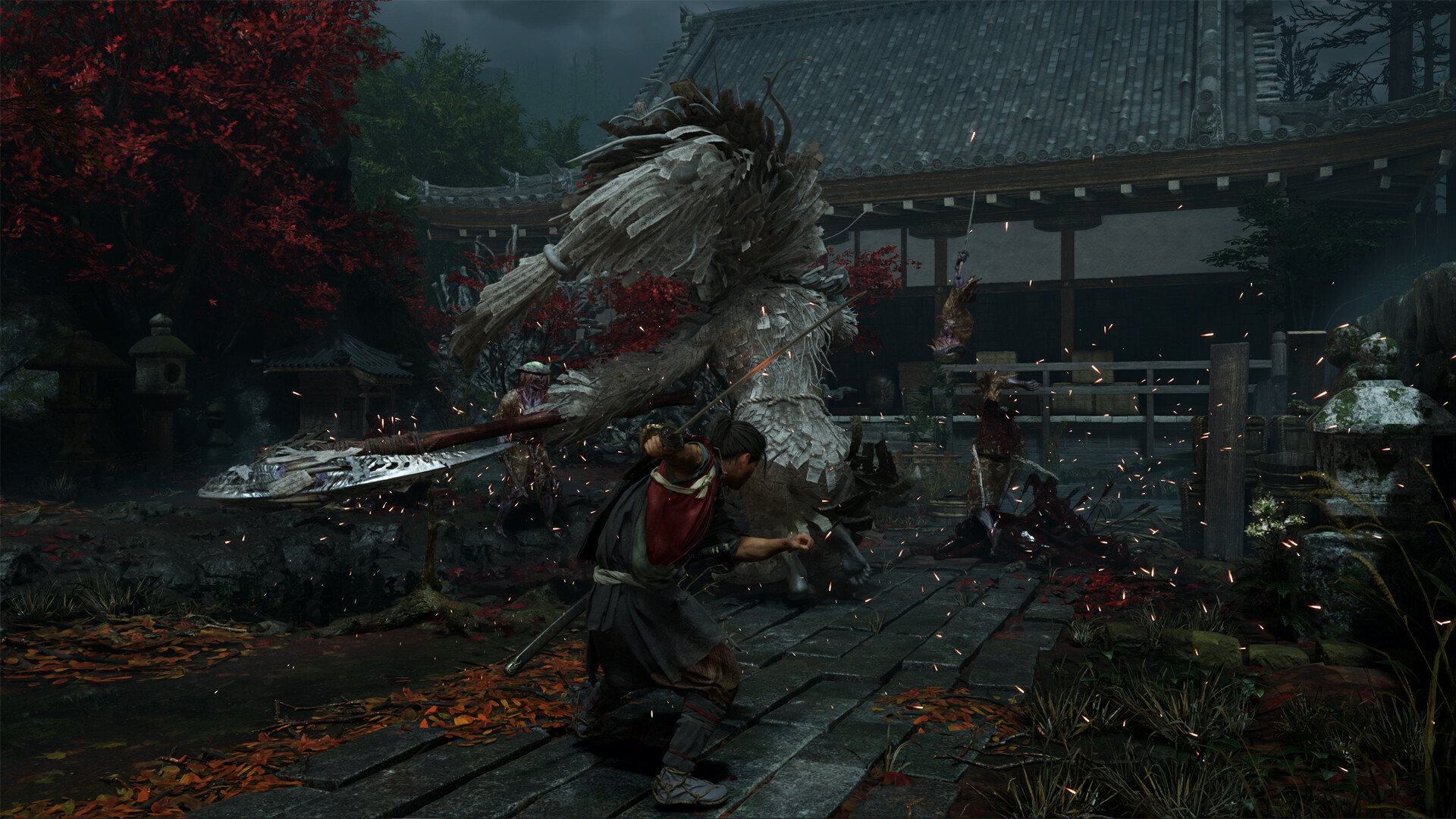
Whilst the camera work might have changed to suit modern sensibilities, the combat itself is largely unchanged. In that, Musashi uses a sword like Samonosuke, he’s just more dynamic than the stoic samurai.
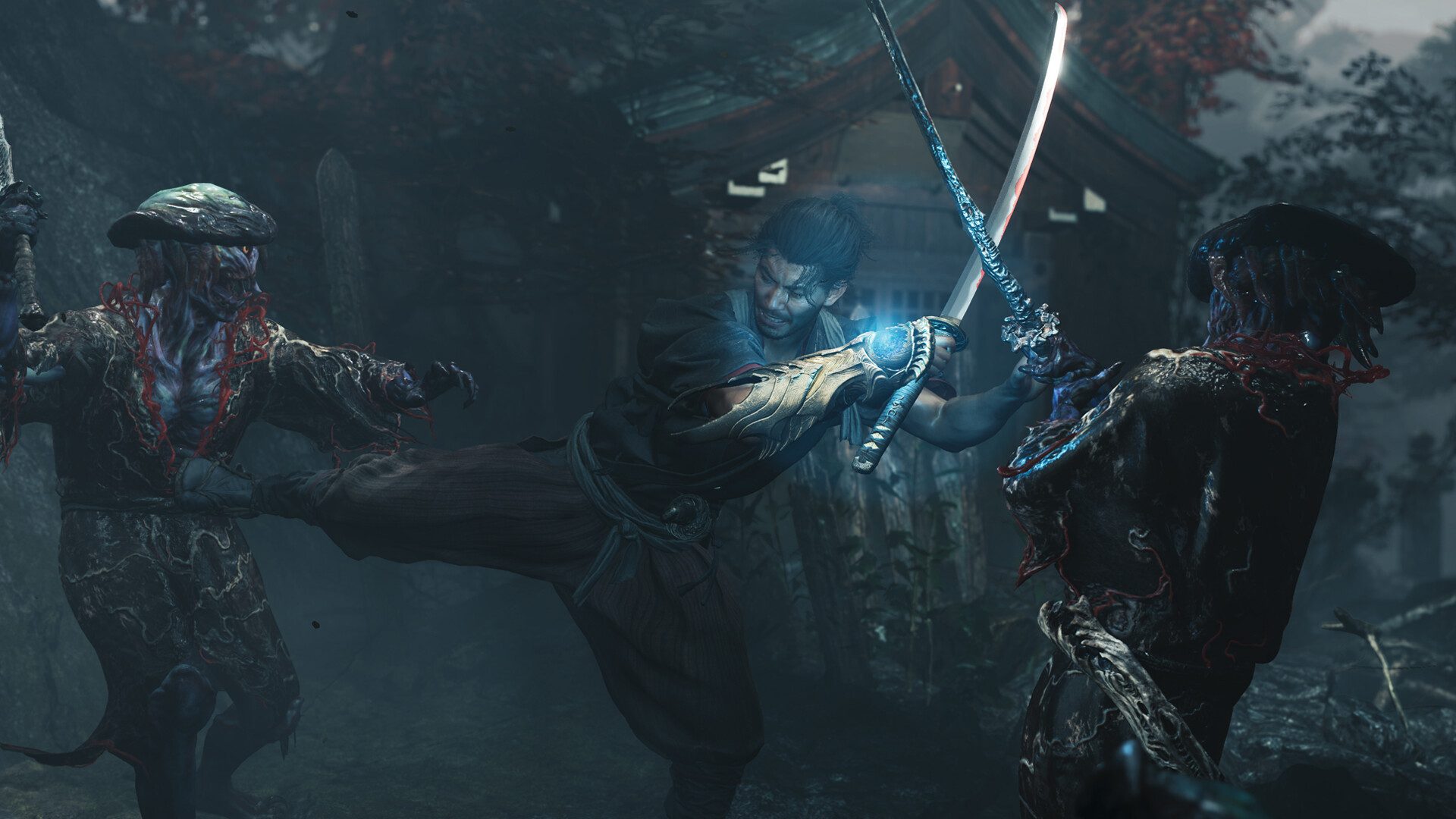
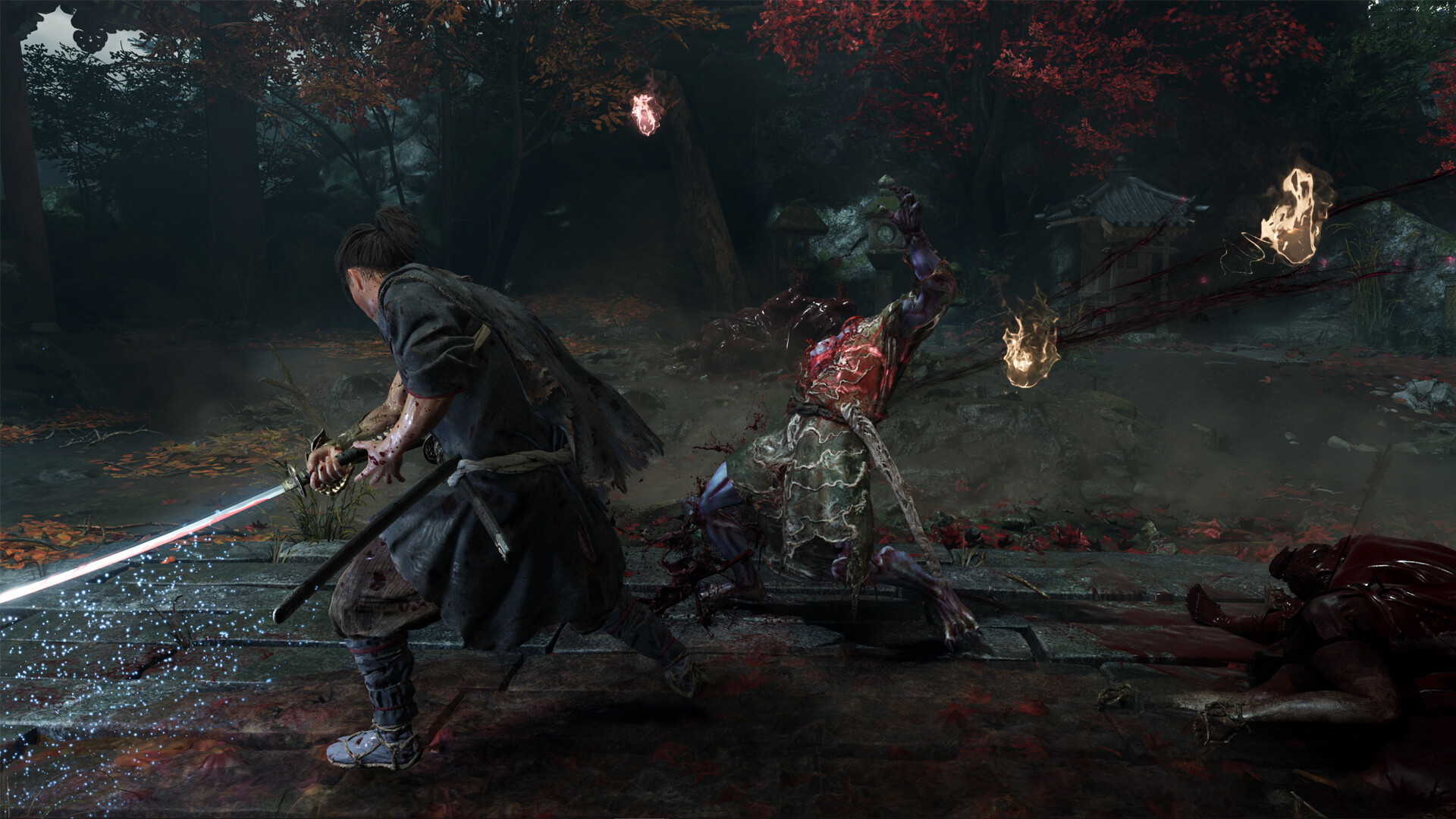
Fights are more organic this time around, much like a Souls, in that we can see what’s ahead. They’ll come to Musashi, and more often than not, carry some kind of sword or hitting weapon. There’s a few archers and other projectile types, but the focus is largely swordplay.
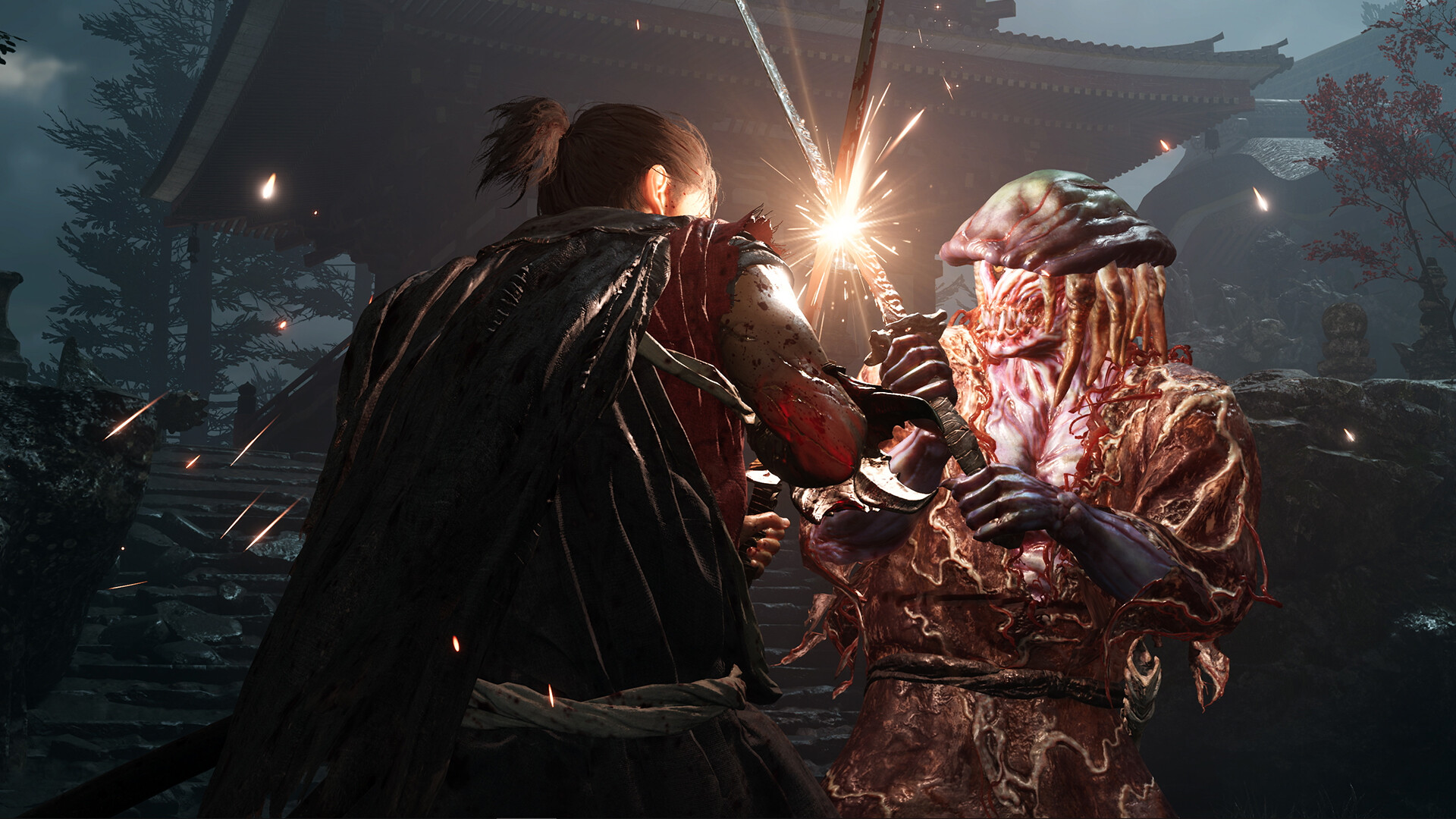
Blocking and parrying is my preferred style, but dodging is equally viable. There’s some enemies that will only focus on one type, so it helps to be a jack of all, eventually master of all. Whilst not a Souls, there’s even a control scheme that is similar, if that’s your style. Whereas I’m old school, I’m a face button brawler when it comes to Onimusha.
Way of the Sword doesn’t squash all Souls comparisons though. Both Musashi and the Genma have stamina bars, causing stagger when depleted. Whilst a bad spot for our protagonist to be in, it opens up killing blows on Genma.
It sounds pretty rote, granted. A mix of old school swordplay and Souls/Sekiro-like parrying, but that’s not all. Way of the Sword offers more variety in combat too.
Spirits, To Arms!
Whereas in the early Onimusha titles players had multiple weapons to play with, Way of the Sword changes that formula up too. Musashi is travelling to be greatest swordsman, not multi-skilled martial artist. So in that sense, the sword is our primary weapon.
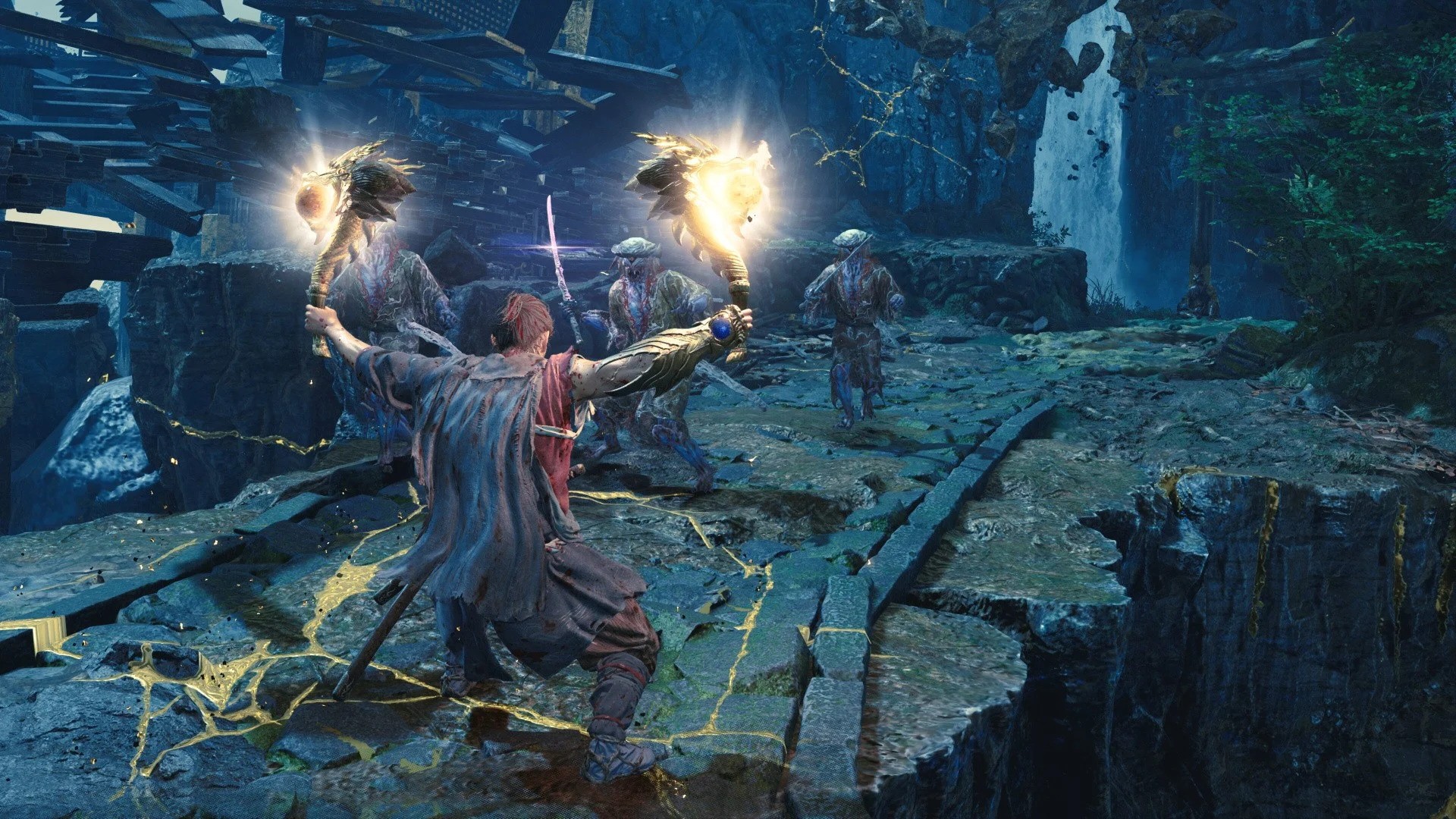
But much like Sekiro (sorry, comparisons are inevitable), there’s support weapons with various buffs and boons. The earliest ones, the Celestials, are a pair of daggers that drain life orbs. There’s an area-of-effect glaive, some stamina-draining hammers and more. There’s six to find total, to add some mix to the combat.
Musashi does also gain an Oni bow, too. It’s not much to write home about, but it’s good for counter-arching the archers. All of these are upgradeable, utilising the souls gained from defeating enemies.
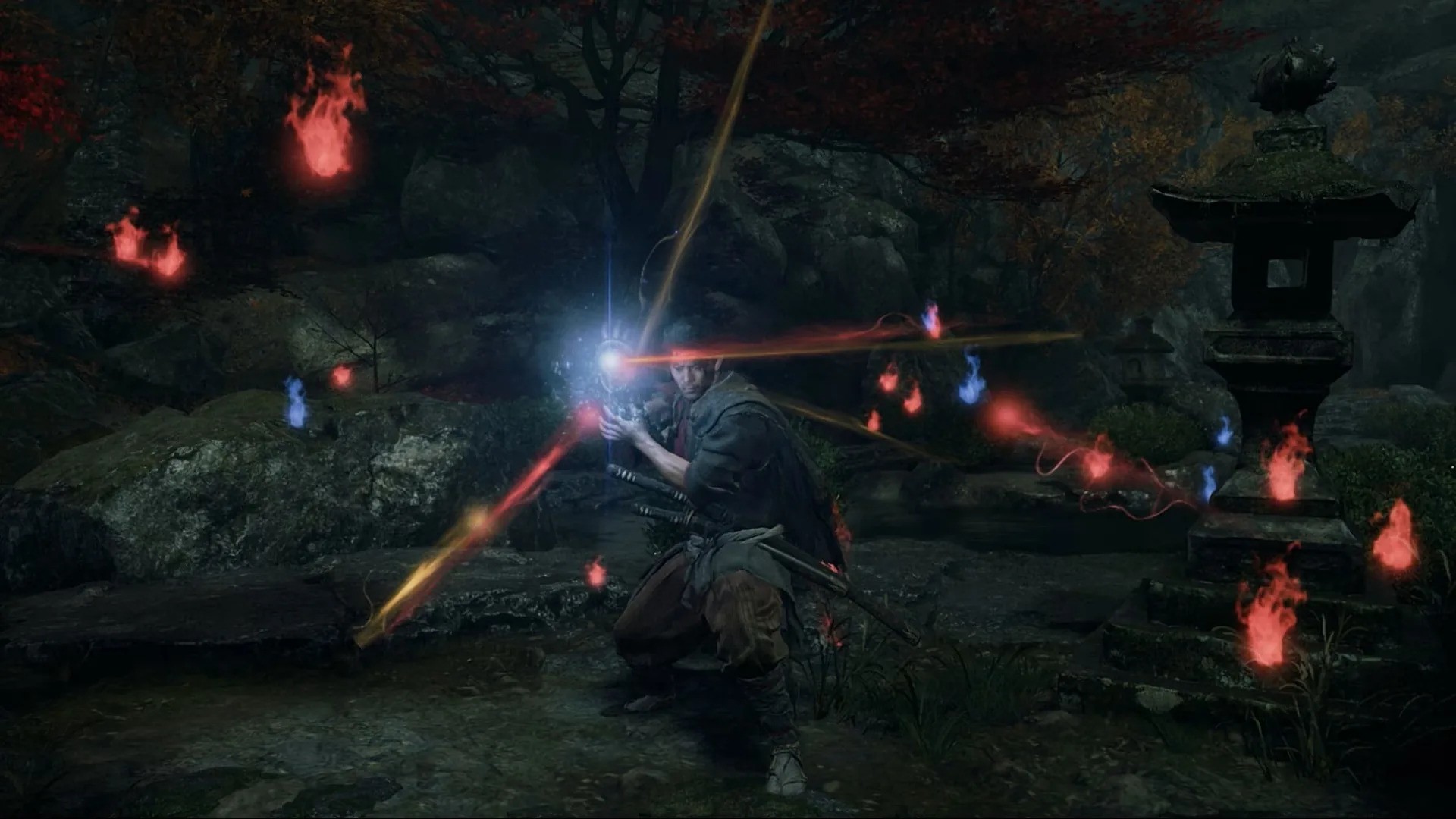
There’s also newer moves, like the Blazing state, to put to use. Parry enough to fill a meter and Musashi’s sword blazes blue. This causes more stamina damage, as well as knock more blue orbs out of enemies. These orbs fill the sub-weapons gauge, so it pays to work on your parry game.
It all goes hand in hand, again depending on how one likes to play. But one cannot do it on luck and skill alone, which is where the upgrades come in, like before. In fact, there’s an even bigger emphasis on the upgrade system than in previous games.
Your Soul Is Mine… To Spend
In previous titles, Samonosuke/Jubei would level up their respective weapons and armour with souls. It was a simple, one-currency system. Bit of a change up this time too, as Way of the Sword uses more of a crafting-based system. That is to say, gathered separate items for levelling up.
So that’s sword, gauntlet and armour, but there’s more. The sub-weapons can also be levelled, as can skills for Musashi to learn and master. You know the drill: larger dodge timing windows, combos off of deflections and parries, that kind of thing. It doesn’t go full RPG “build”, but there’s enough variety to play around with. Like I said my Mortal Shell II review recently, I love a good parry mechanic. So naturally, that’s where my attention went.
There’s also a trinket system, which adds buffs to Musashi’s existing abilities. More potency from healing items, longer Blazing state, that kind of thing. As time progresses, these can be upgraded and more equipped. Personally, I like more potent healing for the reassurance.
As I said above, it takes more than just souls to upgrade Musashi in this iteration. Certain items are needed, or you’ll be stuck with the low level sword if you’re not hunting these items. Which probably has you thinking, “How do we get these extra tools and trinkets then?”.
Well, with a little help from the locals.
Your Friendly Local Misanthrope
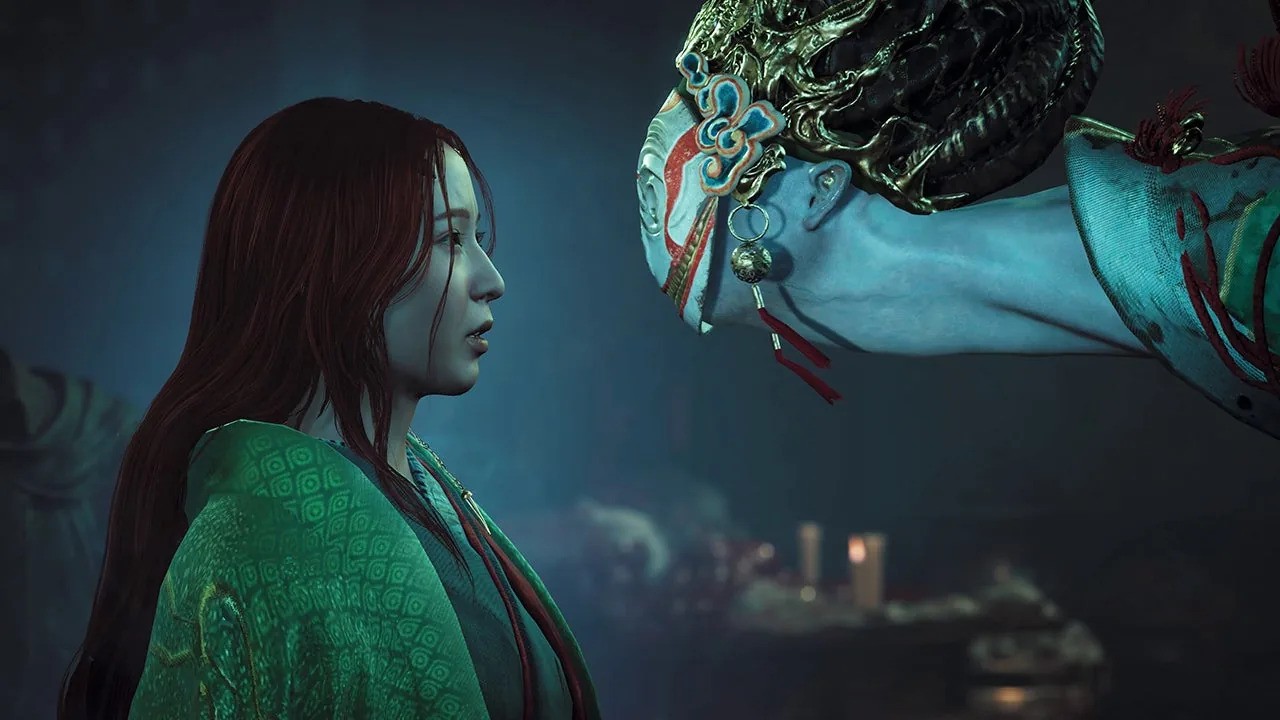
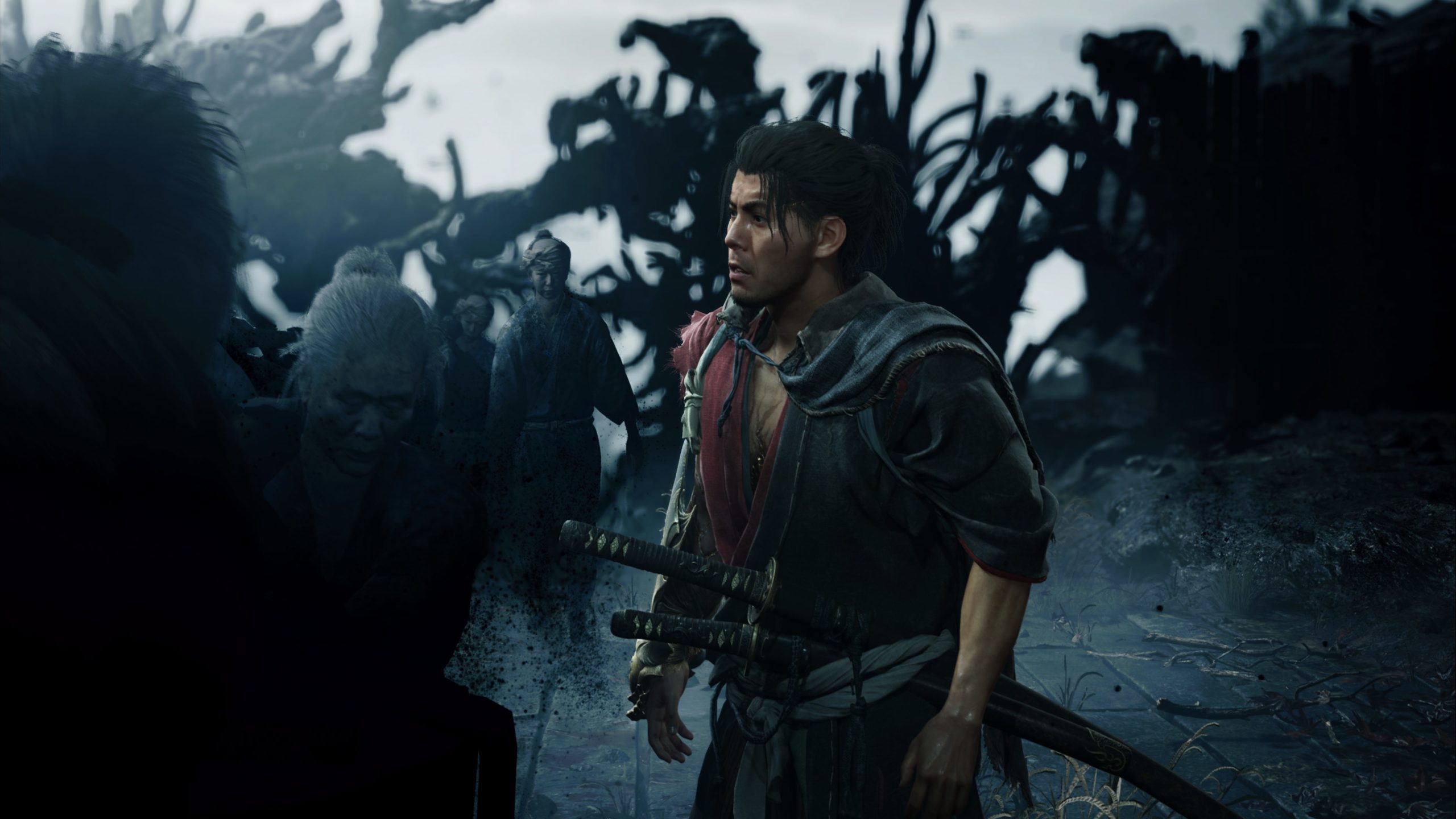
As one has come to expect with hub-like areas in games, there’s always something extra to do. Fortunately (or not, if you’re a linear player), Way of the Sword is no different in that aspect. As players progress, more of Kyoto and its surroundings open up. Cleansing areas of Malice, the evil fog that precedes Genma, allows residents to come out of their homes.
What this does, in turn, is make them realise they’ve lost their cat. Or have seen something that needs investigating, or maybe a family member is trapped by Genma just around the corner. You know the drill, it’s the speech bubble-based mission economy.
Yet whilst I sound churlish about it, it’s actually worth doing. It unlocks more of the world, gets Musashi exploring and nets him rewards to help with upgrades. Some are linked to the critical path, in that main characters might ask a favour or two. But once they’re completed for the main path, there still might be more to do further down the line.
It’s a very older game mechanic, born of limitations and forcing players to stay in the same areas to pad the runtime out. But given that Onimusha is one of those older games, it makes sense. I will admit that it does become a slight grind with some, but it’s all part of the charm.
Cor Blimey, Musashi-san
Right, this is going to be a divisive point for many. I’m not talking about the graphics, they’re beautiful. Making full use of the RE Engine, from the settings to the sword clashes, it’s very pretty. There’s the usual performance/graphics options, as well as Ray Tracing and 120hz modes for those that can support them. On that front, cannot fault it.
No, the contentious point is going to be the English dubbing track. As prefaced at the beginning, I’m an old Capcom fan. I’ve been enjoying the scenery-chewing since OG Resident Evil. But this, this is something else.
Rather than do the Americanised seriousness, they’ve gone full British. They’ve kept the Japanese pronounciation of names and places, but the rest is pure Cheddar. Musashi telling people to “piss off” sounds like something you’d hear in a posh London pub, whilst The Man in White sounds a lot like Peter Serafinowicz.
Seriously, it’s like Guy Ritchie wrote it without being allowed to use Cockney rhyming slang, although it sounds like the actors are going to at any moment. And being honest? I absolutely love it. But then, I’m English: I love self-deprecation and works that feel like they’re doing that.
It’s not as full-on as Thank Goodness You’re Here!, but to an outsider, I can see how it might be disjointing. But, can’t fault a game for personal preference. There’s a Japanese dub if you want to go all Kurosawa, don’t worry.
Cleanse The Land, Or Die Again Trying
To conlcude, I am incredibly happy that Onimusha is back. The series peaked, for me, with Onimusha 3 and since then, it’s been a wait I didn’t know I needed. Of course, this is most definitely bias, I played the originals. If you have too, and feel like me, then this is a no-brainer.
To the outsider, it may look similar to a Souls. I would invite you to use that comparison only as a framing device, because deep down it really isn’t. What it is, is a classic Capcom title with a new lease on life. Much like Resident Evil with Requiem, and Monster Hunter with Wilds, Capcom is on an uphill arc of meteoric speed. And there’s me, riding the trail they’re blazing.
It doesn’t escape all of the modern trappings, however. There’s the usual standard and deluxe editions, that offer different charms and cosmetics. Whilst switching up costumes and sword liveries, don’t worry too much. There’s plenty to unlock in-game too, with only cosmetics being behind a paywall. Will that change in time with some mission/story DLC? Probably, this is still Capcom. But, out of the packaging/download, it’s a complete game.
It’s also a completely incredible game, if this is your idea of a good time. With varying difficulties, a chance to replay boss fights and plenty of upgrades to keep players busy. It’s not short, either. I’m only twelve hours and have only just met the main villain properly.
As said, this is more fuel for the rise of Capcom. As on old school Onimusha fan, you owe yourself to continue that legacy. If you’re a Souls and/or action-adventure game fan, there’s no better time to jump into the world of demon-slaying.
Onimusha: Way of the Sword is available from 4th September 2026 on PlayStation 5 (reviewed on PS5 Pro), Xbox Series S|X, Nintendo Switch 2 and PC via Steam.
Developer: Capcom
Publisher: Capcom