

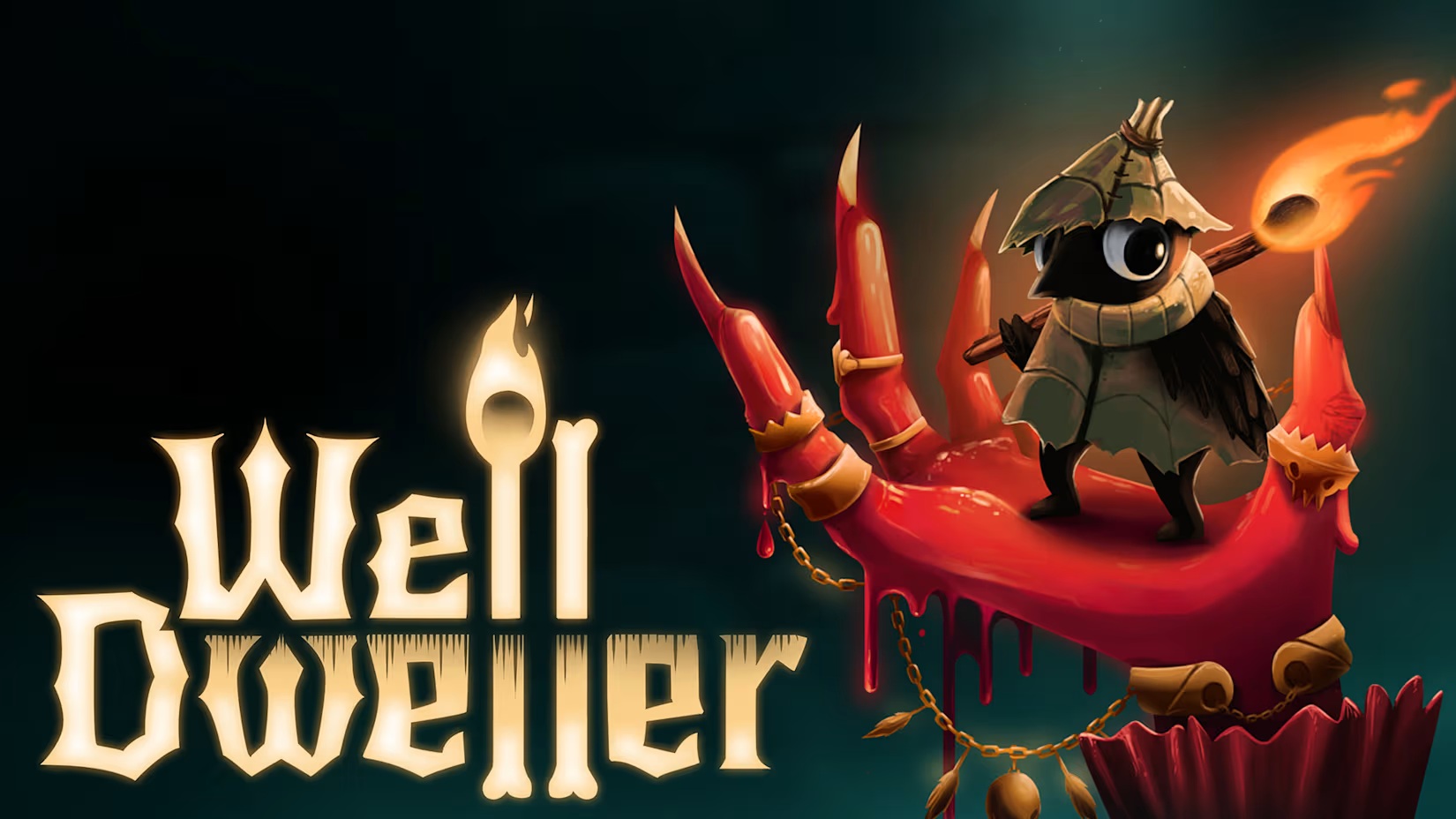
Before this write-up, I revisited my last review of Kyle Thompson’s previous game, Crypt Custodian, because I didn’t want to tread too much familiar ground. There’s a distinct blueprint with his games to the extent that I could create a deja vu of talking points in the process. What is worth repeating, though, is that Thompson’s flavour of direction continues to be singular. We are now four games in, over a span of six years, and the solo developer has been sharpening his tools with each release. I don’t think it’d be hyperbolic to describe Thompson’s games as Ghibli-esque, in that you know a Ghibli film when you see one; there’s a distinct visual finesse, but no one film is ever the same. Insert Well Dweller.
Whilst Well Dweller isn’t falling even a smidge far from the tree of Islets, Sheepo, and Crypt Custodian, it’s demonstrably the Metroidvania with the best understanding of how the genre ticks. There’s that cat from The Matrix – or Crypt – again, but Well Dweller is the best output from Kyle yet. So what’s changed? Improved? Brought back? Everything really. Well Dweller returns to a 2D viewpoint, with the developer’s signature painterly art style looking as sumptuous as ever, a new world to explore and a new suite of mechanics to master.
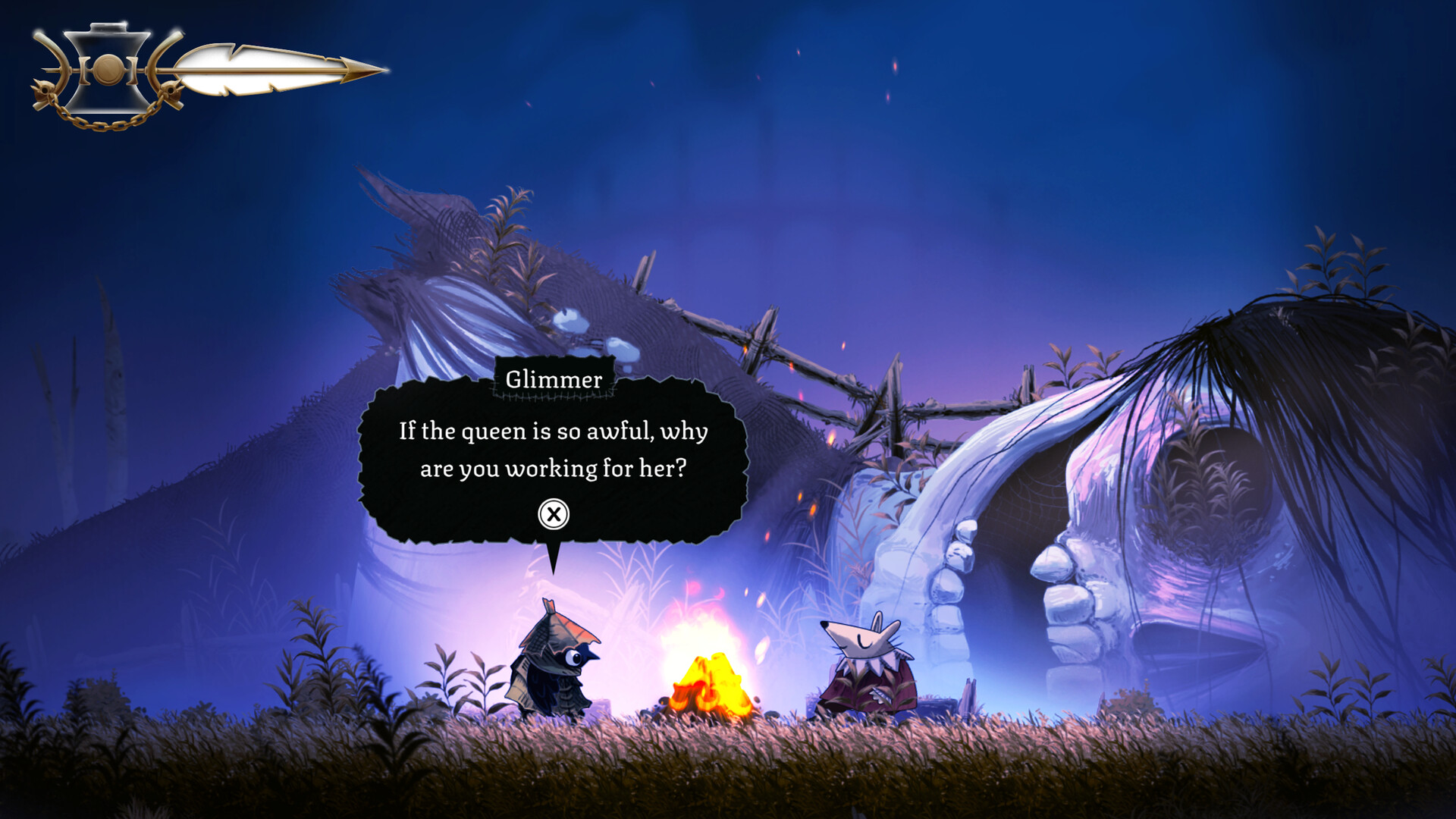
You play as Glimmer, a bird living a quaint life with their family. That is, until a trip for some food gets your family captured by the evil Queen, who has an obsession with turning birds into clothing. The world is in disrepute due to the Queen’s rule, making it a treacherous journey to save Glimmer’s family, but not an impossible one. This isn’t as strongly evocative as Crypt Custodian’s personable story of loss and the journey thereafter. Instead, it’s a more universal fairy tale with a grimdark twist. I didn’t find it too compelling as a narrative, but the storybook style of world-building created a genuine sense of place. It added so much personality to the map I was trawling through.
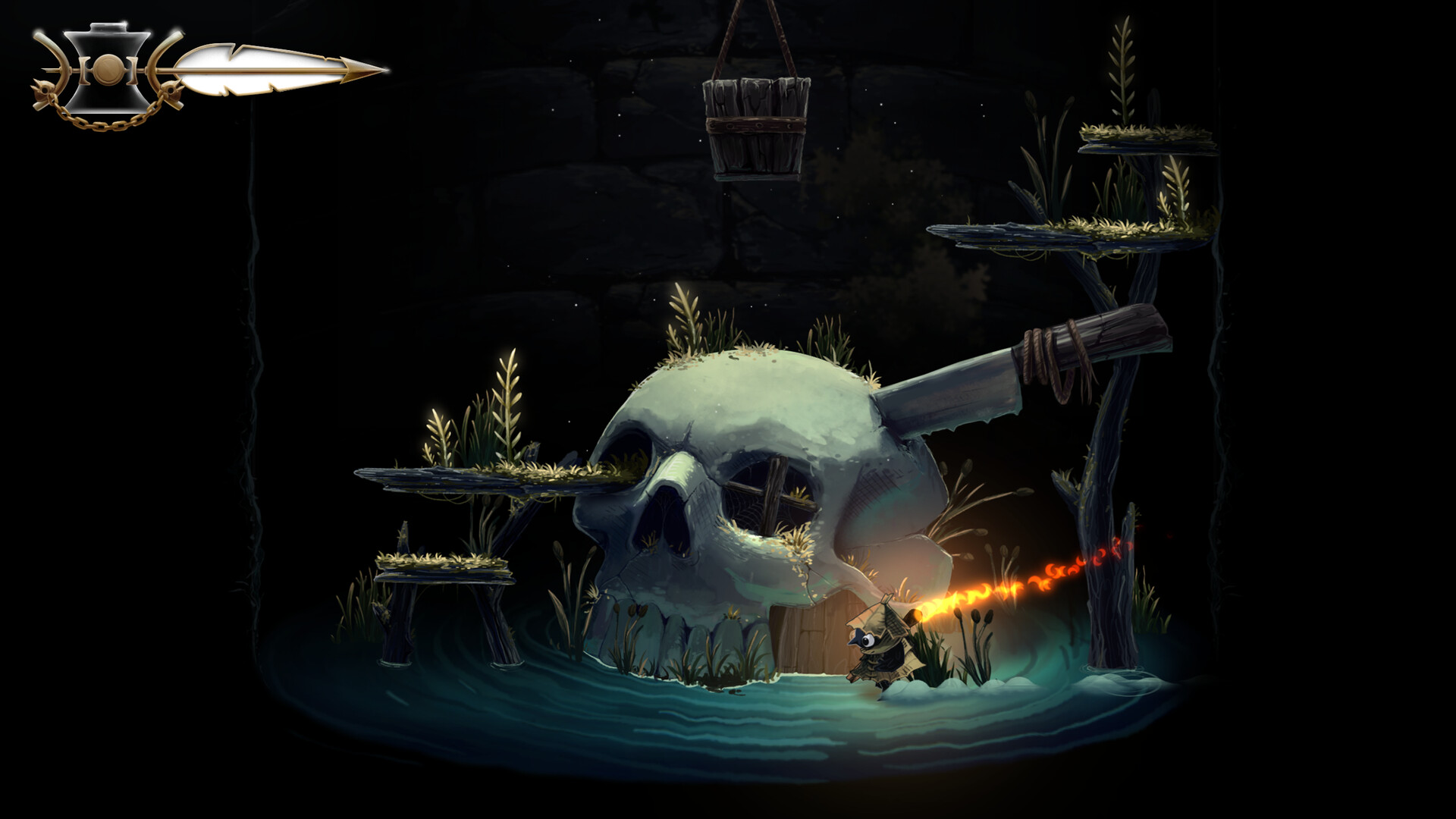
And that sense of exploration was incredibly moreish. There’s a variety of collectibles to find, all well hidden and utilising the many methods of traversal you’ll unlock through progression. I’d say I spent a good 8 hours wishing I had a double jump to serve as a fix-all method to reach those hard-to-get collectibles. However, there’s never a double jump. Instead, Thompson implemented a few ingenious traversal methods revolving around the matchstick Glimmer wields (the weapon you use in the game).
Namely, the move where you can lodge the matchstick onto a wall and propel yourself off it like a trampoline onto greater heights. That, and a combination of the few more unlocks and upgrades to your abilities, makes traversing the expansive map an absolute joy. As you unlock more of the move sets, new areas become attainable, which seamlessly incorporate what new thing you’ve just learned. It simultaneously creates a visual language you begin to work out and become fluent in the platforming puzzles.
There’s also a nice sense of pace when unlocking all these different moves too. Just when you think you’ve mastered one traversal, a new one unlocks, and the danger of death from spikes and pitfalls continues to be pervasive. This also comments on the distances between checkpoints. Well Dweller’s safe zones are spaced out almost perfectly, bringing that pressure just enough to the forefront, without creating frustration from failure. In those safe zones, you can equip the trinkets you find, upgrade them and buy map markers to help you find some of those pesky collectibles that are hiding almost too well.
Maybe I got lucky with the trinkets I equipped, but they didn’t feel like they changed the gameplay all too much. Some may reduce incoming damage from spikes, others may give you a damage increase if you’re at full health or low health, whilst one creates damaging spikes if you fall below a certain health. Part of the collectables are also trinket slots; some may cost 2 whilst others may be 5, so you’re making deliberate choices about what you want to take with you before exploring the map. As you progress, you can equip more, and the game generally feels easier.
Whilst Well Dweller doesn’t have an intense learning curve at the start of the game, there are a few different gameplay elements that break free from feeling a dime a dozen. Also making it harder to adjust to in the opening hours. Namely, the healing mechanic. It’s almost a QTE event to heal: you hold down L1, prompting a bar and an arrow that goes back and forth. In the middle of the bar is the success zone, and letting go of L1 in that zone strikes your match and heals you. In an isolated instance, this is a fine mechanic to add a greater feeling of intention when healing. However, in those boss battles, it is so stressful.
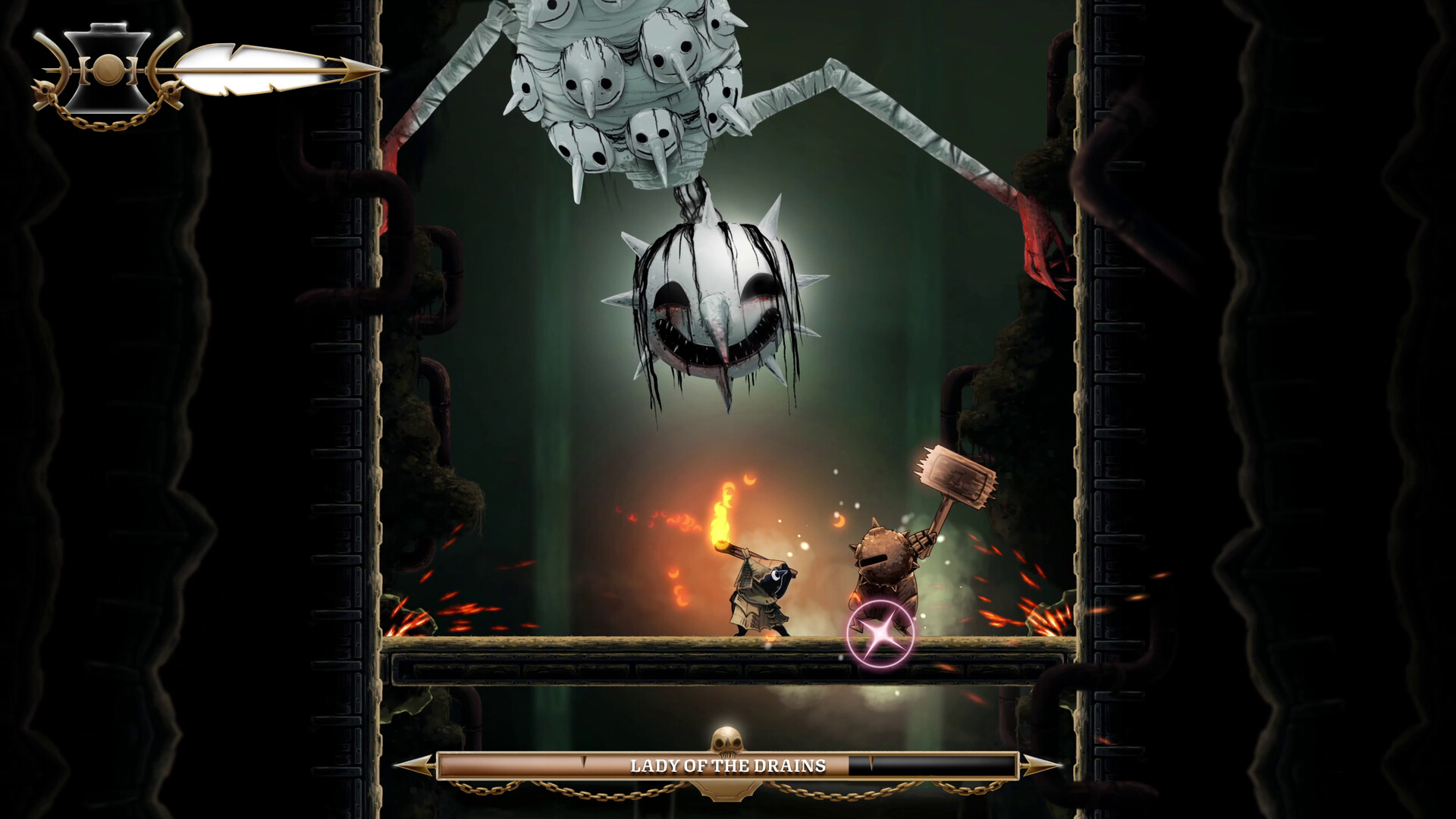
Much like Thompson’s previous games, one of Well Dweller’s biggest accomplishments is its combat and boss encounters. There are only two things you can do to fight back: whack your matchstick at an enemy or set them on fire with a throwable bottle. The bottle builds up the more you use your basic attack, creating a satisfying ebb and flow between switching between both moves. Light as the combat is for Glimmer, it’s focused more on your reactions to enemy attacks.
Enemy variety doesn’t just look vast, but the move sets from each of them are too, whilst sticking to a rulebook. Playing through it, I never felt blindsided by new enemy moves, bosses or otherwise, and I loved that it always felt fresh from area to area. Boss fights in particular are the Queen’s crown jewel. Clearly the hardest part of the game and rewarding to overcome, each boss follows that same rulebook whilst throwing in ways to utilise every traversal skill you’ve learned up to that point. It’s an overall deceptively complex combat system for a game with only two types of active attacks, and I really enjoyed the finesse in its simplicity.
Overall, I’m so charmed by Well Dweller. I mentioned it at the top of this review, but this is easily Kyle Thompson’s best. Everything feels subtly improved, whilst his collaborators match their talents. Like Eric Thompson once again providing the soundtrack. A lot of familiar sounds echo through the forlorn kingdom, but with even more nuance and seamlessness. Thompson is quietly making some of the industry’s most consistent Metroidvanias and remaining within his distinct style, and I love to see it. May the anthropomorphic Metroidvanias continue!
Well Dweller is out now for PlayStation 5 (review platform), Xbox Series S|X, Nintendo Switch and PC via Steam
Developers: Kyle Thompson
Publisher: Top Hat Studios
Disclaimer: In order to complete this review, we were provided with a promotional copy of the game. For our full review policy, please go here.
If you enjoyed this article or any more of our content, please consider our Patreon.
Make sure to follow Finger Guns on our social channels. Twitter, Facebook, Twitch, Spotify or Apple Podcasts – to keep up to date on our news, reviews and features.