

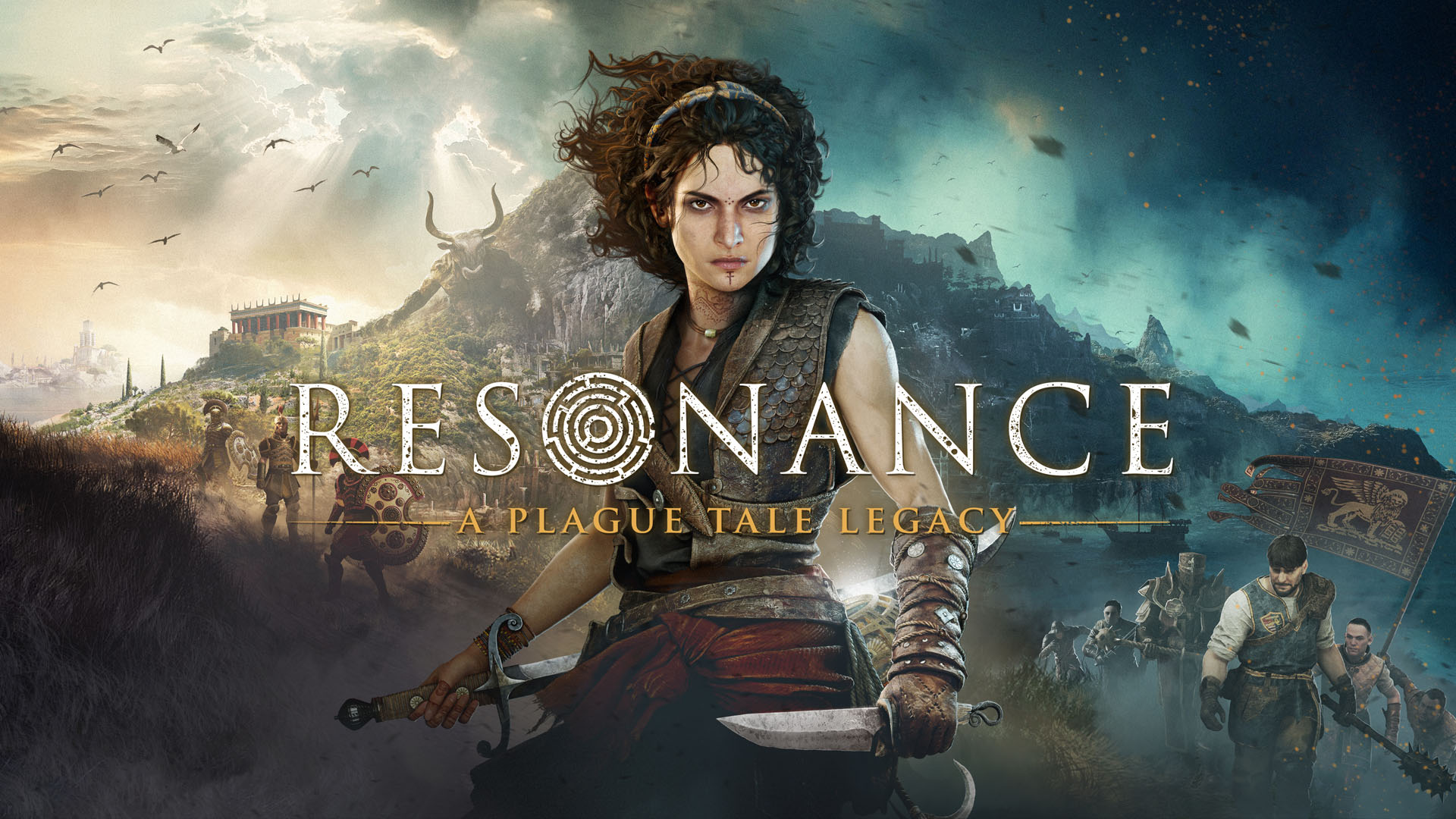
Divesting themselves of the confines of their own IP, Asobo has reinvented Resonance: A Plague Tale Legacy with an almost Uncharted-like adventure amidst the ruins of Ancient Greece. Full of intricate light puzzles and tomb raiding, it’s still heavy on the horror as you should expect from the team behind the horrific crashing waves of rats that will never leave my mind, but here the horror takes a few hours to get going. When you start to think you know this new thing you’re playing, it suddenly changes back to the more familiar territory.
Sophia, who some will remember as the pirate captain from Requiem, investigates a cursed island, intent on the secrets that killed her father. But when those secrets come out, and the horror of the story really appears, Resonance manages to be scarier, more gruesome, and more foreboding than even what we saw in Requiem. I’ll save anything even approaching spoilers until later in the review, but suffice to say the horror here is immaculate, the action tense and sharp, and it’ll have you on the edge of your seat. And once again probably live in your mind for the rest of your days.
Resonance Of Fate
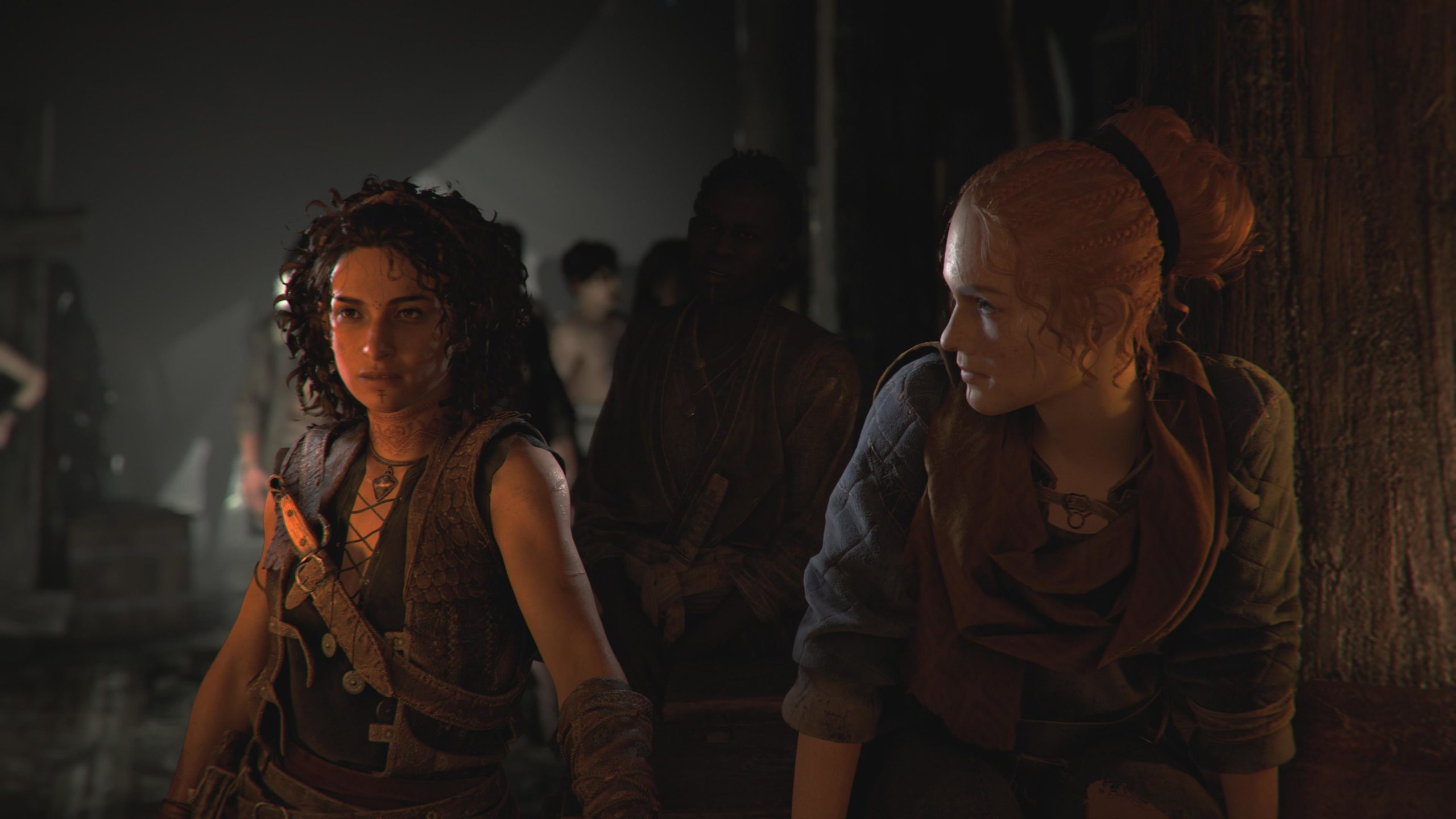
This time around we leave Amicia and Hugo behind and play as Sophia (the pirate queen from Requiem), going back in time to her childhood, living amongst a band of pirates somewhere near/outside Venice, growing up without any parents, and training to become deadly with blade and daggers. Sophia was kidnapped by strange nuns from the Order (that we know well) who experimented on her, making her draw the visions they gave her, presumably using the Macula. It is Plague Tale after all. Once freed from their clutches, her notebook of sketched visions leads the pirates to a strange, cursed island that claims many, including her father.
Even though Chapter 1 is all exposition, it feels light on exposition. What is this gang of pirates and thieves? Why are they so intent on the island? Did Sophia get the visions before or after the nun’s experiments? It’s not very clear at the start, and that can make the beginning a little hard to grasp, as if you’re fighting to know what’s going on. But let it wash over you, let the story unfurl like a nice mystery, and the answers will come.
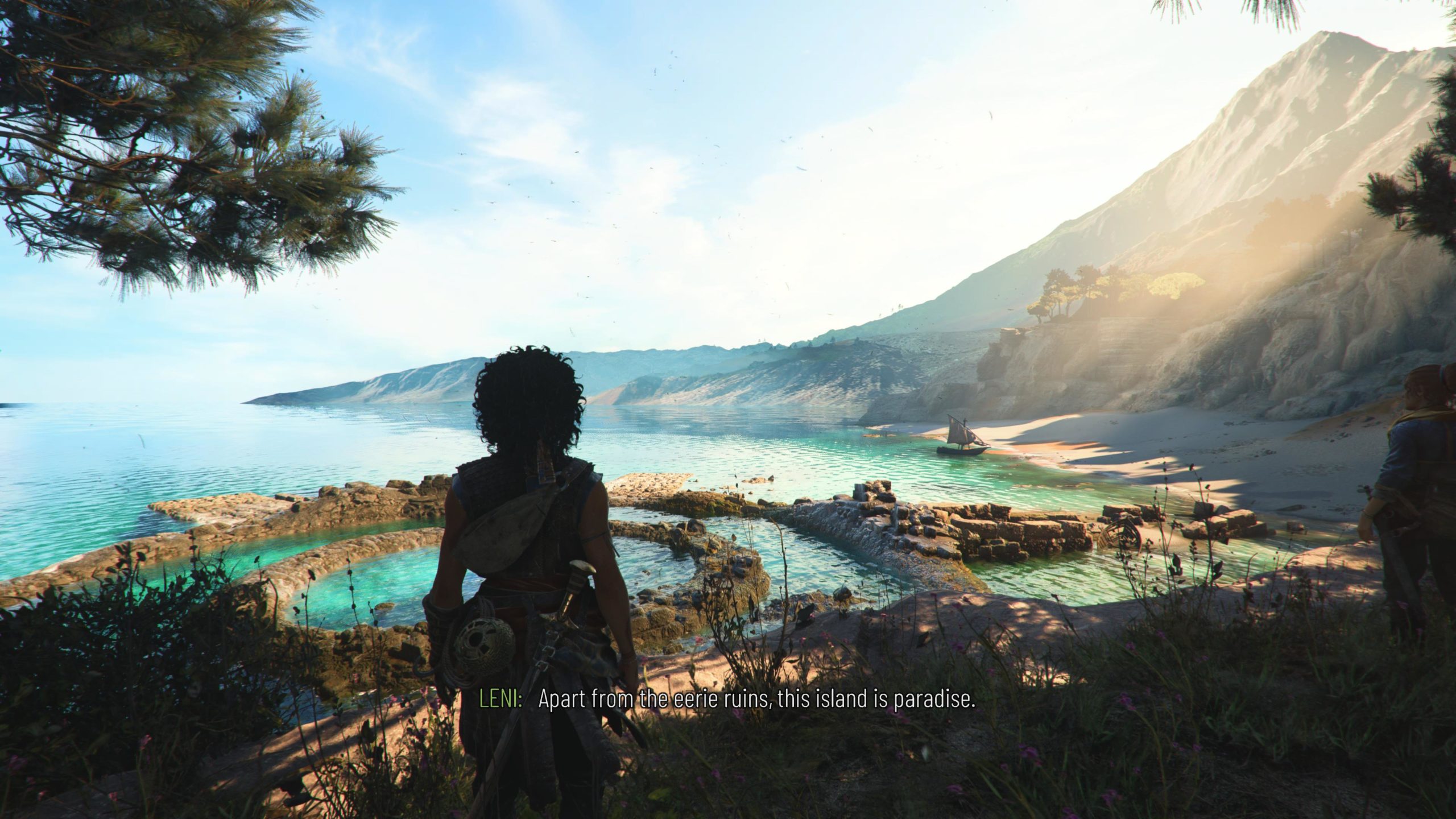
With a little time jump to Sophia’s late teens, the pirate’s attempts to reach this cursed island spectacularly fall apart, and Sophia is left with just her one friend Leni to unearth its mysteries on their own. The island itself is a Tomb Raider’s paradise, full to bursting with puzzles, often room after room of them. Combined with Sophia’s notebook, it can feel like it really took a page out of the best of Uncharted, piecing together old clues to solve the island’s mysteries.
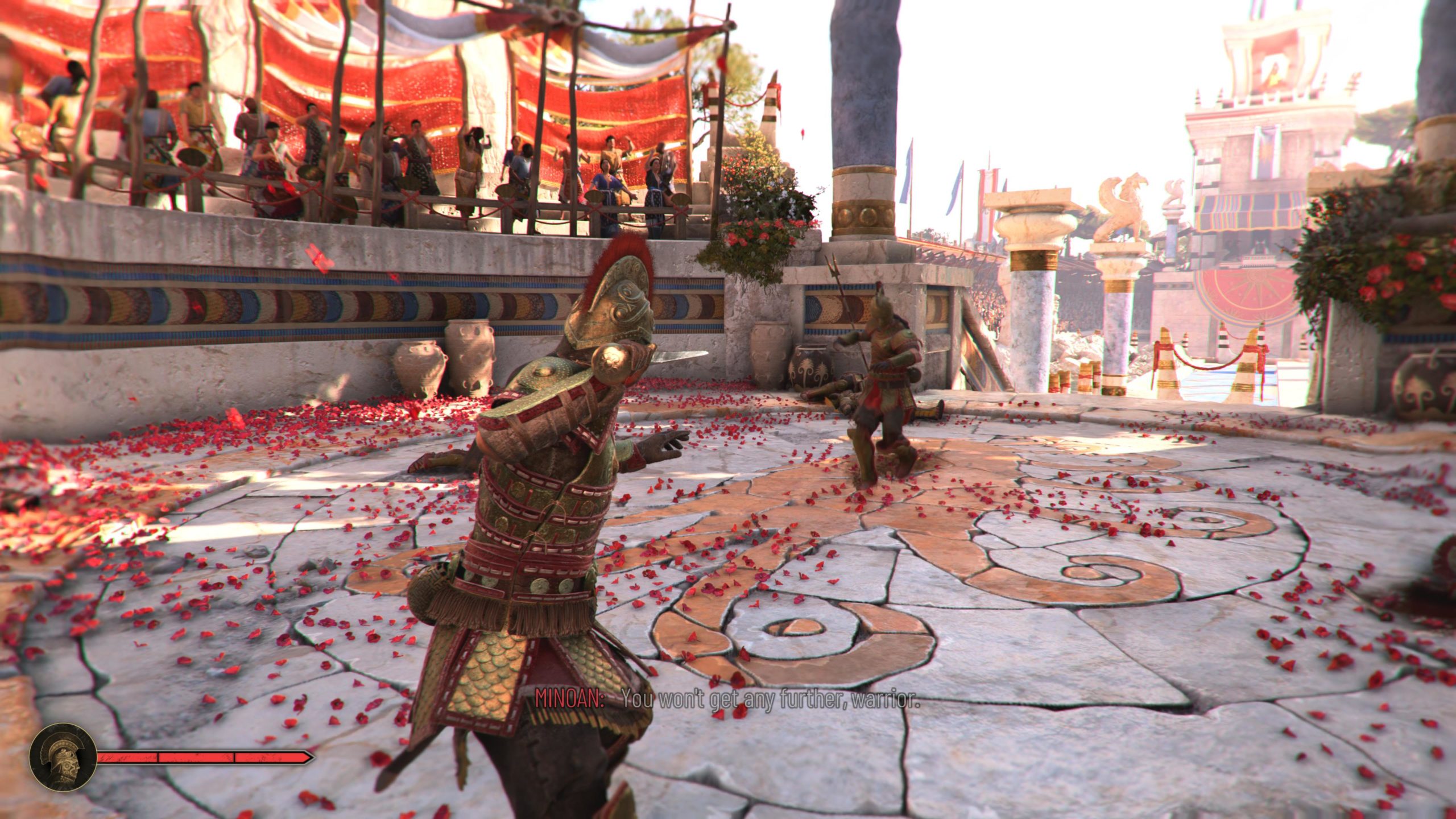
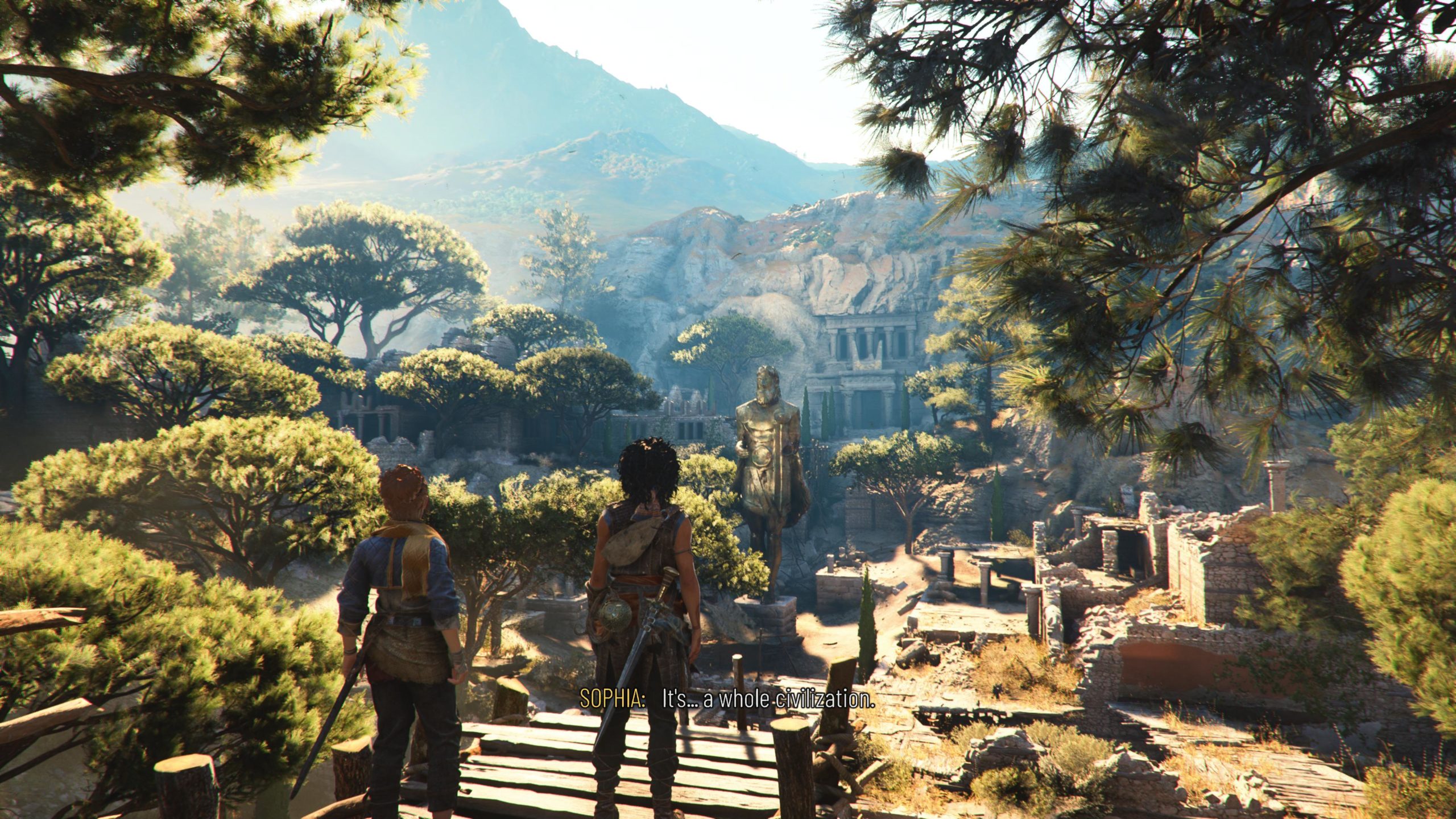
The island itself is central to the whole narrative – a forbidding place, seemingly beautiful but hiding a dark, cursed history bursting with Greek mythology. Sophia’s visions return, and you witness ancient Greeks, in particular Theseus, fighting in a series of mysterious trials to reach the centre of the Minotaur’s lair.
Layering the puzzles, the exploration towards the centre and then deep into the island’s underground, Resonance achieves a sense of mounting dread better than most pure horror games. As you descend the Minotaur’s chasm a few hours in, pursued by an army intent on stealing the island’s secrets for themselves, alternating light puzzles with dark visions, I began to dread what I would eventually find at the heart of Resonance.
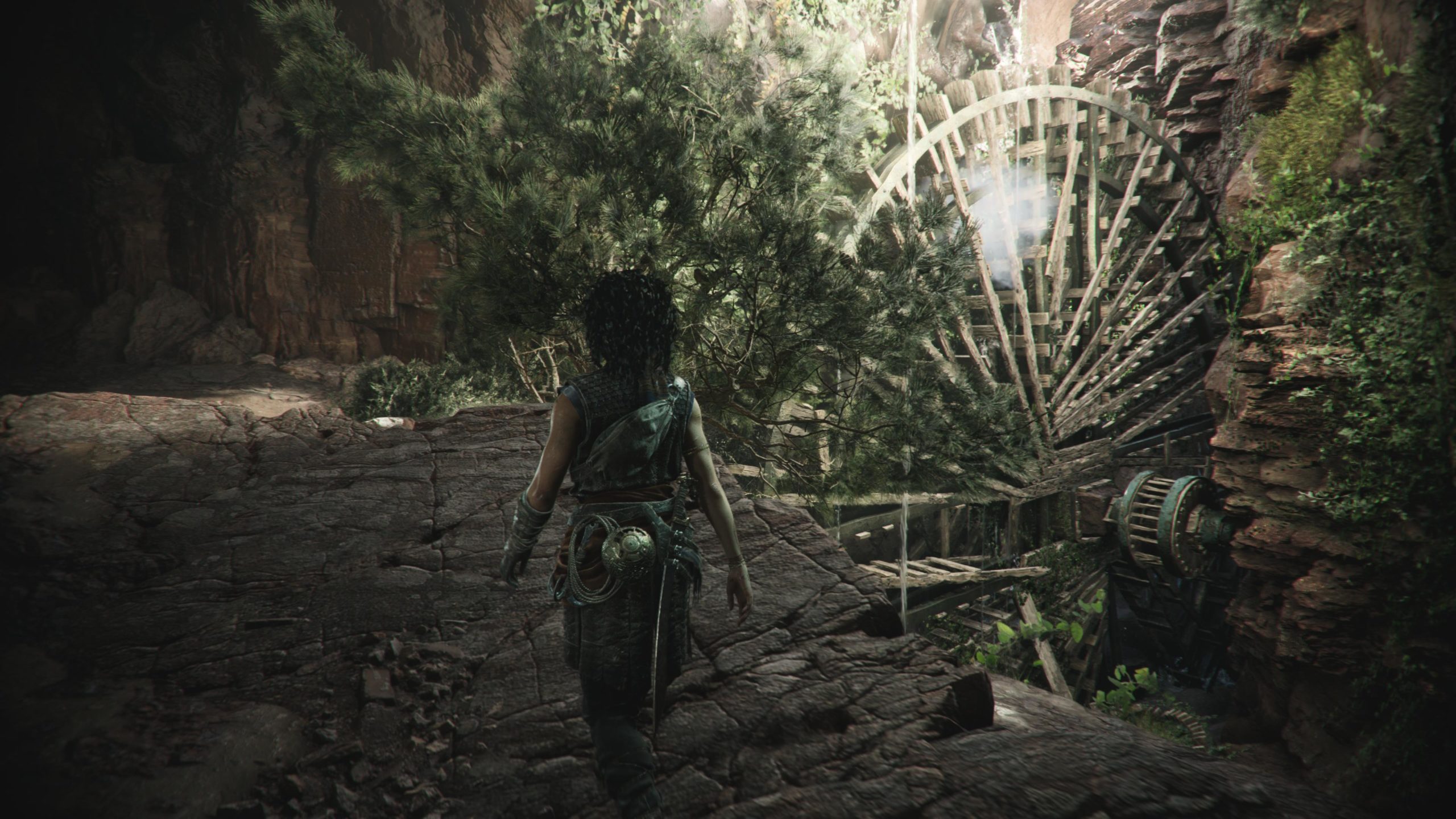
Turned out to be a fantastic dark adventure, tasting every bit as good as the best Tomb Raiders or Uncharteds of recent generations, shot through with that jaw-dropping fidelity Asobo Studio have brought to their whole series. They clearly enjoyed creating the mysterious ruins they did in Requiem and doubled down.
The game shifts when you finally reach the centre and uncover its secrets. Here you must face arguably the best part; the sheer horrifying, dreadful creature. Gameplay here brings back all the best, most terrifying aspects of the previous two games, running for your life, creeping through terrifying areas where a moment’s wrong move will claim your life. I can’t say much more without spoiling it, so be warned it’s a full-on horror and enter at your own risk, but if you love horror, you’ll love this game.
Narrative-wise, it also manages to be more than expected. The point where I thought, at the centre of the island, that everything would come to a big crescendo, well, we still had Act 3 to go. Expect a few twists and turns that were well worth the time and fear to get to.
Striking A Chord
Resonance does away with much of the stealth (still very present in the horror sections) that made the previous two games so compelling, but Sophia is no child, and can handle herself in a fight. She doesn’t really need to hide. Instead she can parry and fight like a warrior in a much more action-oriented title. And so the gameplay here changes to accommodate its lead. I can lament a Plague Tale game being light on stealth, but I commend them evolving both gameplay and character to match each other.
Combat is a little like a dance, parrying and then punishing your enemies, kicking shields and breaking guard stances, dodging the few unblockables and sometimes even getting your grapple involved. You can get surrounded, but the parry is quite forgiving and allows you to deflect multiple enemies at once. Each one has a stun meter you can exploit; a perfect parry often fills it all the way, while smaller flurry parries will collect up stun in four or so hits. Then you punish them by holding square for an execution. There are quite a lot of execution animations, and in addition to them, lots of fun contextual kills based on whether you are right next to a wall or other obstacle. That dagger through the skull move is really having a moment, and I’m seeing it in multiple games, but it’s employed here with real gusto.
I rarely found Resonance that difficult, mostly because Sophia is so capable – this doesn’t feel like the almost overwhelming fights towards the end of Requiem where Amicia was really on the back foot. Instead, much like the old Arkham games, if you start to learn the rhythm of the fights, they can become smooth and graceful, and deadly.
You will collect a number of bangles and beads, rings, and swords throughout the game, and based on how many you have, you’ll gain a few buffs and an easier time parrying, for instance. There’s also six skills to buy to hone the way you like to fight – my favourite, which suited my playstyle, was to make the red unblockable attacks actually become parryable.
However much to my chagrin, these abilities don’t translate to your other character. Yes, in visions you play as Theseus, fighting your way through a hundred other Minoans to win a competition for the throne. Some of the fights towards the end of Theseus sections were quite hard, but mainly because I had to relearn to roll away rather than try to parry red attacks.
It’s a compelling combat system, simple enough to master in the short runtime of the game, but with enough depth to last it too. I didn’t get bored of it, but I could feel that coming as I reached the credits. It’s not overengineered, or full of unnecessary builds and items – it keeps that side of things streamlined in service of the story and Sophia’s character.
Sowing Discord
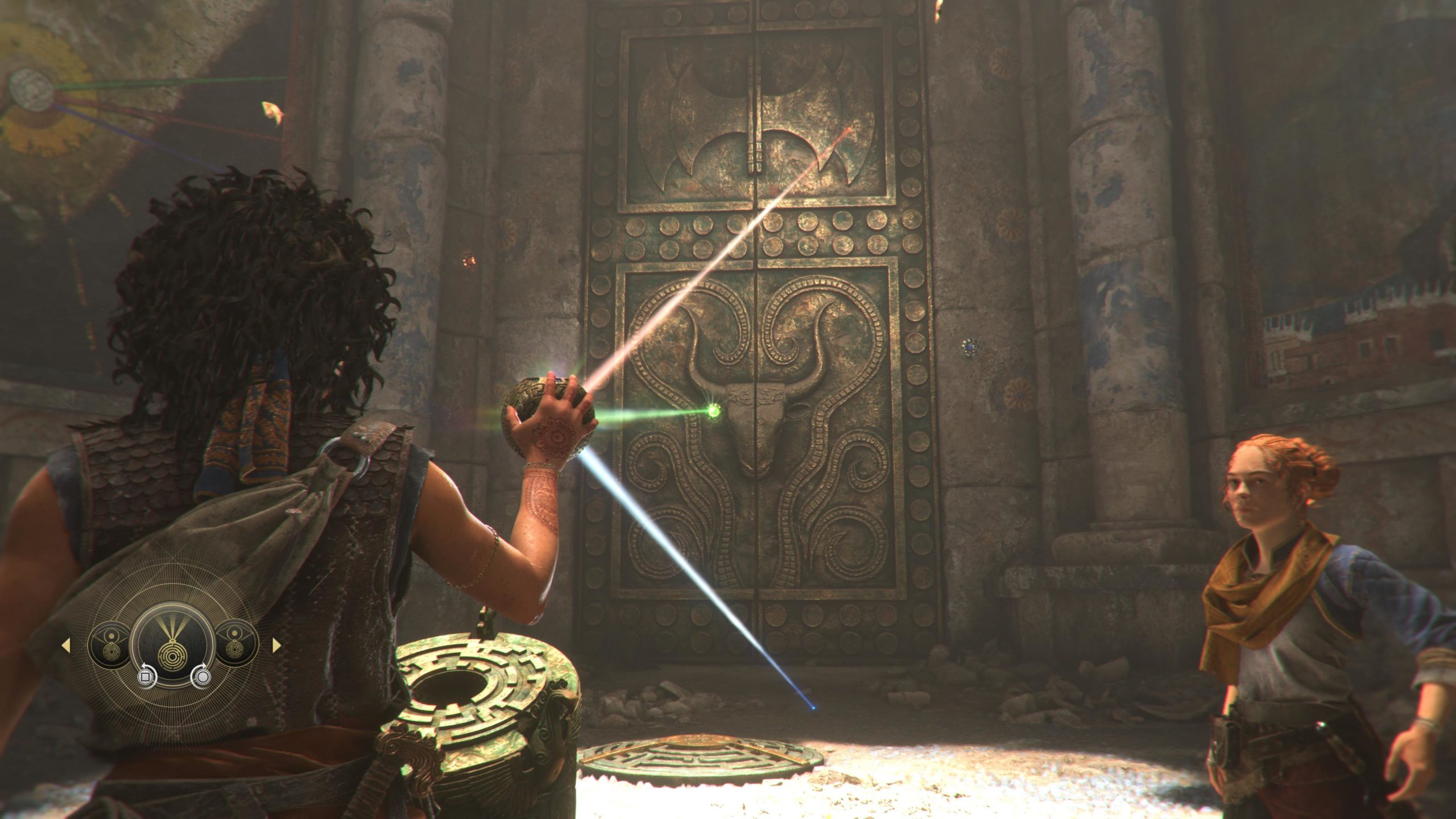
At the heart of what the pirates were looking for all those long years of your father-less adolescence is a key; a spherical light-emitting device of ancient design, that powers all the game’s many puzzles. Set free of your leash, Sophia and Leni take on the island together. There’s puzzles based on reflecting mirrors, tracing markings with light, finding the right routes with light, finding the right symbols with light, standing in the right spot and setting off three coloured lights; you name it, if it’s a light-based puzzles, there’s some form of it here.
I really enjoyed them, breaking up the combat, testing my brain, but only for a few minutes at a time. Only one puzzle was so tricky that the in-game hint system ala God Of War tried to trigger, but crucially you have control of it, and even when triggered the dialogue still tries to help you solve it rather than giving it away.
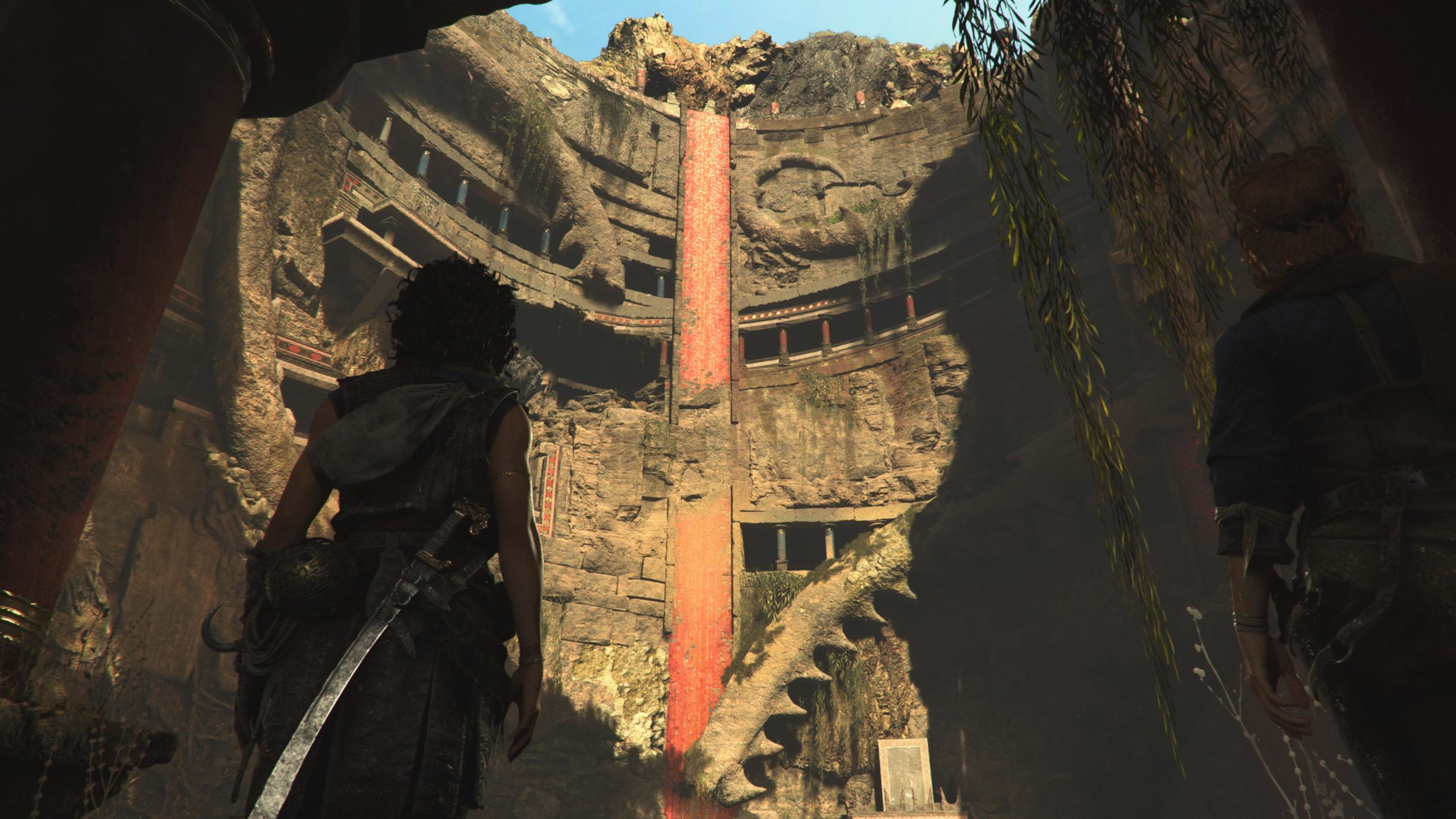
Speaking of the ruins in between all these puzzles for a moment, the level design in Resonance was really quite remarkable. The breathtakingly large pits into which you descend are huge, intricate, interwoven rooms. There’s a fantastic amount of verticality to it all, and a real sense of place. Levels are also not very subtly designed to push you on through the story. Where a Metroidvania might thrive on backtracking, you’ll do almost none of it here. You’re not so much funnelled, but you are constantly falling down small cliffs you can’t climb back up, or sliding down little screes of rock that you can’t go back up. Onwards then, Sophia. There’s no way back.
Becoming Harmonious
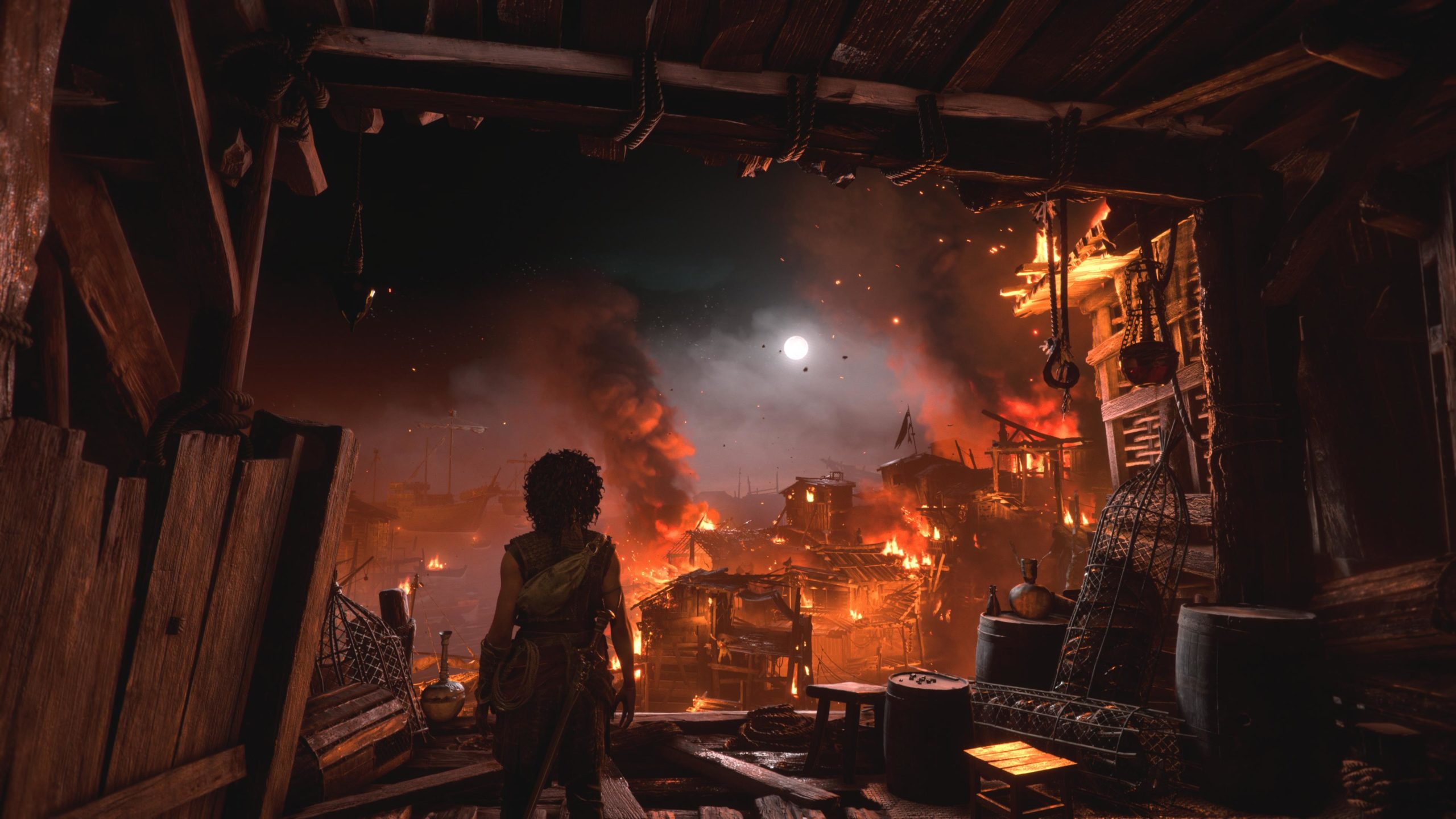
The whole game could be up for awards for art direction and sound design – the vistas you will behold across the island, or impressive rooms deep within, are all incredible. I stopped and took photos constantly more than any other game in recent memory. Sophia’s design, her nuances, Leni’s little at-rest animations, their facial expressions, all works of art.
The sound of the island was also something I came to both love and fear. The sounds that you will come to associate with the terrifying centre of the island, the breathing, the droning, mounting dreadful noises of your descent, are all incredible. The music is full of great choirs singing in traditional Greek styles, but with a real atmospheric cinematic orchestration. It’s only comparable soundtrack really is a few of the themes in the Greek God of War games, or Assassin’s Creed Odyssey. A really exemplary soundtrack.
While I found a few small glitches in this launch build, I’m pretty certain they will be patched before long – they happened less and less as I played, which made me wonder if they’d been solved already. I clipped through a few bits of terrain here and there, got myself stuck and unable to move, and had to reload the section. Thankfully, it was saving every room or two, so it was never very far back.
No Woman Is An Island
Resonance: A Plague Tale Legacy is a highly impressive switch of genre for a team that has already delivered two of my favourite indie stealth horror games of all time. Changing protagonist, switching to an action-adventure shot through with tomb raiding, and somehow injecting it with some of the scariest, most terrifying runs for my life I’ve had to do in all my days of gaming; it’s kind of masterful.
I found the simplicity of design, something I had always noticed in Innocence and Requiem, was still present in Resonance in abundance. Making an incredibly workable combat system for a 15-hour game, devoid of unnecessary builds, weapons, or fluff of any kind, was refreshing. I love when games are still high on gameplay, but it’s all in service of the story and the characters. Resonance: A Plague Tale Legacy, may not quite have the legacy of Innocence itself, but considering how confidently and consistently it has been created, it won’t be the last Plague Tale Legacy story to tell.
Resonance: A Plague Tale Legacy is available now on PlayStation 5 (review platform), Xbox Series S|X and PC via Steam.
Developer: Asobo Studio
Publisher: Focus Entertainment
Disclaimer: In order to complete this review, we were provided with a promotional copy of the game. For our full review policy, please go here.
If you enjoyed this article or any more of our content, please consider our Patreon.
Make sure to follow Finger Guns on our social channels –Twitter, Facebook, Twitch, Spotify or Apple Podcasts – to keep up to date on our news, reviews and features.