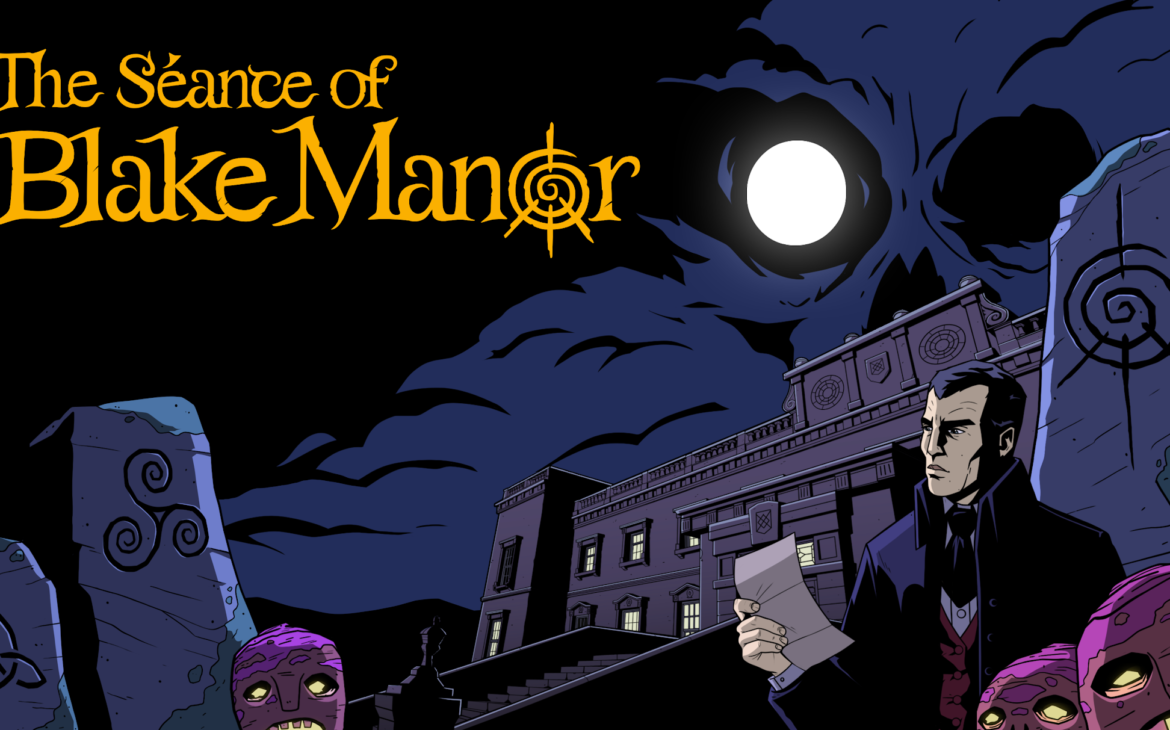
Much like the game’s original autumnal PC release last year, The Séance of Blake Manor now arrives on consoles, with orange leaves piling up on the pavements. I know game ports don’t plan to hit a season; they come out when they’re ready, but there’s something fortuitous about playing The Séance of Blake Manor as we plummet towards the Winter months. With folklore, mysticism and a missing person at the forefront, there’s no better time to grab a trench coat and cosplay as a paranormal Poirot.
The Séance of Blake Manor is developed by Ireland-based studio Spooky Doorway, who has closed many cases with their Darkside Detective Series, but none quite as ambitious as Blake Manor. Whether it’s the game’s breadth of interwoven mechanics, the plethora of lore surrounding its central mystery, or its inspired art direction, it’s safe to say we’re not in Twin Lakes anymore.
Instead, the game takes place in the more grounded but equally as haunted backdrop of 1897’s Cannemora, Ireland – at the titular Blake Manor. You play as Declan Ward, a private investigator who’s anonymously been summoned to the manor to find its missing guest, Evelyn Deane. A séance is taking place in the next couple of days, drawing much company to the Manor. This leaves a lot of room for speculation on how Ms Deane has gone missing, or more importantly, if anyone’s responsible.
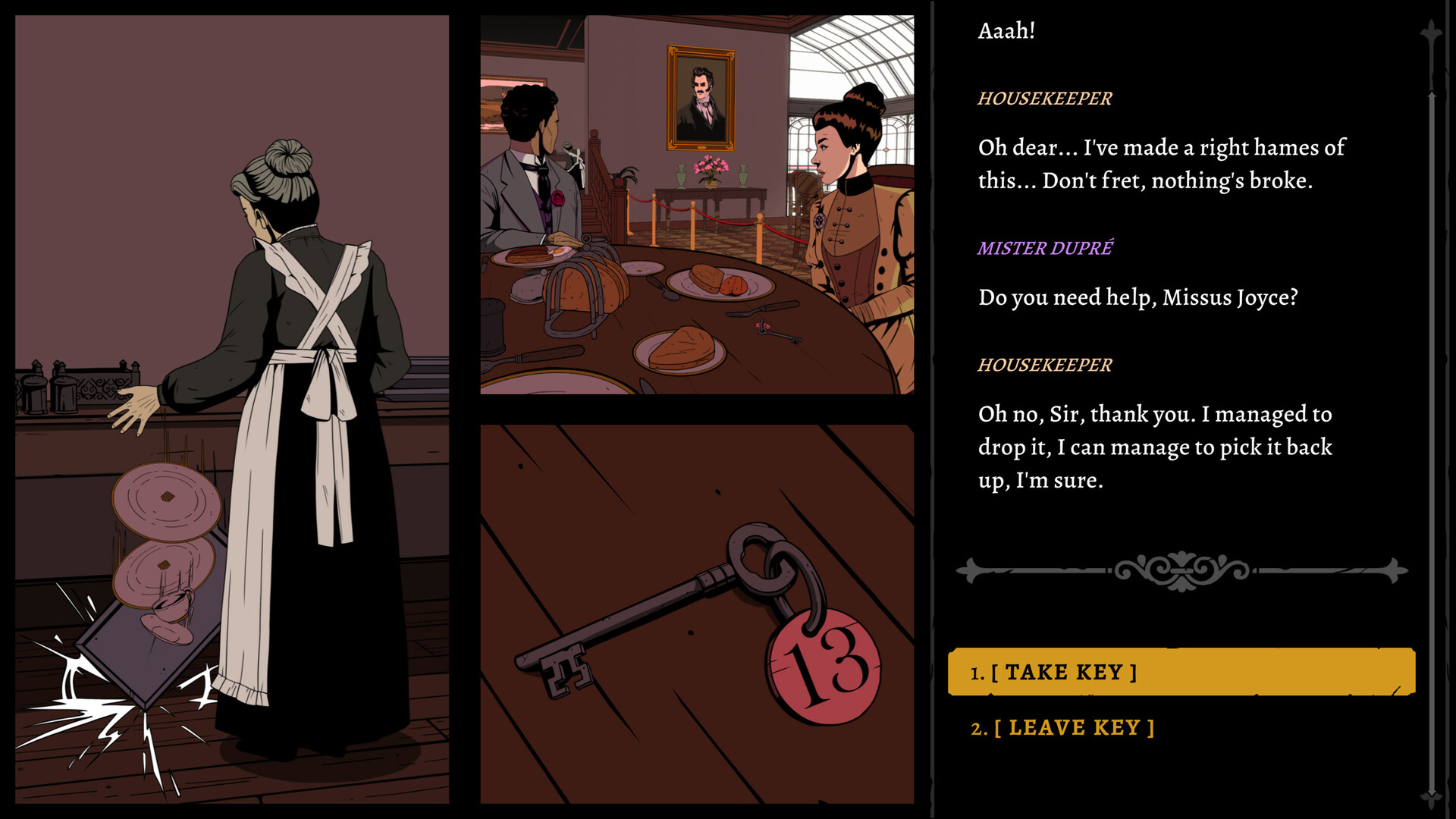
You quickly familiarise yourself with the pervasive mechanic of the game – time. Each action, whether that’s to inspect an item or discuss a topic with a person, is tied to one minute. So now you have to investigate with time against your side. This does mean, however, that roaming freely doesn’t move the time forward, giving you plenty of your own time to make informed decisions on what or who you choose to inspect. With the game’s first-person perspective and 3D comic book style environments, there’s a lot to comb through in Blake Manor, making the perspective an interesting way to digest your surroundings.
It faintly gave me that same sense of time optimisation the Persona series does. However, there aren’t quite Social Links here, but rather cases/mysteries pertaining to each guest/staff member. I’m happy to report that I did everything I could with hours to spare, so don’t feel too much time pressure; you’ll quickly learn efficiency in your investigation. And a lot of investigating there is.
With over 20 characters who may know a thing or two about a thing or two or their own motives for attending the séance, there is a cascading web of observations. This is shown through an incredibly intuitive mind map that you’ll visit often in the menu. The mind map breaks it all down into different mysteries and characters, with connecting lines that help in your deductions. Despite its verbose mind map system, navigating it on console is about as seamless as it can be. Could it feel better? Sure. Though the game’s intuitive use of the controller’s limited buttons has done a decent job of making it feel as good as possible.
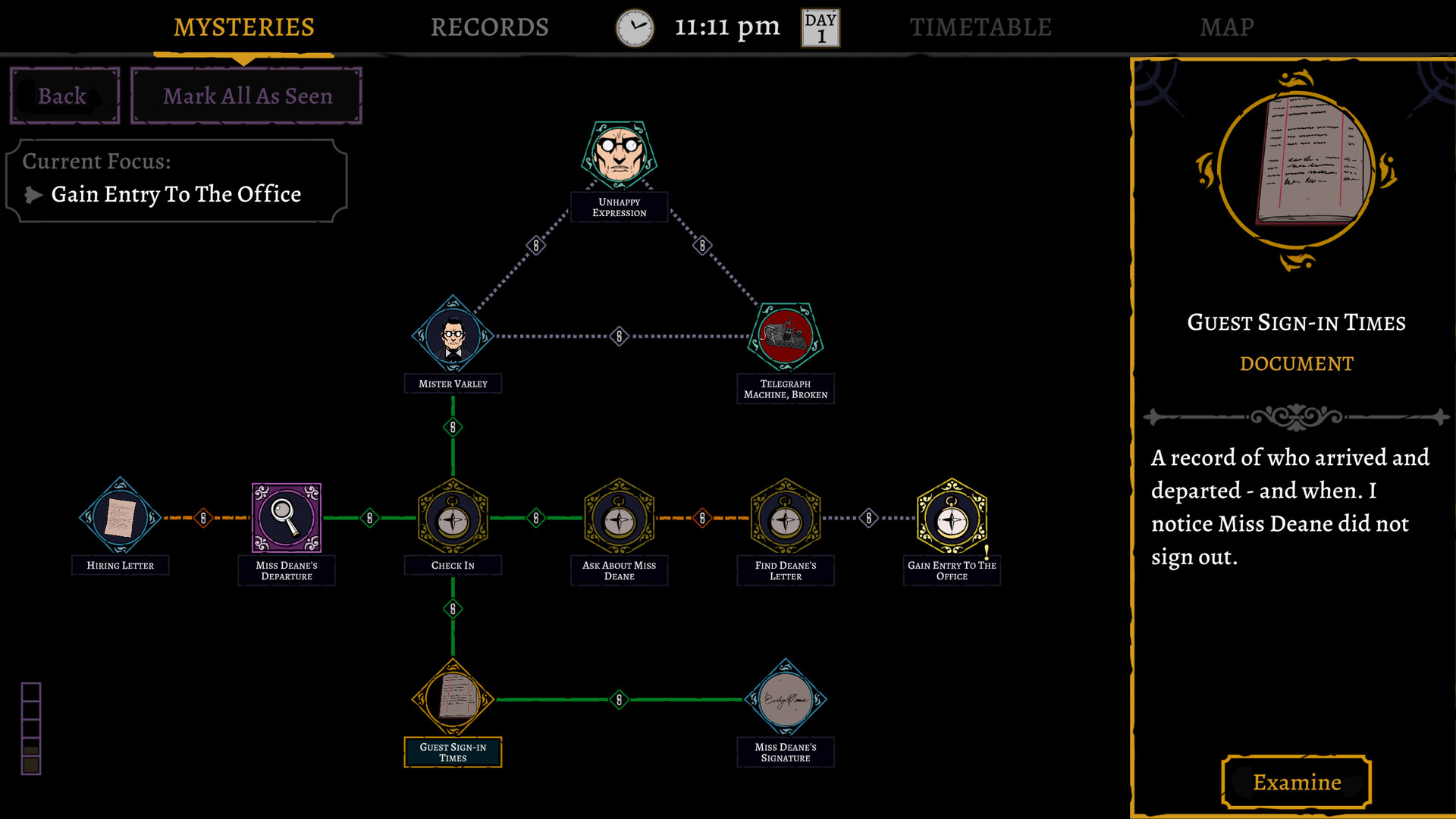
Aspects like assigning R1 and R2 to sift through a pop-up if an item has different actions, or putting the different menus like the game’s map, the mind map, and the guest’s schedule onto each direction of the D-pad, acting as hot keys. It’s a solid effort to make what is essentially a very PC friendly game accessible on different platforms. Which is perfect news, because the moment-to-moment really is sifting through those menus, snooping around your environments and boldly presenting evidence to anyone relevant.
I was hooked. The Séance of Blake Manor does an amazing job of breadcrumbing your journey with smaller, but potentially important breakthroughs, making everything you do feel meaningful. You speak to a character, which gathers information. If you have access to their room, you can find evidence to present to them, giving you more info, and once you’ve collected enough, you can confront the character with a motive. This then leads you down a little side quest, which may uncover evidence against someone else entirely. The idea is to complete each character’s mind map to either rule them out of being responsible for the disappearance or keep them in mind.
In between your evidence gathering, there’s a bunch of puzzles to keep your brain on its toes. This ranges from finding a code that might relate to a box or safe you found hours earlier, to deciphering symbols to unlock guests’ belongings or drawing Sigils to uncover some of the more paranormal elements in Blake Manor. It’s all fairly straightforward puzzle mechanics, but it does a decent job of breaking up the gameplay.
As a result of this fundamentally catchy gameplay loop are intricately written characters. There are connections between them all, one way or another, whilst also being so singular when you deep dive into their motives – and belongings. The writing is steeped in Irish mythology, different aspects of the country’s history and period-accurate characterisations. It’s handled with so much care and detail that I found myself enveloped in the period and the lore of the Manor.
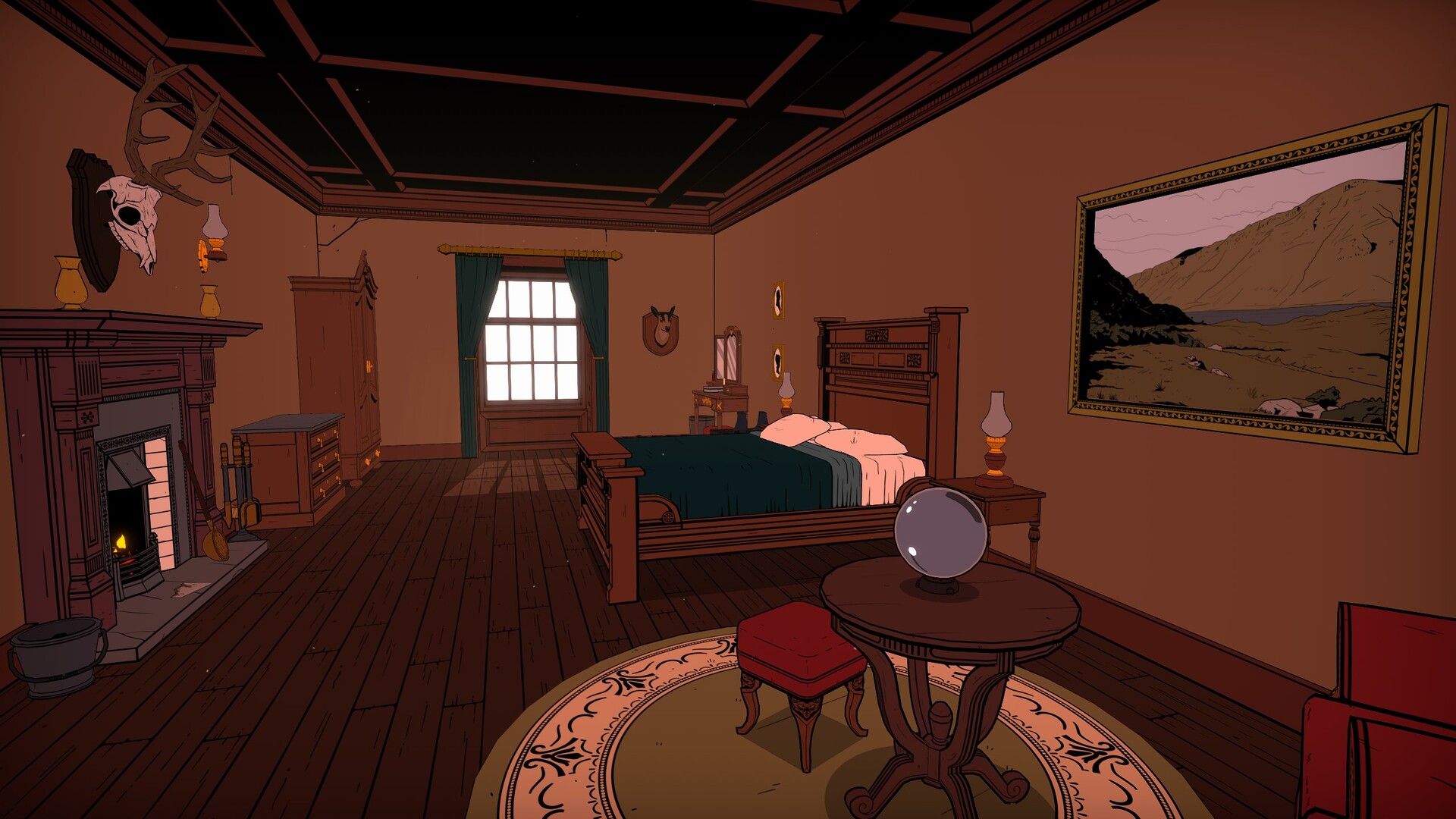
A couple of elements that do hold this back from being something I’d recommend to everyone are the game’s pacing and its gameplay around the last quarter. As you whittle down the list of culprits, the game stops feeling like you’re casting a wide net of info and evidence and instead fishing for something specific. With that comes a lot of laborious back-and-forth across the manor, and a potential sense of being directionless. I could count on a single hand the number of moments where my progression with a character was halted because I didn’t look at, what is usually, a superfluous item.
It could comment on my detective skills maybe, but there is a certain rhythm you get into and a handful of things to look out for when scrubbing for clues. This may sound like a nitpick, but pretty much every object can be inspected, most of it not leading to anything. So when you’re keeping the time mechanic in mind, you do effectively filter out what you’d suspect to be a useless inspection, which ultimately left me stuck a few times as a result. A great way to nudge you in the right direction is checking the mind map, as it gives you a current objective connected to a character or mystery. However, that structure didn’t feel as fun as the more expansive early game did.
Despite those issues I had with it, The Séance of Blake Manor is a great detective mystery. The whodunnit aspect keeps you engaged, the writing of each character keeps you invested, and the gameplay systems urge you to be calculated. It all culminates in something quite special in the end, and I don’t think another game this year has zapped my time away as this has. If you like mystery games or detective games at all, you need to accept your invitation to Blake Manor.
The Séance of Blake Manor is out now for PlayStation 5 (review platform), Xbox Series X, Nintendo Switch 2 and PC via Steam.
Developers: Spooky Doorway
Publisher: Raw Fury
Disclaimer: In order to complete this review, we were provided with a promotional copy of the game. For our full review policy, please go here.
If you enjoyed this article or any more of our content, please consider our Patreon.
Make sure to follow Finger Guns on our social channels. Twitter, Facebook, Twitch, Spotify or Apple Podcasts – to keep up to date on our news, reviews and features.