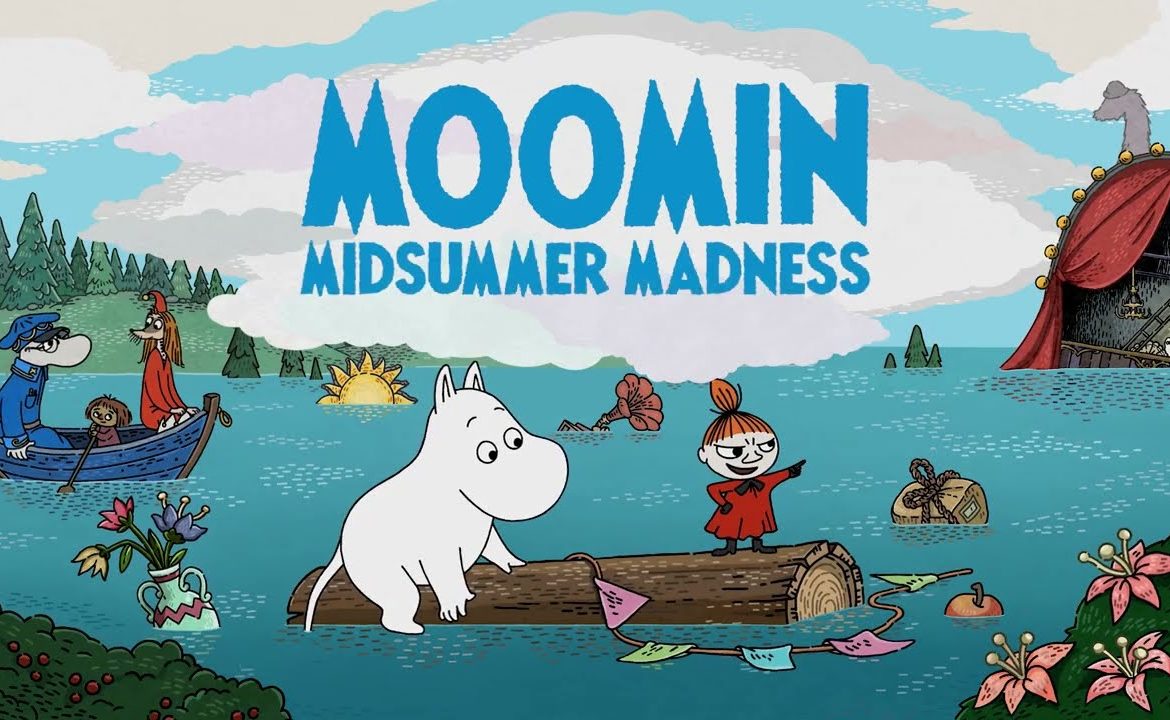
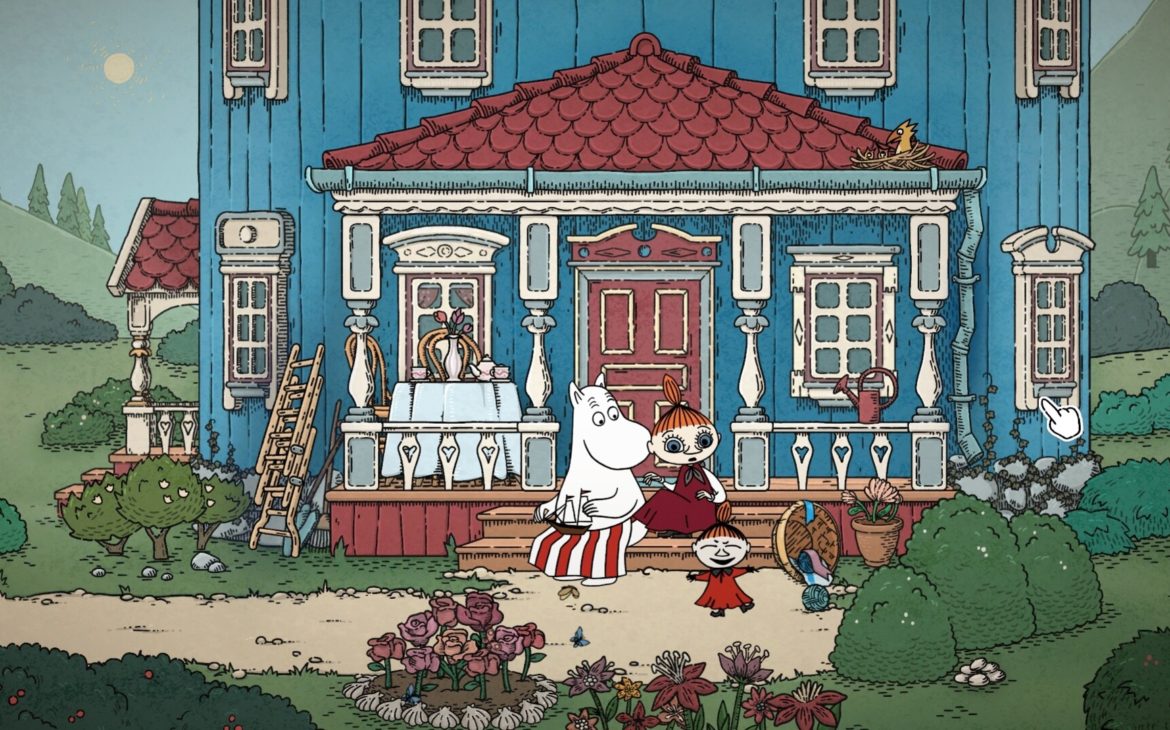
No sooner has the dust settled on the last Moomin game, set in winter but released in summer, than another Moomin title appears, released in winter but set in summer. Seasonal confusion aside, casual Moomin lover, be forewarned – Moomin: Midsummer Madness is a very different game to the last two Moomin games. Where they were open recreations of Moominvalley, and largely set up as pseudo open worlds, Midsummer Madness is a point-and-click adventure. Where they were pastel-like, this has sharp pencil outlines more akin to the Moomin comic strips.
Moomin: Midsummer Madness is indeed a game of a very different genre, but please don’t let that put you off. This one achieves the same nostalgic, ethereal and charming atmosphere as the others, just through a different lens. So, you need more detail? Well, perhaps let us investigate that picture a little closer, you know, for little interactive bits?
Moomin: Midsummer Madness is the story of one very hot, dry Moominsummer becoming an incredibly wet one. Based on the novel Moominsummer Madness, the fifth book in the series released in 1954, Moominvalley is quite literally flooded, so that the sea comes up and sinks Moominhouse. Every creature, not least the Moomins themselves, is displaced and has to survive on boats. For all their quaintness and charm, Moomin stories have never shied away from natural disasters or large seasonal weather events. Tove Jansson was incredibly aware of the natural world, and many of her stories are full of danger, one scene away from playing hide and seek in the forest.
To cut a long story short, the Moomins relocate to a floating theatre, befriend the rat caretaker who lives there and put on a play, while Moomin, Snorkmaiden, and Little My are separated and Snufkin gets involved in Little My’s story. Of all the Moomin stories, it’s perhaps the one that happens in the smallest confines, perfect for a point-and-click, where an adventure across many mountains etc would not have been the best fit. You need places you can return to constantly, tableaus and minigames and such, and this story fits them all.
Parts of the story, including Moominpappa writing a play, and Snufkin dealing with the overeager park keeper, are from this novel and have previously appeared in the recent Moomin games. Midsummer Madness, I think very deliberately, veers away from these particular events, and concentrates on the other plot points, so that despite living in a theatre and putting on a play, you are mostly concerned with Little My and Moomin away from the theatre while that is going on. It’s a deft decision, because in some ways I wasn’t looking forward to rehashing old ground. It was nice that in the end I didn’t have to. This means Midsummer Madness makes a nice companion piece alongside the previous games, rather than duplicating scenes.
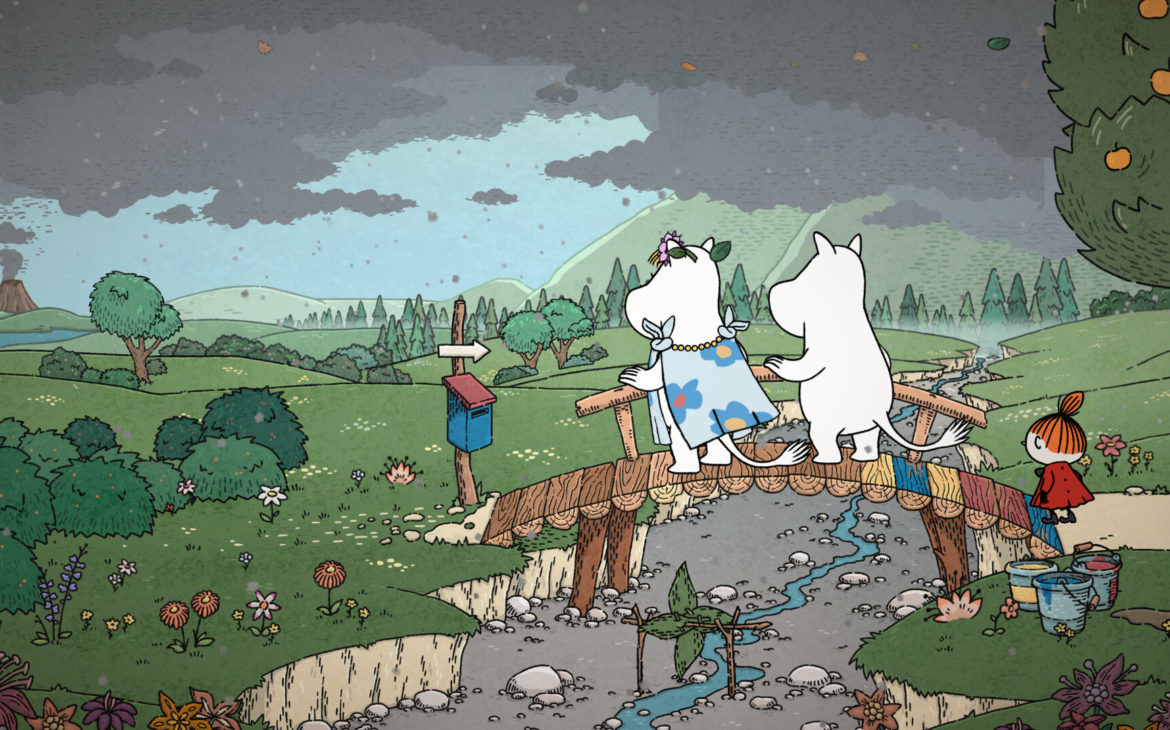
Midsummer Madness is a point-and-click of a pretty classic mould; you point at interactive objects or items in the pictures and settings, and try to pick up things you need to solve particular tasks. For example, pick up a walking stick to give to a top-hat-wearing crab to complete his outfit. You have a backpack to store items, and the Moomin characters will give a variety of clues and tasks across each of the 6 chapters to help you find the solutions.
In addition, again like many classics of the genre, you can combine otherwise less useful items into ones that will solve a problem, such as combining 3 individual jewels with a metal band to make a tiara. However simple this sounds, there are the age-old problems of not guessing what would solve what, not knowing if you’ve found everything, not knowing if you’ve exhausted the available ‘rooms’ or screens, and not knowing if something needs combining. It can be fairly tricky to work these out, but with some trial and error, most could be solved with a bit of out-of-the-box thinking. Each chapter lasted something like 45 minutes, and added together that’s about 4-5 hours total playtime. It’s an interactive storybook, so the runtime and price-point make sense.
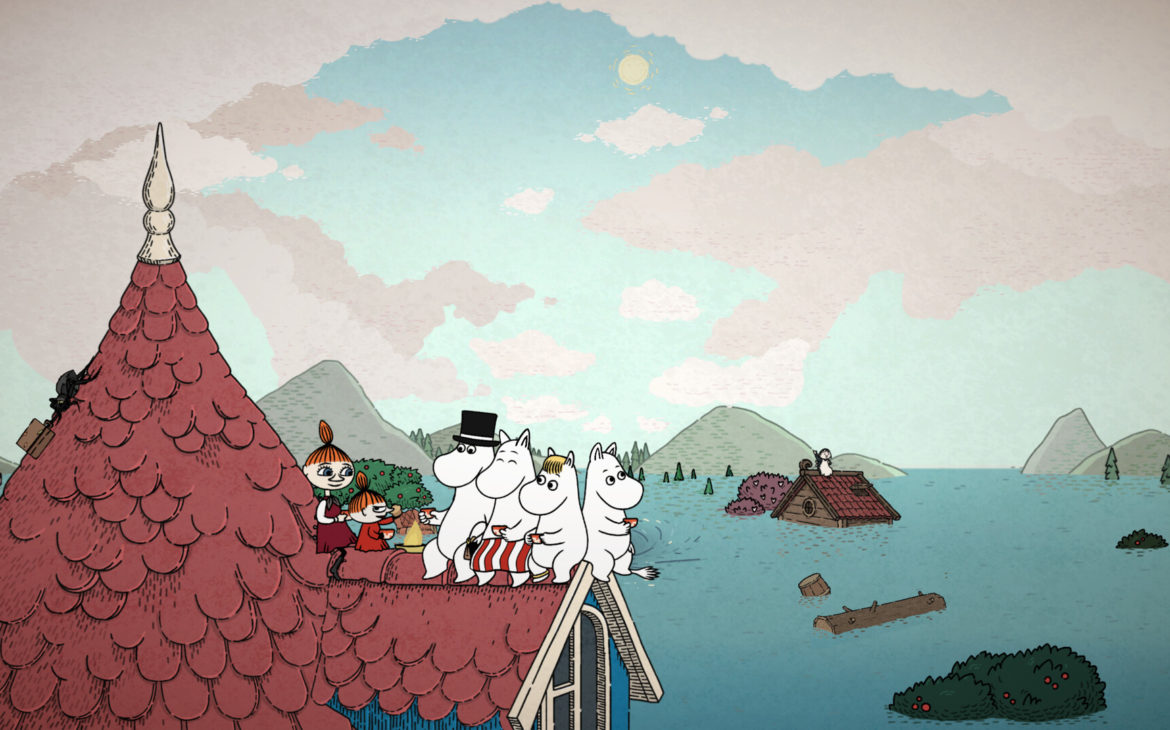
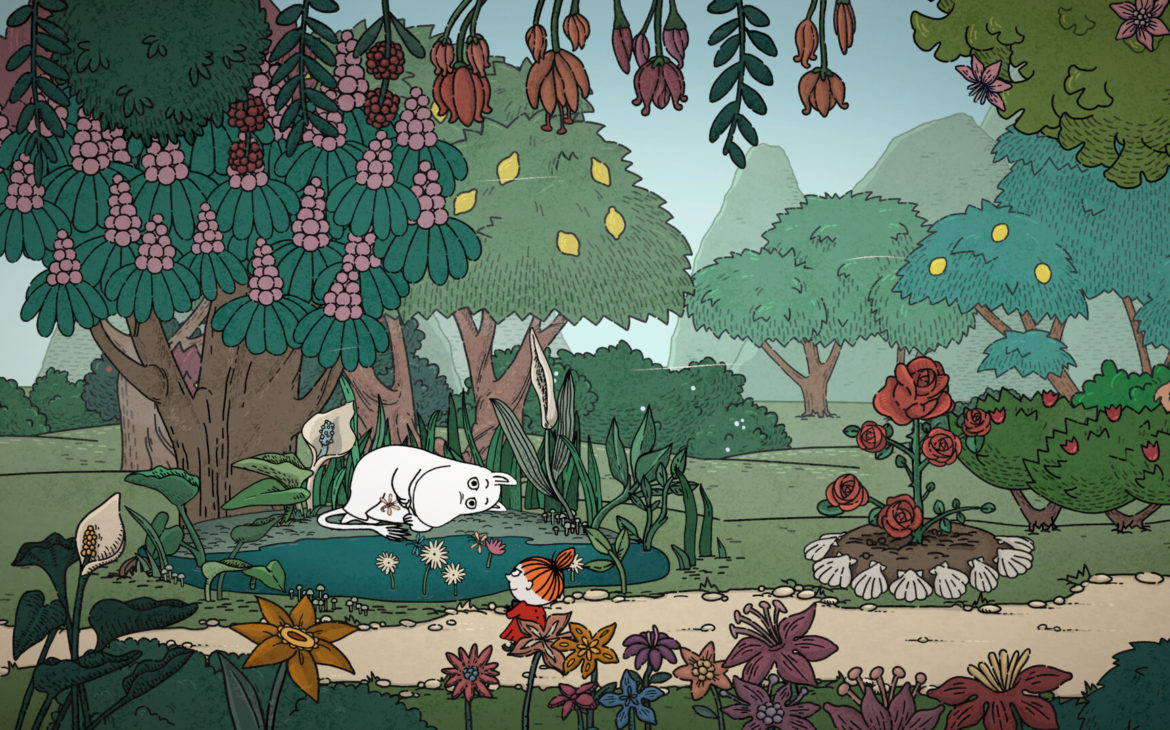
Graphically, Midsummer Madness is a little different from the pastel art of the previous games, opting instead for the sharper outlines of the Moomin comic strip style. The versions of the Moomins here are probably even closer to the original art, especially in some of the lesser-known characters like the Mymble’s Daughter and Emma the Rat. It’s a lovely style, and as a fan of Moomins for many years, I couldn’t pick a favourite between this and the previous games.
While this Moomin title doesn’t have Sigur Ros on the soundtrack, it does manage to create a very quaint and charming atmosphere through music, with sort of doo-wop and vocal jazz stylings. I get the feeling it’s the kind of music Moominpappa would listen to while writing his memoirs or sitting on the veranda.
I tried to play Moomin: Midsummer Madness with a five-year-old, and though they were interested in the Moomins and the solving of the puzzles, it was only when a solution worked that they were engaged. When we were floundering in the ocean without a paddle, as it were, they became bored and frustrated. I would suggest adults buying the game don’t buy it for under sevens or at least play it alongside any younger children, as there is a fair amount of out-of-the-box thinking and guidance needed that really young children just don’t have the patience for, or the experience.
Even as an adult, I found some of the puzzles tricky, and was not always able to find a solution to an issue quickly. The UI doesn’t always help you to see when you are missing interactive items (although there is a button for this), or when to start combining them. It took me a very long time to work out how to move Edward The Booble, for example, or to traverse the Little My attic junk maze, so much so that I had to skip the third iteration of the puzzle.
This is why I would suggest adult supervision if the game is given to kids, as you don’t want it to be given up on when it’s as charming and wholesome as it is.
I find it refreshing that we’ve got a third Moomins game and it’s a different genre. Not every game in a particular IP needs to fit the same mould, and the wholesome nature of the Moomins would fit a fair number of more considered genres that require reading and patience. The Moomins look like they are aimed at children, and they are, but just be aware that really young children may find this one too involved and too difficult to engage with. If you have older children, have at it; develop their lateral thinking.
I found the point-and-click genre to fit Moomins in a pretty obvious way, perhaps more so than the open-world quests in Moominvalley that the previous titles went for. This latest title sticks closer to being a truthful rendition of a particular Moomin book, and works well as an interactive storybook, even if it misses out key scenes like the play itself. However, it’s not very original, and it’s not doing anything I haven’t seen in countless point-and-clicks over many decades. The artwork is lovely, but the UI is not always your friend, and the minigames are fairly generic.
Moomin: Midsummer Madness is out now on Nintendo Switch (reviewed on Switch 2), and PC via Steam.
Developer: Crossbridge Game Studios
Publisher: Shochiku Games
Disclaimer: In order to complete this review, we were provided with a promotional copy of the game. For our full review policy, please go here.
If you enjoyed this article or any more of our content, please consider our Patreon.
Make sure to follow Finger Guns on our social channels –Twitter, Facebook, Twitch, Spotify or Apple Podcasts – to keep up to date on our news, reviews and features.