

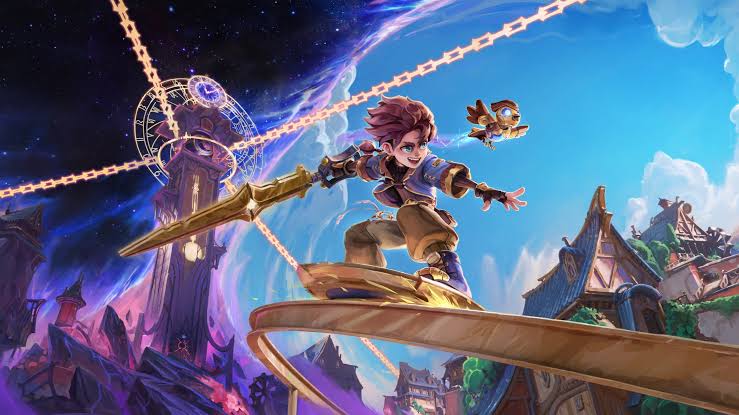
Developers Weird Beluga are back with Duskfade, a game so much more ambitious, so much more beautiful than their last, Clid the Snail; it’s really great to see the growth in the studio. I said back then that I could see great potential in the studio for future projects.
But ambition is only intent – a coherent and enjoyable game is not guaranteed. Duskfade is a combat platformer in the vein of Kingdom Hearts mixed with Spyro the Dragon, areas are open plan rather than funnels of tricky jumps like Rayman or Crash Bandicoot. There’s a ton of collectibles, some Heartless-kinda enemies to fight, and a plot to save your sister from an evil magical clock tower. Ambitious, yes. All the hallmarks of a great platformer? I hope so.
Fade In
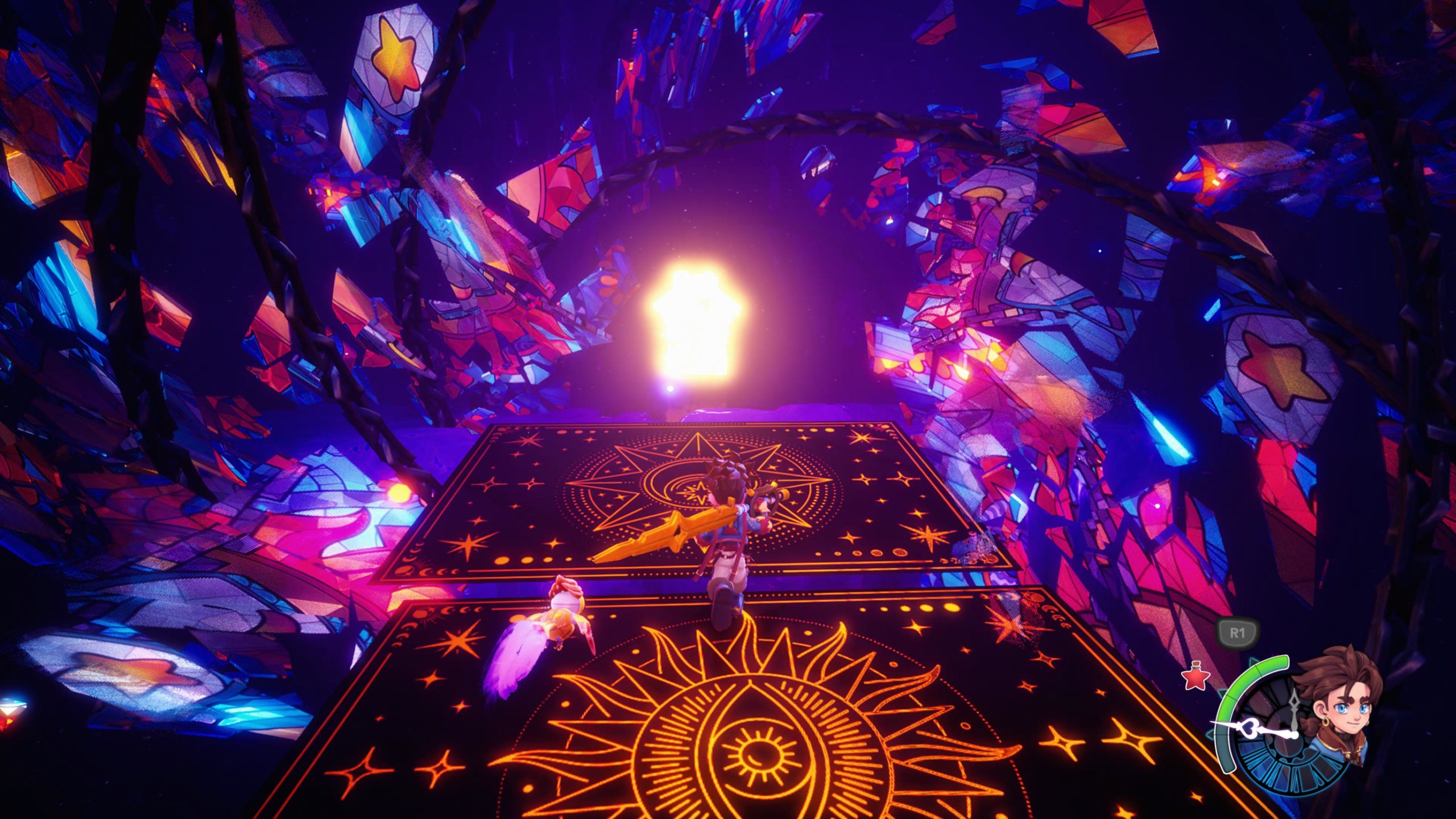
To begin with at least, that hope is a little misplaced. Duskfade has a really pretty but very disjointed opening that tries to set up maybe too much with too little screen time. Later in the game, through dialogue, much of the game world and creatures have explanations, but the exposition at the top leaves much to be desired.
You play as Zirian, who comes home one day through lonely but pretty Tick Town, trying to cope with the recent loss of his grandfather. His sister Allira has dealt with her grief by locking herself away in their grandfather’s clock-workshop. Suddenly there’s a big explosion from within as Zirian tries to open the door, and whatever Allira was working on in there has torn reality across Tick Town and the realm of Tearfeld at large. When Zirian wakes, he finds his sister locked at the top of a great big clock tower that has appeared at the centre of the world, but it can only be opened by destroying four far-flung chains. Cue your incentive to explore all four points of the compass and your ultimate goal – save your sister.
Though that summary probably sounds succinct and straightforward, Duskfade struggles to show or tell its narrative in a coherent way, you kind of have to piece everything together yourself. It’s a fairly cumbersome opening, but don’t let that deter you. There’s probably a fairly good argument for speeding through into gameplay and exploration rather than spending too much time on lengthy exposition. But in this case I think the opposite extreme was taken, too little to really feel connected with the world.
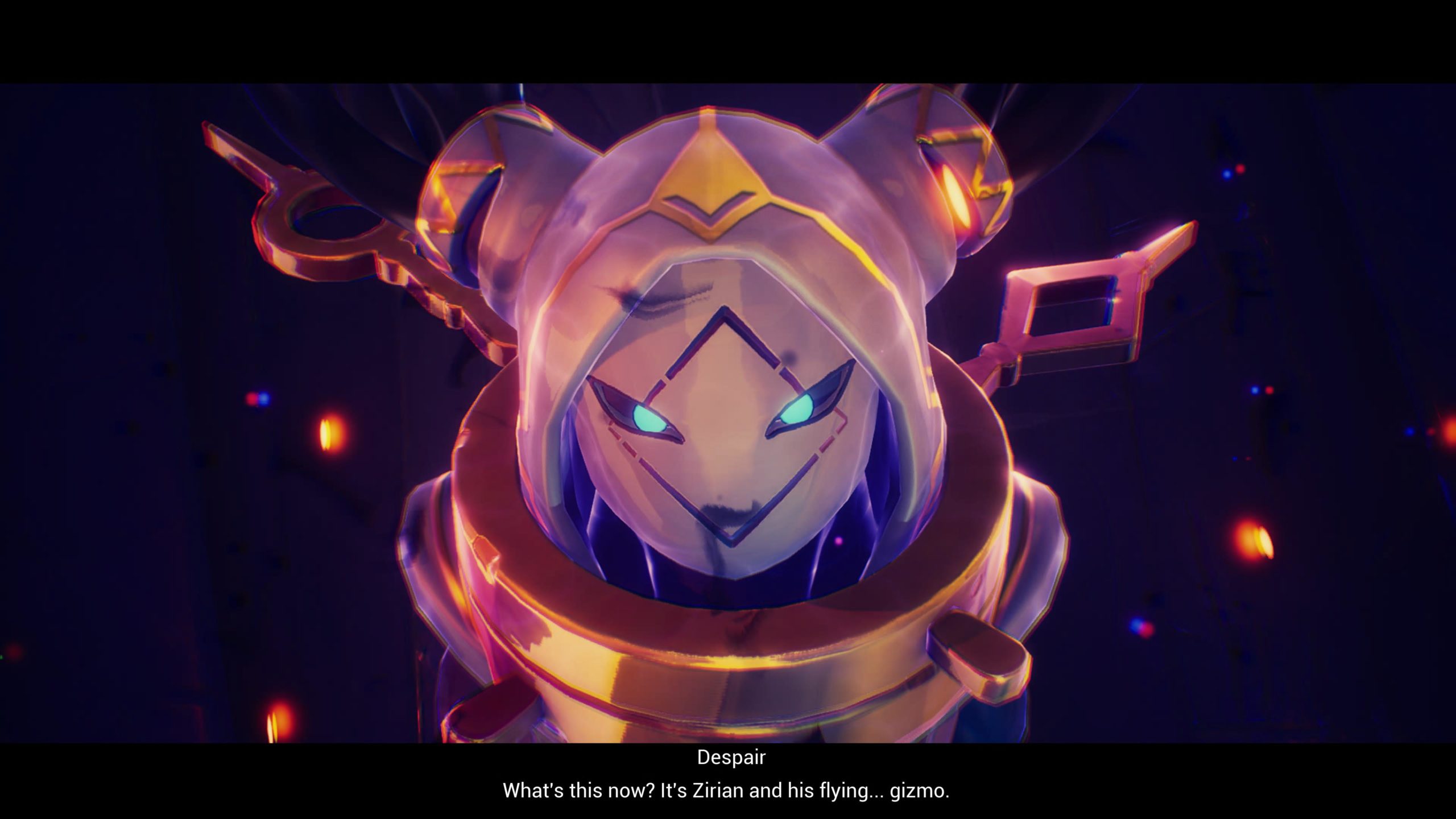
With barely any idea of where to go, or what to do, once you are out of town, things do thankfully start to fall into place far more smoothly; you are joined by a slightly snarky and equally clueless clockwork bird companion called Cuckoo (clocks, right); there are dialogue sections, NPCs to talk to and slowly but surely the world of Duskfade starts to take some kind of shape. You and Allira really are the only humans, and there’s a fair bit of backstory to learn regarding the clockwork world and their grandfather. There’s a fairly interesting villain in the form of hooded and pigtailed-with-darkness Despair (loving the design on her) who Zirian and Cuckoo meet as they head for the first chain’s landfall, and the scenes with her are fun, better directed, and start to fill out a story I could get on board with.
I didn’t like the little tears in time that had little vignettes of dialogue; I find these types of tableau vignettes are like microstories with nothing to grip onto, and they did nothing for me. Duskfade succeeds in telling its story far more so than Weird Beluga’s previous project, with higher stakes and characters and a scenario that young players and adults alike can feel connection with. As it progresses, the story does get better, but it’s never stellar. It treads over the same ground for a long time, until I, for one, had long guessed the twists before they came. There are a lot of scenes dealing with grief lessons and Cuckoo and Zirian learning to get along, which were nice if a little heavy-handed.
Never Fade Away
In terms of gameplay, Duskfade feels a lot like Kingdom Hearts – there is light platforming, with a fairly high amount of forgiveness for accuracy. You have a double jump and a roll and eventually even a grapple, and between them these powers mean you can jump and string together moves to reach virtually any platform.
Duskfade is structured into four linear paths towards the chain’s landfalls, but within those paths, the actual level design is really quite imaginative and expansive – real standouts included the Starstone Mines, and the sprawling underwater academy that spanned a huge, breathtaking library and two bosses. I appreciated there was a linear path, but that it was never really straightforward – it was often hidden round a corner, or diagonal, or involved a really massive jump that you couldn’t see until you’d explored or elevated. Just little things that made it feel like the level design was doing something just a bit novel.
That said, it sometimes was too hidden – Duskfade can feel like it’s not very confident of itself. The level design is leading you where to go, but then instead of letting you find your own way there, it then adds a secondary bell system to lead you literally by the nose, corner by corner. It struggles to handhold enough in the story and narrative, but then there’s too much handholding in the gameplay.
If I’m being picky, I found Zirian very light on his feet, feeling a little floaty and weightless. I said the game is very forgiving in the platforming department, and it is. You can die, but you rarely will from jumps or falls. Where you’ll die is in combat.
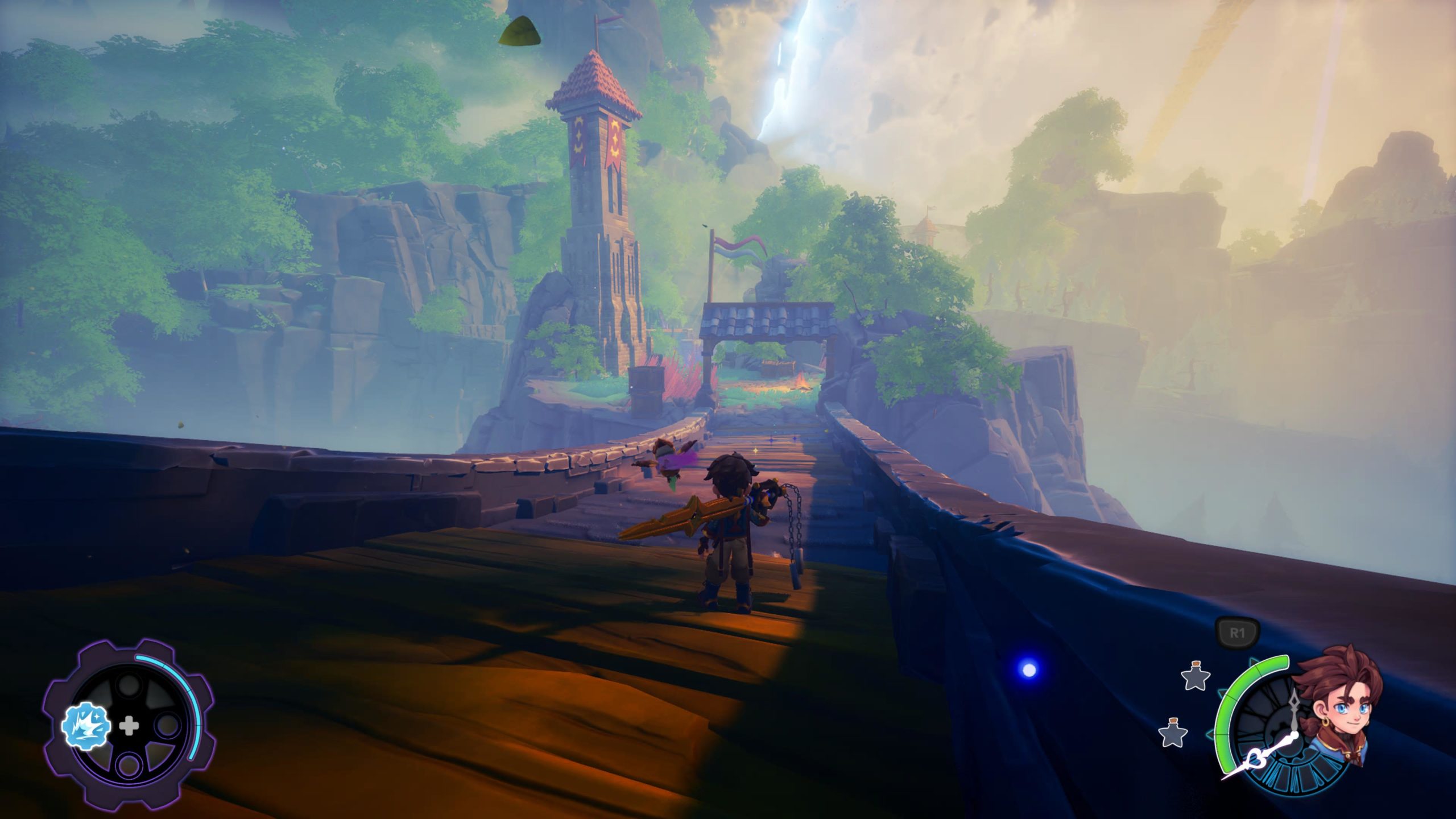
From Dusk til Dawn
In combat, Duskfade can feel even more like Kingdom Hearts, but I’m afraid a Kingdom Hearts that achieves kind of less, but with more ingredients. There are more controls here, more dodging, projectiles to bash back, and a variety of powers like time slowing, but while that would make me think combat would be more engaging, it isn’t. Kingdom Hearts features a lock-on that moves from heartless to heartless and allows you to clear them all while really just button-mashing, and Sora looks fly while doing it. The same lock-on in Duskfade has you bouncing around, not knowing quite what you’re doing, what enemy you’re facing, often not the closest one, and not connecting with your sword, generally not looking fly.
You actually have to fight; you actually have to take a more considered approach, such as to dodge out of the way, or hit back projectiles, but the system doesn’t give you the kind of tight responsive controls and movement you’d need to pull it off. In combat, Duskfade still feels floaty. This is not Stellar Blade, or even Kingdom Hearts; it’s just not responsive enough.
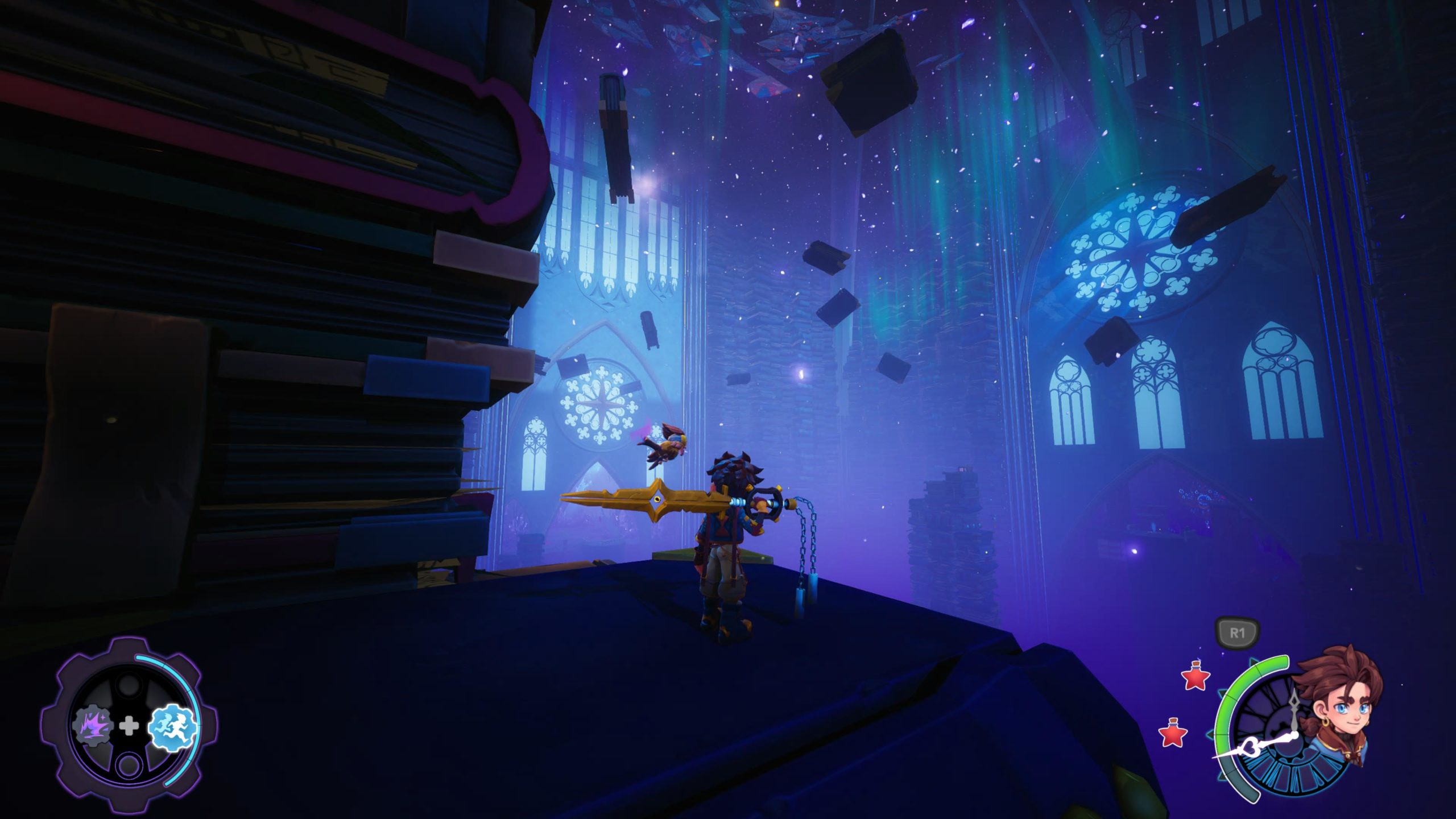
To top it off, the enemies are relentless, highly motivated to kill you, and hard. You only have a single health potion until around the halfway point of the game, when you’ll net yourself another. Your health bar is poor and very easily depleted. You must engage with the systems that don’t perform particularly well, and fight your damnedest with floaty controls.
The upshot is that I ended up not finding the combat, in a combat platformer, even remotely engaging. I would avoid it whenever possible, often by just continuing to move forward until I was out of the enemy’s perimeter of attack and awareness. Kingdom Hearts usually stopped you doing that by locking the area until the enemies were cleared, and Duskfade does that on occasion, but not that often.
The only times I found combat engaging were the bosses, which in many cases were multi-staged, but also involved platforming and reaching new areas or heights to continue the fight. Many are based around a personification of an extreme emotion, and tied in with the themes of grief Zirian and his sister are battling with. Maybe a little on the nose, but hey, it’s a kid’s game. I really liked having platforming in the bosses, and it elevated them into the kind of fights you remember from Nintendo’s best platformers.
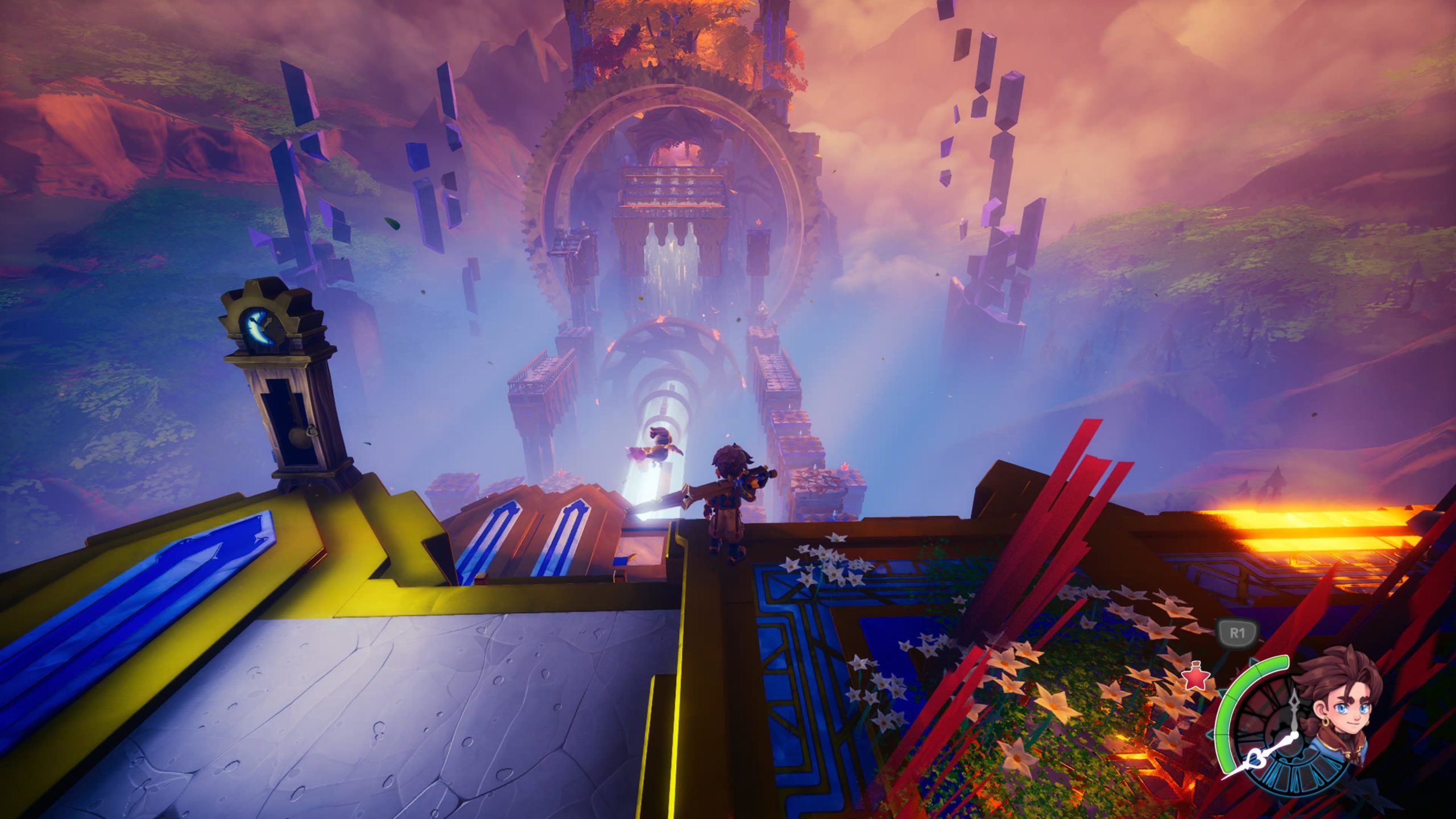
Red Sky At Night, Shepherd’s Delight
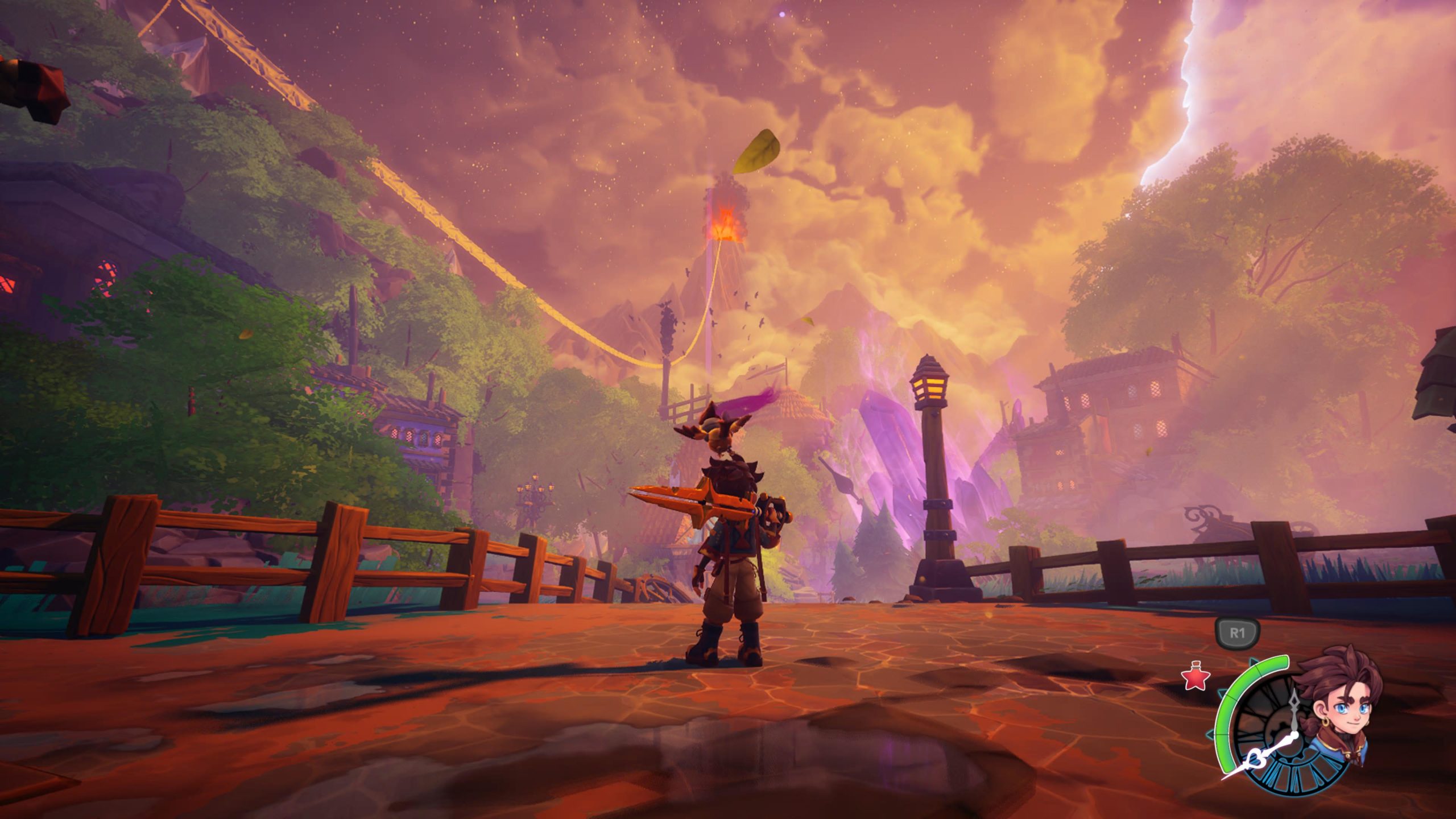
Let’s talk about more elements where Duskfade shines. Every level is full of beautiful scenery, and has a real 90s platformer fantasy vibe, like the best Spyro levels or the medieval-themed levels from Crash Bandicoot Warped. I found them constantly impressive, and as you will see from the screenshots, I kept stopping to take in the view.
I was also impressed by the music throughout Duskfade, from basic town music with a good hook, to cinematic pieces in high-tension scenes. I particularly liked the way each level had its own theme in keeping with the area and the visuals – for example the Starstone Mines you visit a few levels in had a wonderfully Final Fantasy-like refrain and instrumentation that made me think I could Hear The Cry Of The Planet. Sound and visuals are doing the heavy lifting and really make Duskfade stand out and appeal to those nostalgic for that 90s platformer feel.
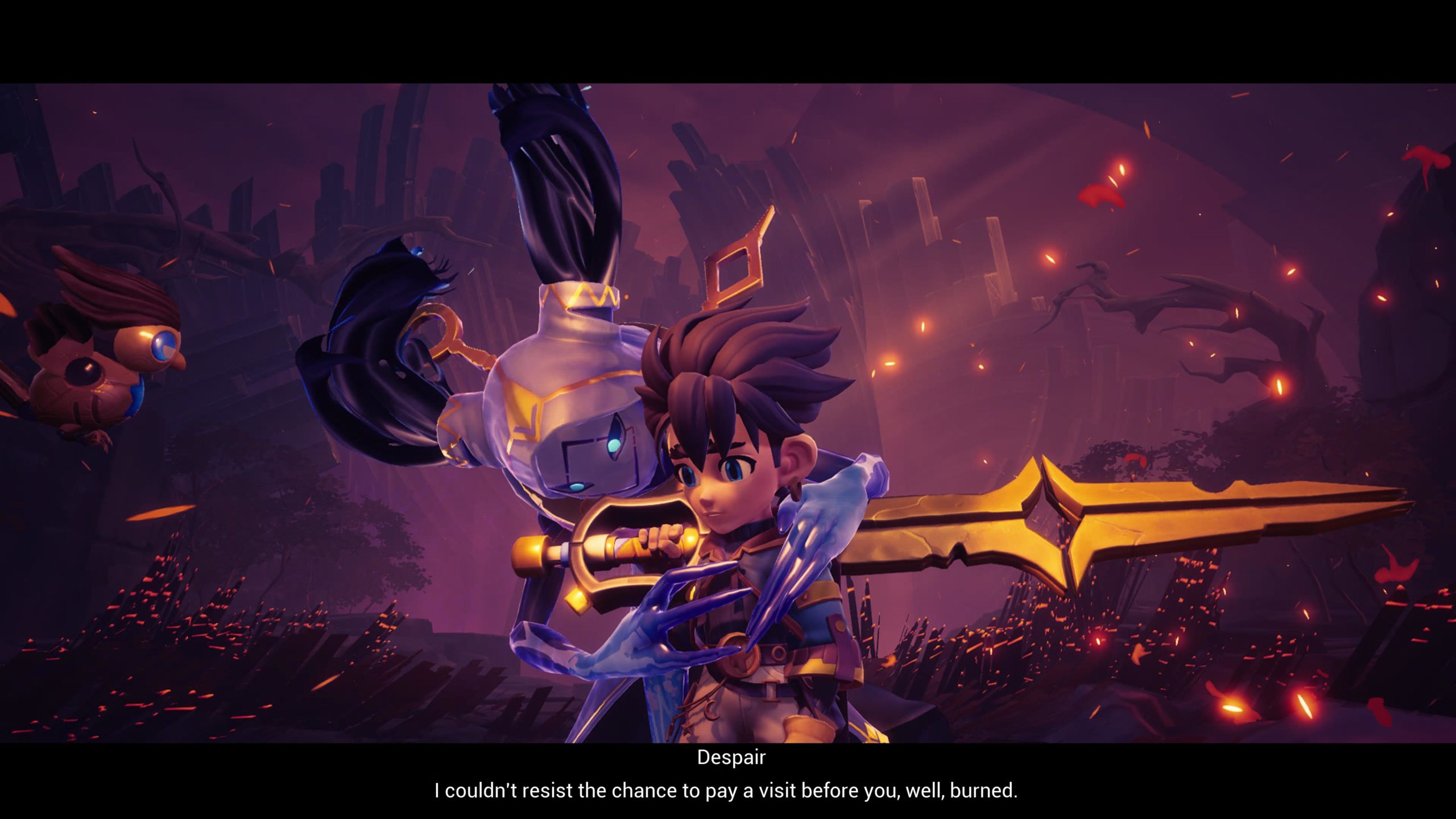
Fade to Black
So, no Duskfade doesn’t quite have the confidence and flare of perhaps Square Enix’s Kingdom Hearts, or Naughty Dog with Jak and Daxter in the PS2 days. Those were big studios at the top of their game, and with a lot of experience. As a first platformer, on modern hardware, from an Indie studio, it’s more than worth your time, especially if you are nostalgic for those kinds of platformers that we are starved for these days outside of Nintendo properties.
Duskfade has a beautifully lit and designed world, perhaps a little too ambitious for its own skills. Combat and platforming both can feel fairly floaty and there’s relatively little challenge, but what’s here is a fun time, after a rocky thirty minutes or so. The characters, dialogue and narrative had enough in them to compel me through to the end, and it really has some jaw-dropping vistas to behold. It’s just a shame that the gameplay is nowhere near as compelling as the sounds and visuals on offer.
Duskfade is available now on PlayStation 5 (review platform), Nintendo Switch 2, Xbox Series S|X and PC via Steam.
Developer: Weird Beluga
Publisher: Fireshine Games
Disclaimer: In order to complete this review, we were provided with a promotional copy of the game. For our full review policy, please go here.
If you enjoyed this article or any more of our content, please consider our Patreon.
Make sure to follow Finger Guns on our social channels –Twitter, Facebook, Twitch, Spotify or Apple Podcasts – to keep up to date on our news, reviews and features.