

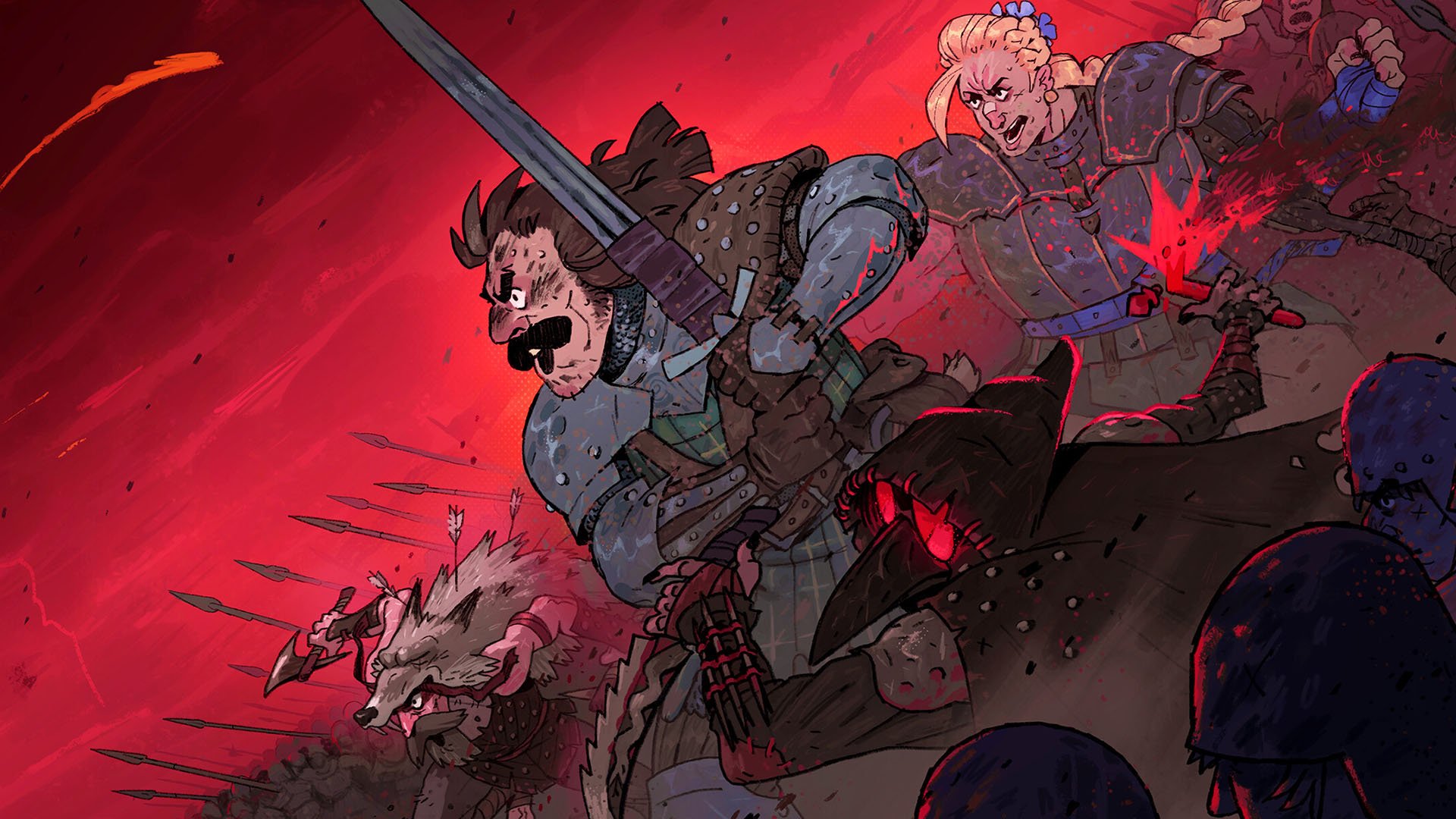
I’ve gotten to a point of apprehension when it comes to roguelikes. There are so many, and some have even perfected the formula, that I find it hard to jump two feet into a new one. Tears of Metal is an exception to that, however, as developer Paper Cult have already proven once before – at least for me – that their foray into genre isn’t one to be looked over. Of course I’m alluding to the developer’s previous title, Bloodroots, a criminally underrated isometric “one-hit kill die-retry murder bullet”; think Hotline Miami if it was a Tarantino Spaghetti Western. With this new release, though, Paper Cult have swapped out carrots to the eye for large-scale battles on the Scottish Isles, as you lead a battalion of soldiers to reclaim your island.
Tears of Metal is a roguelike with muso-style gameplay and a huge helping of style. Paper Cult are on a streak for creating 2D hand-drawn assets and realising them in a 3D game, with this release being their greatest example. There’s a gritty realism to the game’s colour palette, with accentuated and jagged geometry creating an incredibly distinct look overall. There are a lot of browns, greys and greens used across the landscape, making the blood of the enemies you slay pop on the screen. Whilst Tears of Metal rightfully is getting compared to Dynasty Warriors, it feels more aligned with Berserk and the Band of the Hawk. Both gritty, grounded and brutal. It’s what initially grabbed my attention when seeing the trailer; that and the controlled chaos of its gameplay.
Spoiler: Yes, it has that one-more-run addictive quality. For a plethora of reasons like Tears of Metal’s meta progression, the variety in builds that you can customise, and its moment-to-moment gameplay. For the uninitiated on what Muso games are, the gameplay features 100s of enemies on screen that you can hack-and-slash fairly easily and thoughtlessly, with a couple of harder enemies that require more skill to take down. Different characters you play as have varying move sets and stats for you to learn and acclimatise to, hopefully enabling you to lean into a certain playstyle you prefer. I mainly played as the starting character, Wallace, the kilt-wearing, sword-wielding leader of the battalion.
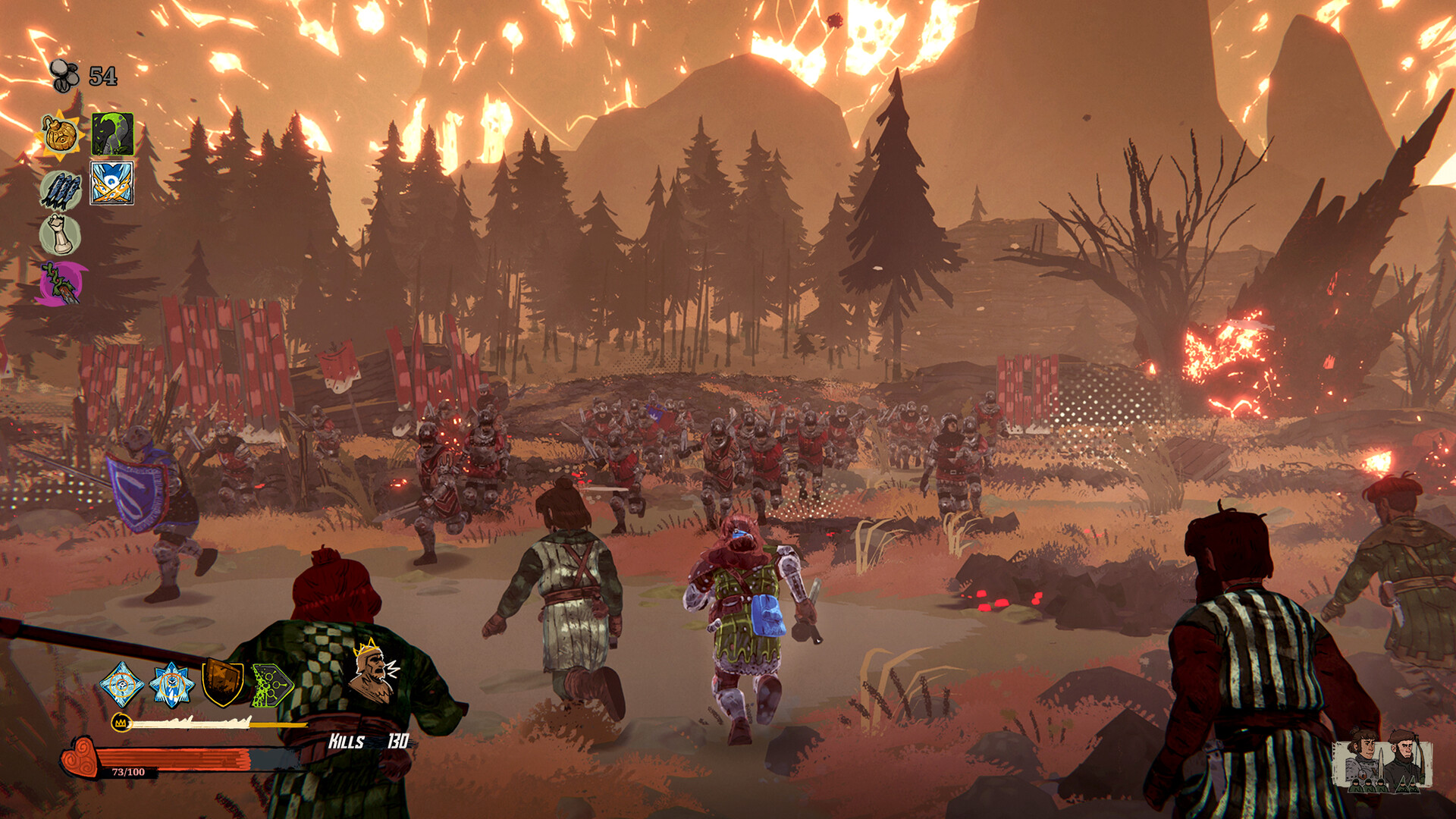
He is the most well-rounded of all the characters; he doesn’t excel at one thing or another, but is a great baseline for learning the game’s intricacies, of which there are a surprising number. The hack-and-slashing is the general moment-to-moment that feels kinetic and responsive, but you also have special moves that require combo-style inputs. These are stronger attacks that are paramount to utilise to ensure you don’t die. Mixing both your standard combos with the special attacks feels incredibly satisfying when you see your combo counter shoot up after every kill. Then you have your block, which, timed correctly, can also act as a parry. It nicely breaks up the mindless slaying of foes with some thoughtful strategy when you’re facing some of the bigger enemies, feeling more like character action games from this decade (Hi-Fi Rush, Stellar Blade, etc.).
Another aspect of the proposed strategy is that your health doesn’t regenerate. You can either regain some through paying a currency at a shrine or scouring the map every level to find food. The latter would be fine, but if you’ve completed the mission on that level, you only have about 20 seconds left to explore it before you move on. This is one of my current pet peeves for Tears of Metal, as it’s not just health pick-ups but currencies or chests I can unlock that may also be missed if I’m not quick enough before moving on. I mostly circumvent this by picking up as I go along, but it does slow down the pacing in what is otherwise a game jam-packed with action.
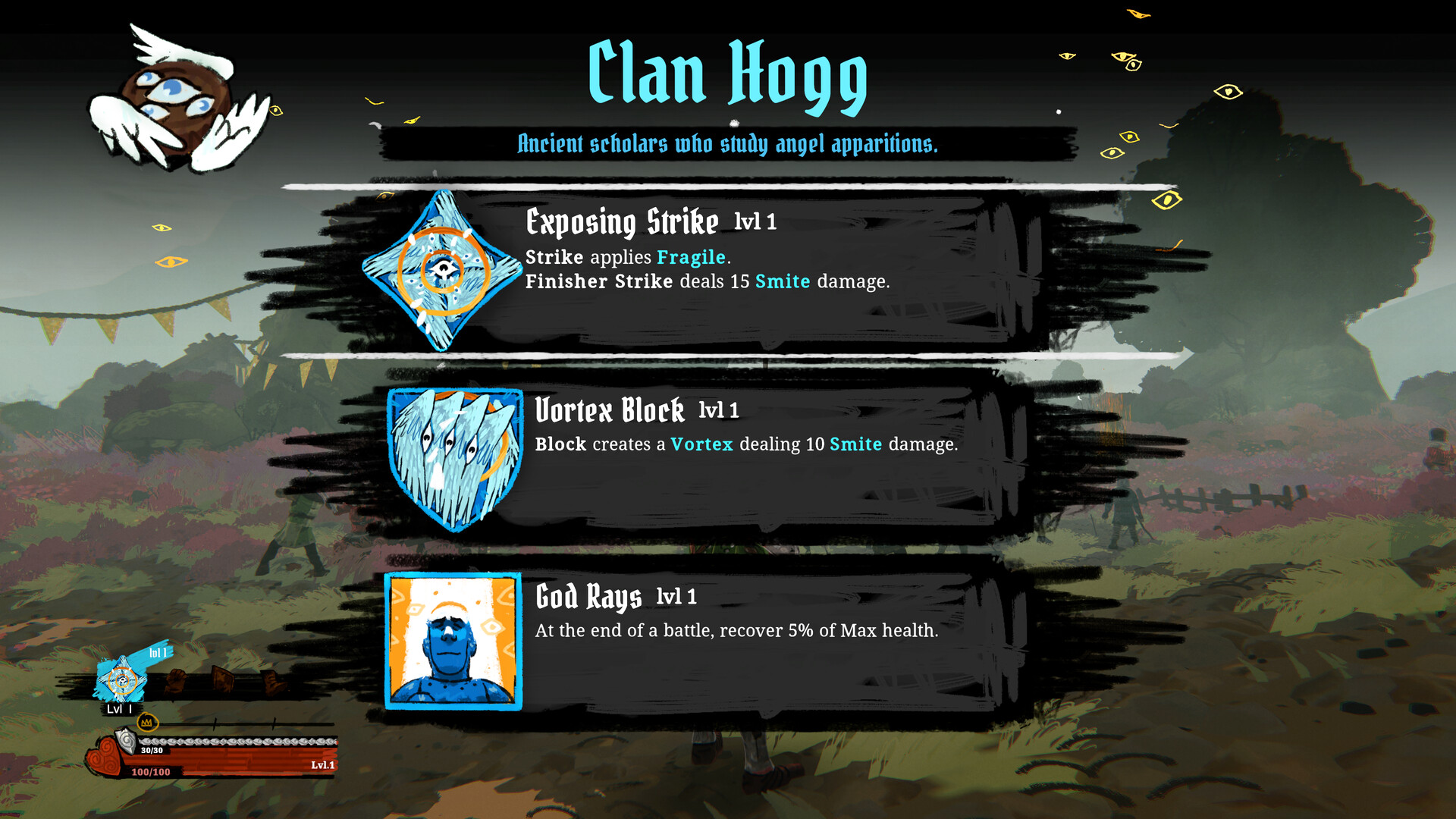
Other ways to keep yourself alive in battle are to call upon your battalion to do your bidding. Before every run, you can choose who goes on your expeditions with you. Your fleet is broken down into swords, spears, and bows, with each member having their own perks that benefit you. It’s incremental as far as I’ve played, like 10% HP bonus or better blocking but it feels like the ceiling is high for this. You can also level them up, making your fleet generally more powerful and helpful, as they fight alongside you. A variety of each is good because it means you can call to action a few different ways when in battle. You’ll build up a meter as you defeat enemies; this enables you to command your fleet to do attacks like arrow barrages in a focused area, or send your sword fleet to attack one enemy.
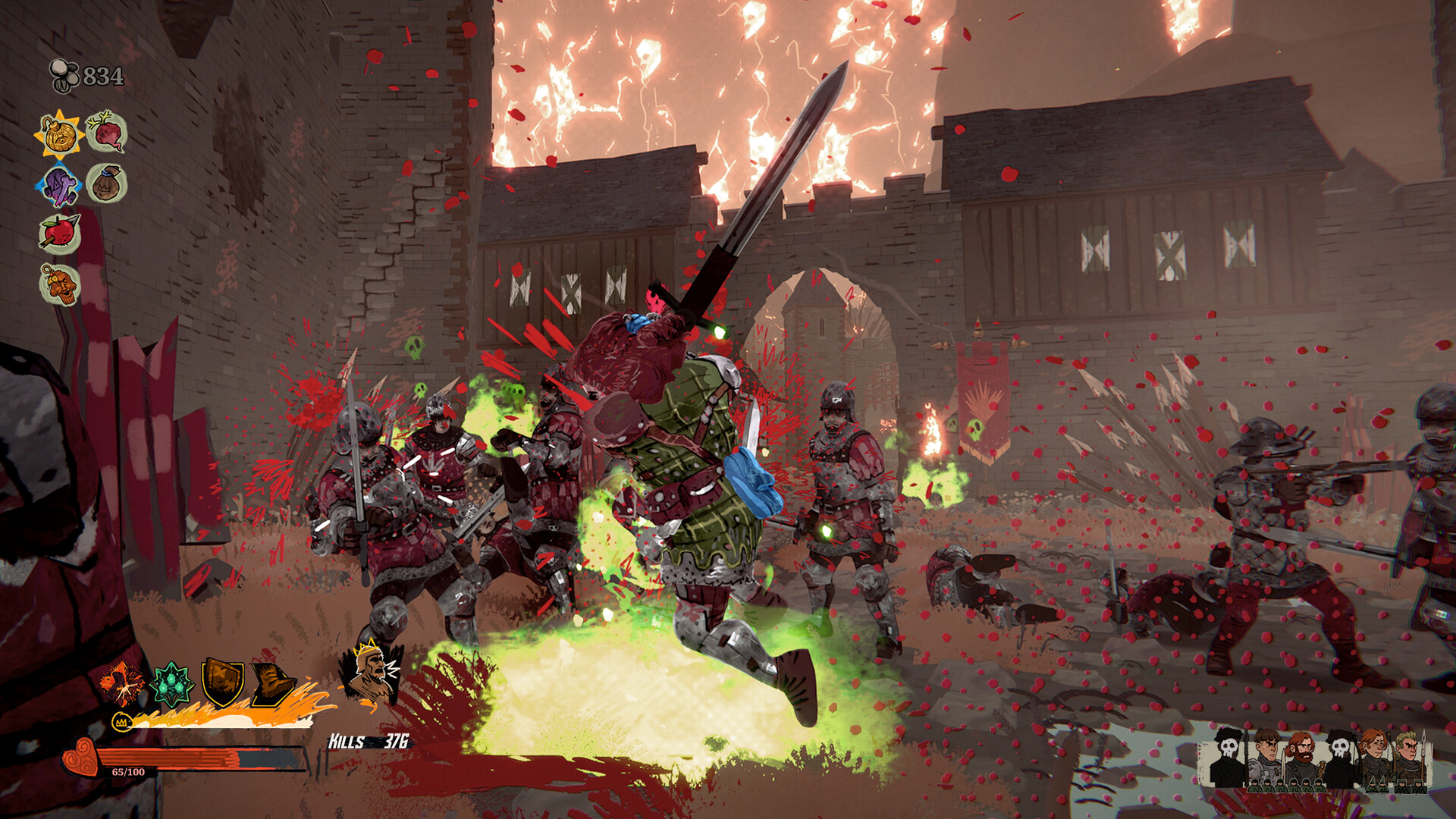
I love this addition as it fills out the offering of what you can do and improve without feeling like a game bloated with mechanics. It’s all very intuitive and flows nicely to create an addicting gameplay loop. Then you have the buffs you’re awarded after finishing a level, which stay with you until you die. I’d compare this element to how the Hades series implements its buffs, as Tears of Metal’s are also centred around its attacks. These are called ‘Emblems’, and there are a handful of different elemental factors to them. Ravager emblems will make your attacks explosive, distributing high-damage attacks to your foes, whereas Lightweaver can chain attacks across enemies through glass shards.
It’s a brilliant variety to experiment with and see what you feel helps you out the most. Couple this with ‘Charms’ you’ll find in chests, and you can create some really fun builds that’ll cater to your playstyle. Charms are more passive, similar to what your army brings with them into battle: percentile increases on various stats or better cooldowns to your special moves. Something minor about the collection of charms is just how busy the HUD is when you’re deep into a run, and you’ve got a bunch of them equipped. They end up taking a fair amount of on-screen real estate, making it a little distracting. This is most prevalent when you have a bunch of incoming attacks that are telegraphed with a visual cue. It can look a little bit messy at times, especially when the game is constantly embroiled in chaos.
My complaints are superfluous, however. Tears of Metal’s breadth of mechanics in its Early Access status is really impressive. Tears of Metal is an already fine-tuned roguelike that I can only envision expanding its scope in all its elements. And even if they didn’t and just created more game to play with the same set of mechanics, then that’d be equally as great.
What I’m trying to say is, outside of Tears of Metal’s technical limitations of being in Early Access, e.g. lore-specific descriptive text for a random item yet to be described, there is nothing really early about the game. Not to mention this can be played in 4-player co-op. I haven’t tried the co-op, sadly, but it’s a rare treat to play a roguelike with some friends, especially ones as fun as this. This is an impressive start for Paper Cult, and in a sea of roguelikes, Tears of Metal is already shaping up to be a cut above the rest, a tier of its own.
Tears of Metal is out now for PC via Steam Early Access
Developers: Paper Cult
Publisher: Paper
Disclaimer: In order to complete this review, we were provided with a promotional copy of the game. For our full review policy, please go here.
If you enjoyed this article or any more of our content, please consider our Patreon.
Make sure to follow Finger Guns on our social channels. Twitter, Facebook, Twitch, Spotify or Apple Podcasts – to keep up to date on our news, reviews and features.