

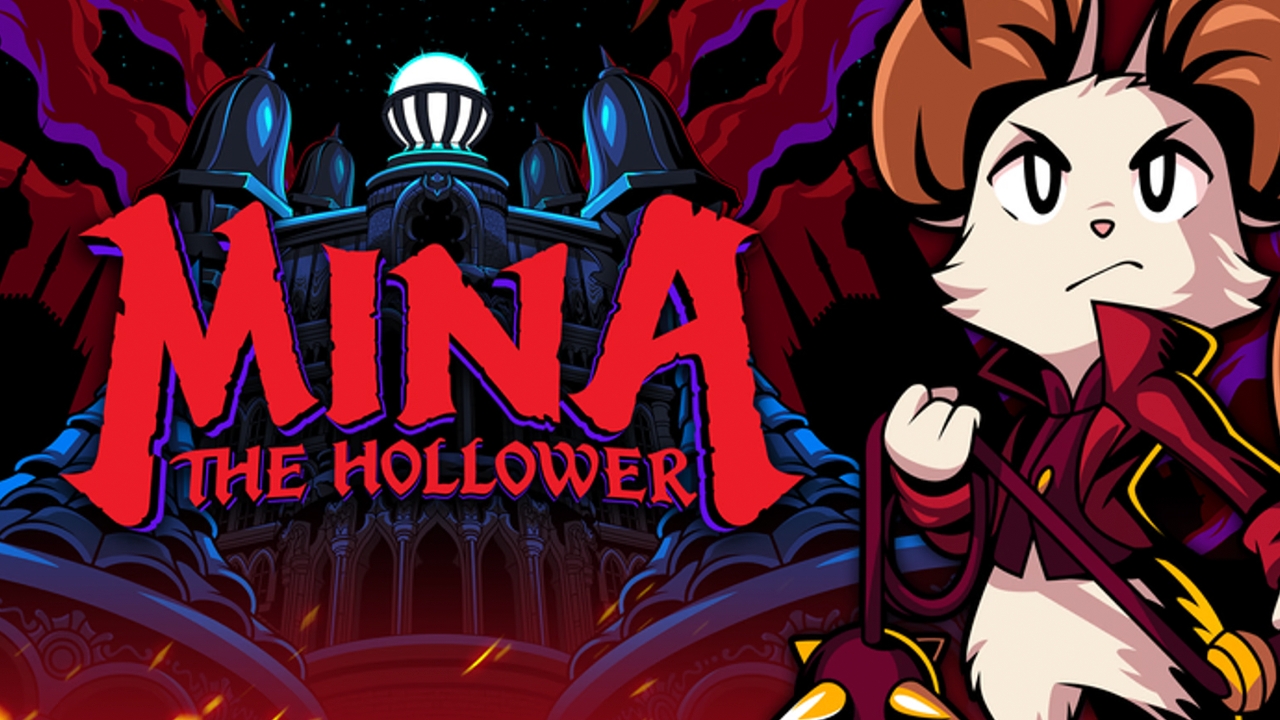
I have a confession right out of the gate; I never played Shovel Knight. I know, it’s like some kind of gaming rite of passage, and a faux par not to have even played it. Well, too late now. At least, if you are in the same situation, this’ll be the one review that doesn’t spend any time comparing Mina the Hollower to Shovel Knight. Because I can’t really.
Mina The Hollower is somehow a retro soulslike (so retro it’s emulating the 16-bit era), and that is a genre descriptor I never even considered before now. Some genius at Yacht Club was mixing genres like a bartender mixes drinks, and voila, they hit upon a Game Boy-style Bloodborne. Add in some digging-based platforming, and you’ve got yourself the basics of Mina the Hollower.
I Know You Gonna Dig This
Mina is a mouse inventor whose inventions, the Spark Generators, power her world of Tenebrous Isle and the central city of Ossex, and allow for civilised society. She is recalled from far-off voyages by stoic Mayor Lionel when the Spark Generators dim, to investigate the mystery. What she finds is warped monsters, and traitors in the capital.
When Thorne, a bat and traitor to the throne, ransacks the city and Mina only just fights him off, it falls to Mina to follow him and restore the Spark Generators back to their proper functionality as she travels amidst unrest and mystery.
For a 16-bit looking game, Mina the Hollower packs a pretty hefty bit of plot, certainly a fair bit more than is generally bothered with in your average soulslike. At the same time, it’s not an RPG, and while it looks like Final Fantasy 6 a lot of the time, it’s not delivering an epic story like that. It’s the right amount in my opinion, more than the average soulslike where I lament the lack of compelling reason to continue, but less than an epic that would draw attention and focus from its stellar gameplay.
Hollow Doubt
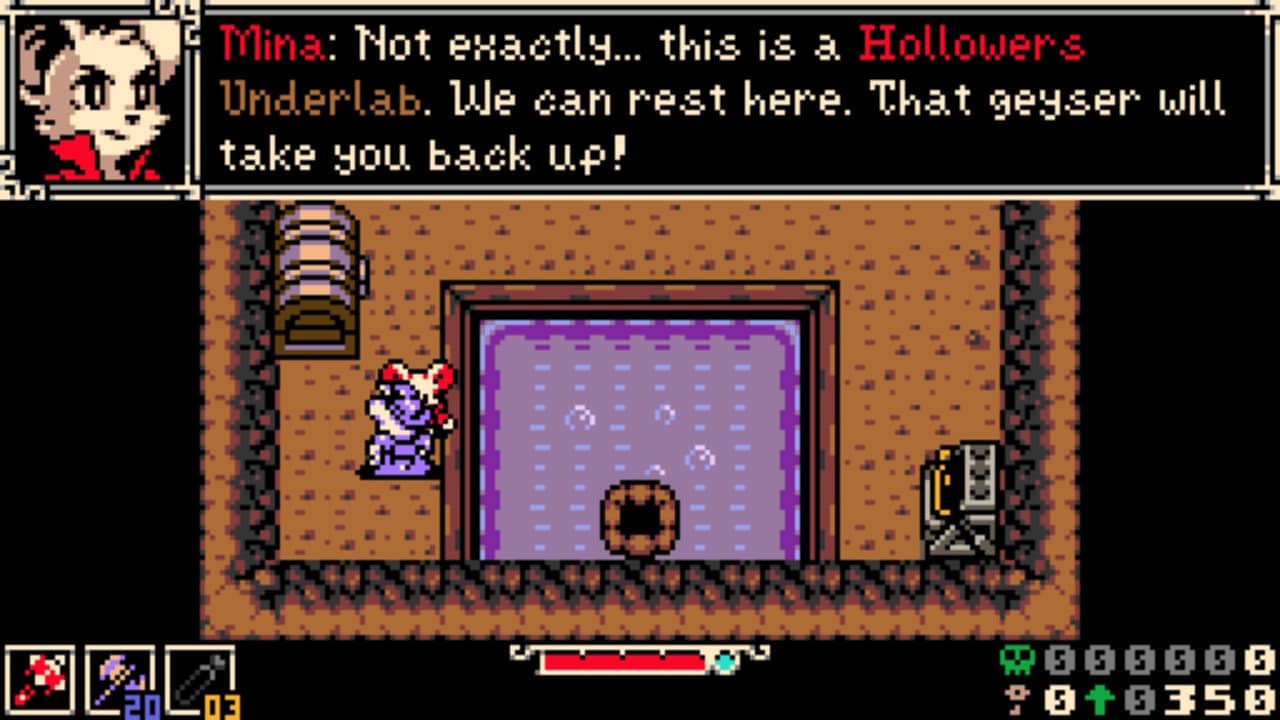
For those still wondering what a Hollower is, it’s a practitioner of a kind of super digging skill, where they can duck under the ground at a moment’s notice, avoiding damage, and can tunnel anywhere and everywhere. This allows not only for an innovative feeling new mechanic for the combat, but also a platforming and puzzle mechanic that is integral to the entire game.
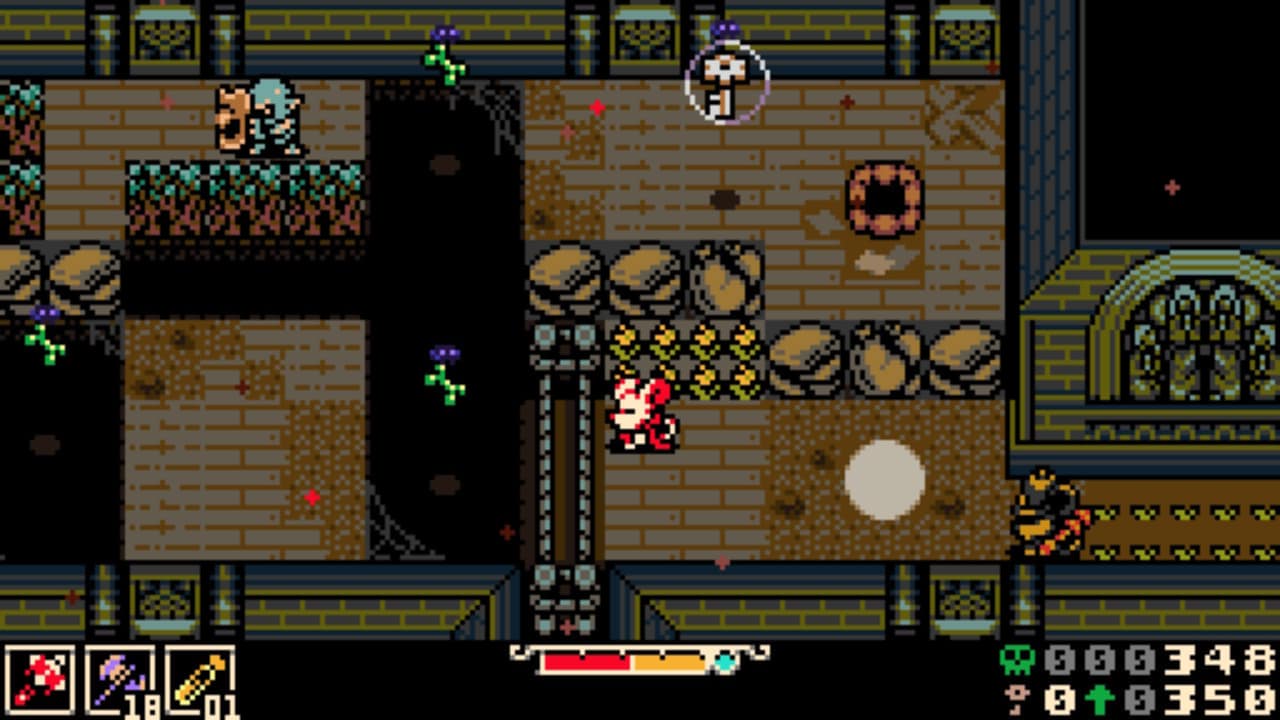
Every screen is a platforming puzzle, or every group of screens an intricate web of soulslike mazes. With this added depth of digging mechanic, they loop around and open shortcuts and are just generally satisfying to explore and play. Digging and then popping up from the ground gives you a more powerful, longer jump to reach far-off places, plus you can dig under enemies and obstacles. You can imagine for yourself the hundreds of unique situations and challenges they’ve laid out for you across the many locales. It’s like a classic 16-bit style Zelda or Alundra in that each of these areas intersect, and circle and expand from each other. It respects the classic style of these games, while adding in punishing soulslike combat.
Digging Your Own Grave
And somehow it really is like a soulslike, which was the part I really doubted going in. How can you make such simple graphics hold the kind of depth of combat that those games do? Isn’t it just going to feel like a tough as nails Zelda? Well, it manages it and then some. Enemies are very tricky, each with their own behaviours and weaknesses. Add to that you are encouraged to be recklessly aggressive, as your healing ability is tied to how much damage you are doing to the enemies.
It feels a fair bit like Bloodborne’s blood healing, but in Mina the Hollower, you have vials that can restore health. However, these only work if you have ‘powered up’ those vials with a little damage dealing first. And if you get hit, the vial build-up is lost, or mostly lost. Meaning if you are in dire straits and haven’t got any built-up healing ‘power’ or get hit again, you can’t actually heal without risking it all fighting at least one enemy. Or having another quick swipe at the boss. It’s a system I found fair most of the time, rather than cruel, as it’s generous with the build-up of life; one enemy will usually suffice to get most of a health bar restored, but it’s an easy system to fall foul of.
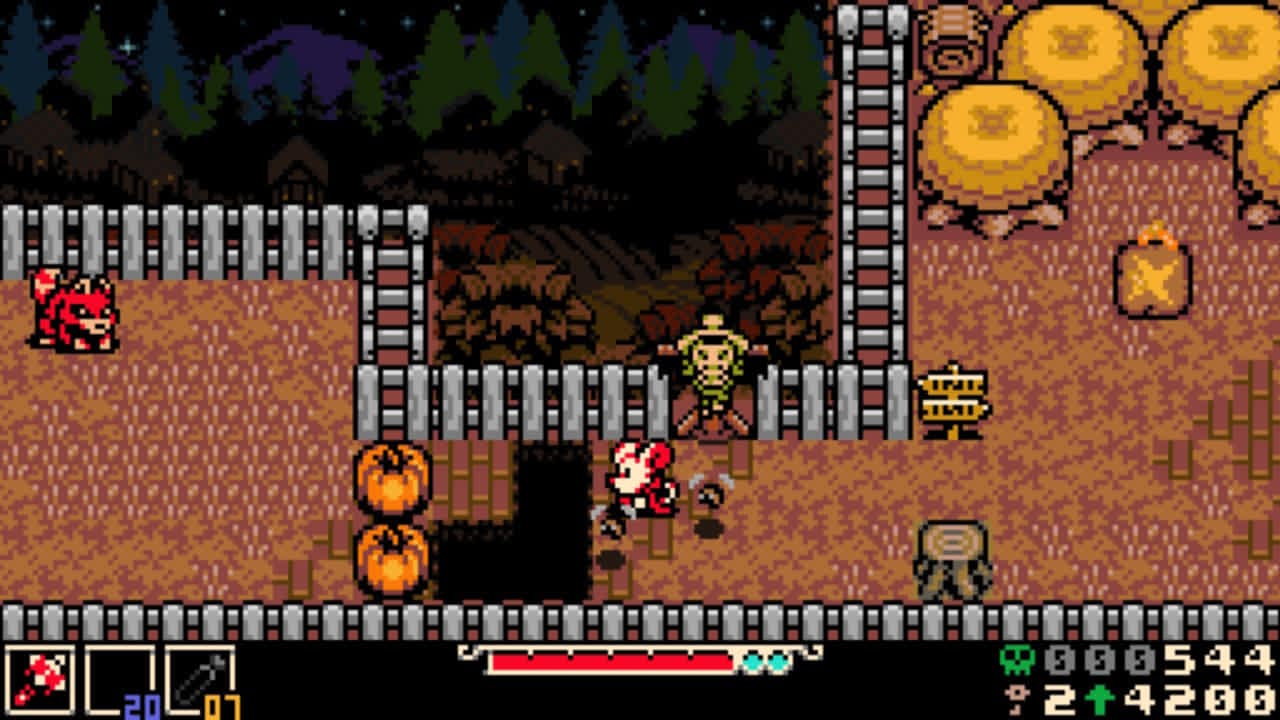
I loved the system right from the start, and even later when bosses were knocking my health down to nothing, and I couldn’t heal, and had to try all over again. I lament the lack of a general parry or dodge, but ducking under the ground and popping up elsewhere is Mina’s version of this mechanic. There’s no parrying for most of the weapons, but you can knock projectiles out of the sky, and the shield/coffin can parry – very useful in the mid to late game.
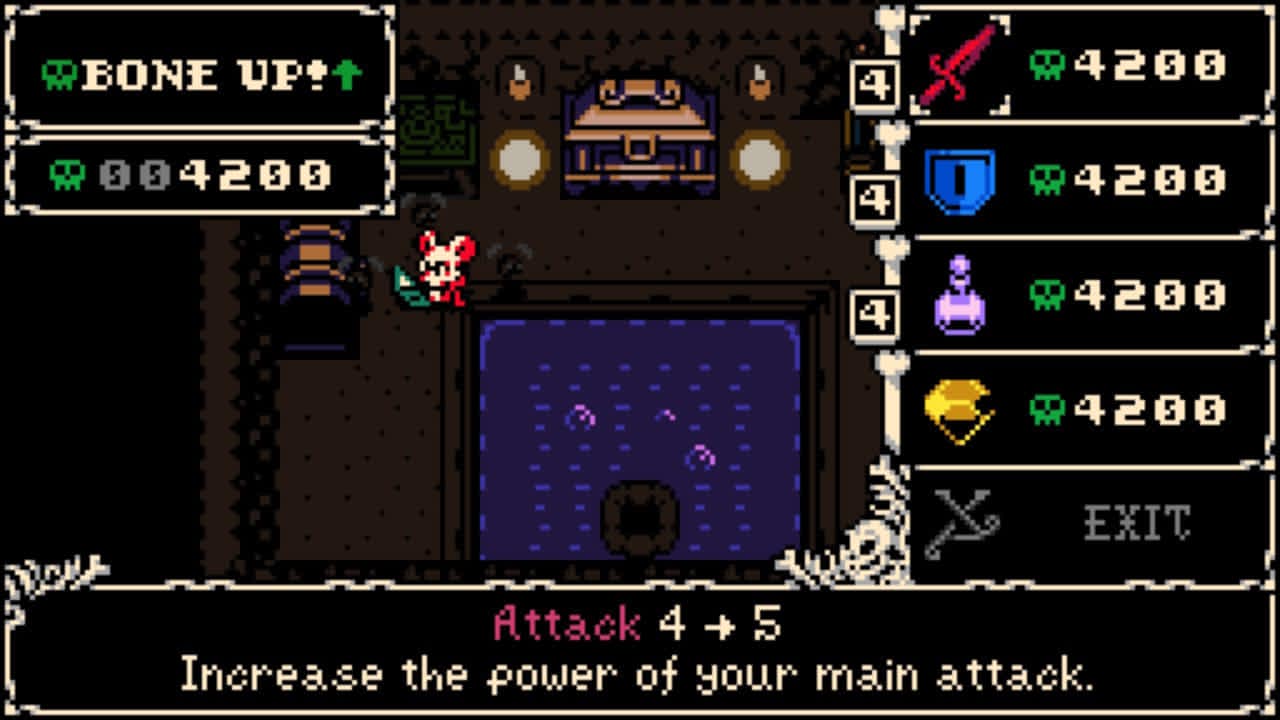
For those concerned with stats and builds, there are five weapons (I started with the flail whip), and you can purchase or find the ones you don’t start with. There’s not much in the way of armor or items, but you pick up a throwable sidearm weapon a fair amount of the time (of which there are fifteen). The currency of Mina the Hollower and her world seems to be bones, which are dropped by enemies and dug out of virtually anywhere on any screen. When you have enough, just like with souls, you can ‘bone-up’ (like a good scholar), levelling up your attack, defence, sidearm stat, or bank the bones to use in shops for more vials, increased maximum health, and trinkets etc.
I’m glad Mina the Hollower leans into keeping it simple on the builds side of the genre. A 16-bit system where you had to pick up hundreds of stat-increasing weapons or armor pieces like Nioh, or where you had to read more than 3/4 stats on the chunky pixel graphics, would have been messy.
Gold Digger
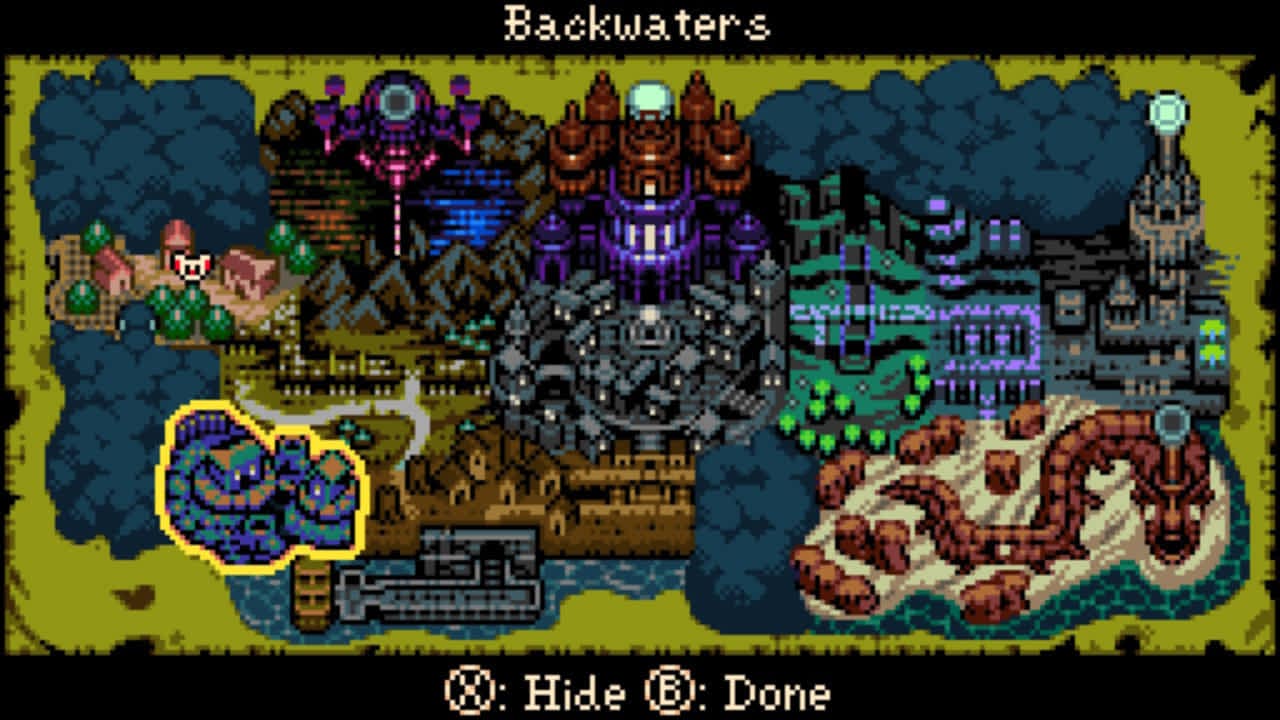
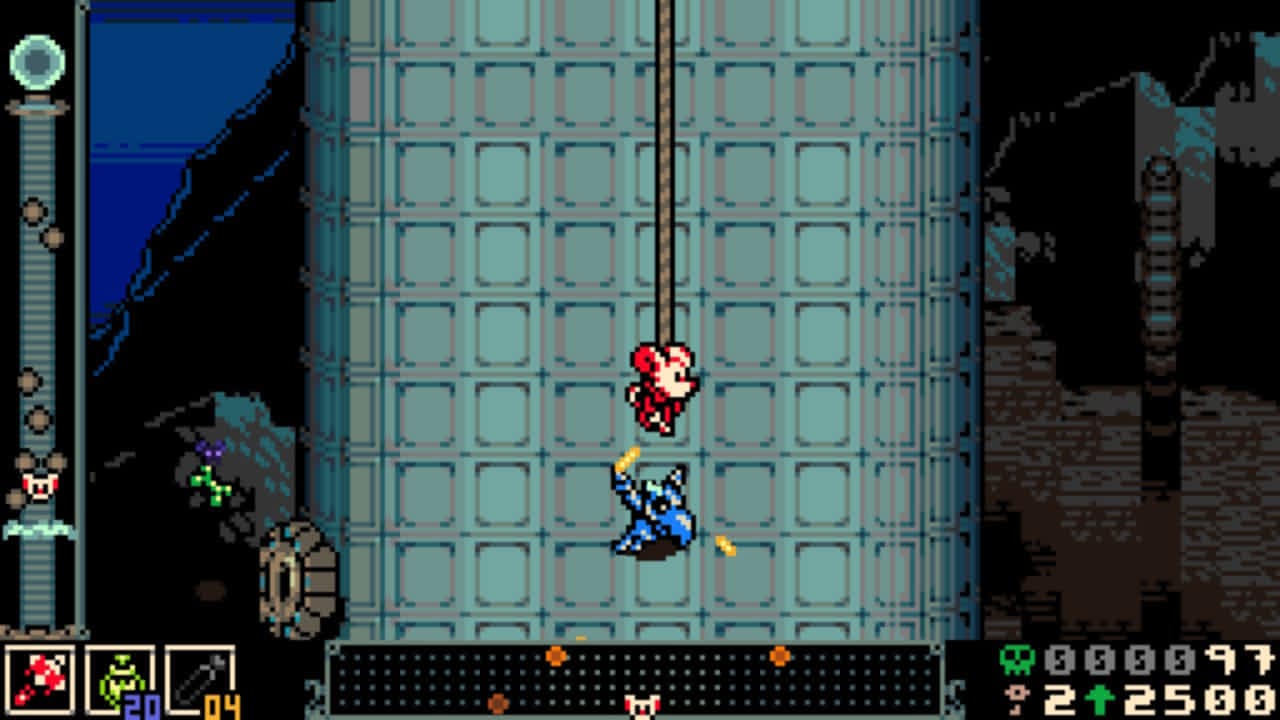
Mina the Hollower sports some of the most vibrant 16-bit pixel art I’ve seen since its heyday, polished and animated beautifully. It’s nostalgic at the same time as being wonderfully new and adding that modern aesthetic to an old style. It’s a truly beautiful game if you are the kind of gamer who appreciates pixel art done this well. I should shout out that restoring the spark generators involves a different kind of screen, a sort of rotating ascending rappel, that employs a system that looks straight out of Starfox or Terranigma, yet may not have even been possible back in the early 90s. It was very fun when it suddenly appeared.
The soundtrack is appropriately gloomy, with rain and wind etc, but also employs the kind of chiptune you’d expect from the era. It’s sort of operatic MIDI, chip-gloom. I don’t know, but I liked it.
While I had a great time with Mina the Hollower, there were moments that were maybe off-puttingly difficult. Not just the difficulty of bosses or enemies, but actually getting around in tricky platforming areas, trying to use the digging system to make a tricky jump while any enemy is on screen, or even just knowing where to go next. There is some direction to be had if you speak to NPCs or read the newspaper (which was my go-to after each generator), but it’s still a little hard to know where to go next.
Even at the very start, I found it was much more of an explore and find your way kind of game, than a game that explicitly said you need to go south to the quest marker. There weren’t any quest markers, ala Elden Ring (or most 16-bit type games for that matter), so I just mention it to forewarn those that found those games trying. Within each of the locations themselves, I found the terrain, platforming, and mazes led me around perfectly; I just wasn’t always sure where to go next, or where might be beyond my level/abilities.
It should be said that in some small way Mina the Hollower has aspects of a Metroidvania too; areas will be sealed off by keys until you buy or find them, effectively funnelling you towards areas you can explore first. There were also plenty sealed by more intricate keys hidden in other areas, like the heads of statues you had to transport while getting chased. So while it wasn’t so much new abilities allowing for new areas to open, it does involve backtracking through areas you’ve done to open doors to new areas you can now access.
Last thing on difficulty. Yacht Club clearly do not subscribe to the same level of git gud as Fromsoft; there is a whole menu of what in my day would have been called cheats: modifiers that make virtually any aspect of the combat toggle on or off, or make them progressively easier. Being able to dig forever without bursting up, for example, is a pretty much perfect evasion tool, but it’s not actually making the boss easier, per se, but it is giving you a lot of breathing room. I personally didn’t use these, as I found the perks delivered by the trinkets to be enough to get me through and keep it challenging.
Sleepy Hollow
Mina the Hollower is a fantastic addition to the pantheon of soulslikes. It has a concept so vivid and a style so different to anything else out there, that it sits almost as a must-play for fans of the genre. I had no end of fun with its intricate puzzle areas only traversable with the fine-tuned skills of a Hollower who has spent hours with the game already.
I found the combat really was not that far away from Bloodborne. I appreciated the angle towards aggression for healing, and it really emulated that genre feel of only taking on one enemy at a time, rushing back to your hole with your accumulated bones etc. I also found a world that felt well-conceived, well-written, and well-loved by its developers. Being a soulslike that actually places emphasis on its plot and had a named character, should put it on a pedestal before you even consider the rest of the package is verging on perfect.
Mina the Hollower is available 29th May 2026 on Nintendo Switch (review platform), Nintendo Switch 2, PlayStation 4 & 5, Xbox Series S|X and PC via Steam.
Developer: Yacht Club Games
Publisher: Yacht Club Games
Disclaimer: In order to complete this review, we were provided with a promotional copy of the game. For our full review policy, please go here.
If you enjoyed this article or any more of our content, please consider our Patreon.
Make sure to follow Finger Guns on our social channels –Twitter, Facebook, Twitch, Spotify or Apple Podcasts – to keep up to date on our news, reviews and features.