
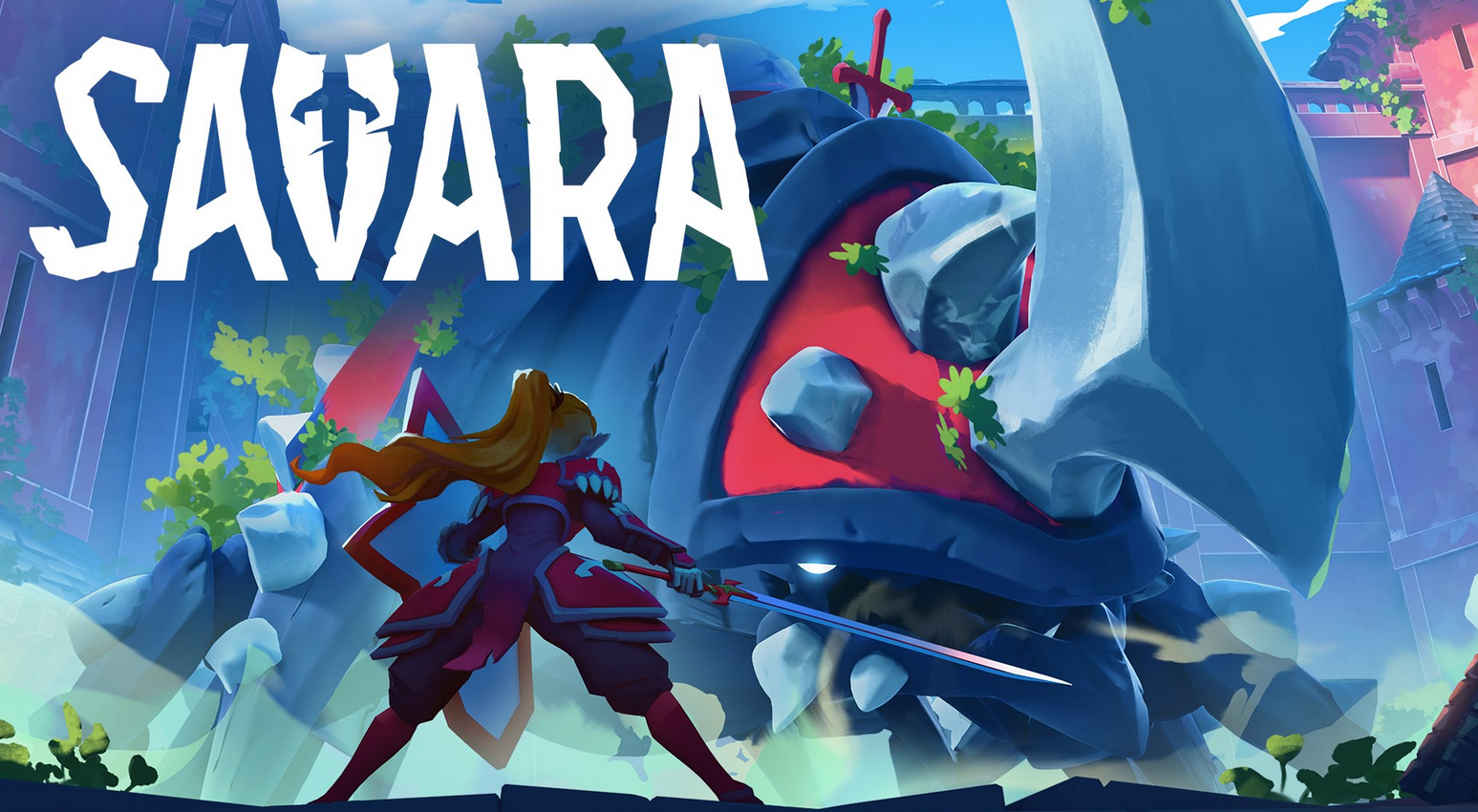
Disclaimer up front: I’ve never played nor watched the WAKFU animated series, which Savara is loosely based in the same universe as. This is not the review that tells you about any easter eggs or makes comparisons. I couldn’t even tell you if there were shared characters or if the whole cast was from the animation.
What I can tell you is that Savara is a roguelite, with a heavy inspiration from Monster Hunter. You collect materials from breaking parts off the creatures you battle and use them to enhance yourself for your next run. I always loved that part of Monster Hunter, so I’m hoping I also love it here. There’s a lot of Hades vibe here too, but with a much more colourful palette, which I appreciated straight away. No grimdark roguelite this.
So, story is pretty minimal here. The Warrior King (so generic I’m not sure he even had a name) has thrown a great Festival, where the fiercest, hardiest warriors fight through room after procedurally generated room of monsters, until they can reach the end and win the Festival. Savara is a young female warrior taking up the challenge, who has some past with several of her competitors. This past and the basic banter between them between runs is handled just like in Hades, except there’s none of the compelling writing or characters, and they mostly talk about innocuous rubbish.
And that’s about it for the story. Savara is as one-dimensional as a piece of paper, as are all her fellow competitors. No one has anything of note to say. There’s little to no explanation of the world, the festival, how you can ‘die’ and then have another go at the Festival run, nothing. There’s no Dead Cells-style floating head reanimating yet another corpse, or a soulslike Lampbearer. I got the impression it was just way duller than that – she was just getting KO’d and then trying again. However, if that was the case, there’s still no explanation why she gets no wounds or can restart so quickly.
Do not go into Savara expecting an intricate bite-sized narrative that takes advantage of the vignette style of a roguelite like Hades or Saros. Instead, if what you liked was the innocuous banter of some of Hades’ denizens, then that is what you are getting here, but with less satire and humour. I came away disappointed that the entire facet of games that I generally draw on the most for compelling me to continue, i.e. the narrative, was largely missing in favour of a simple roguelite in said universe. Instead, I had to want one-more-run because of the gameplay alone.
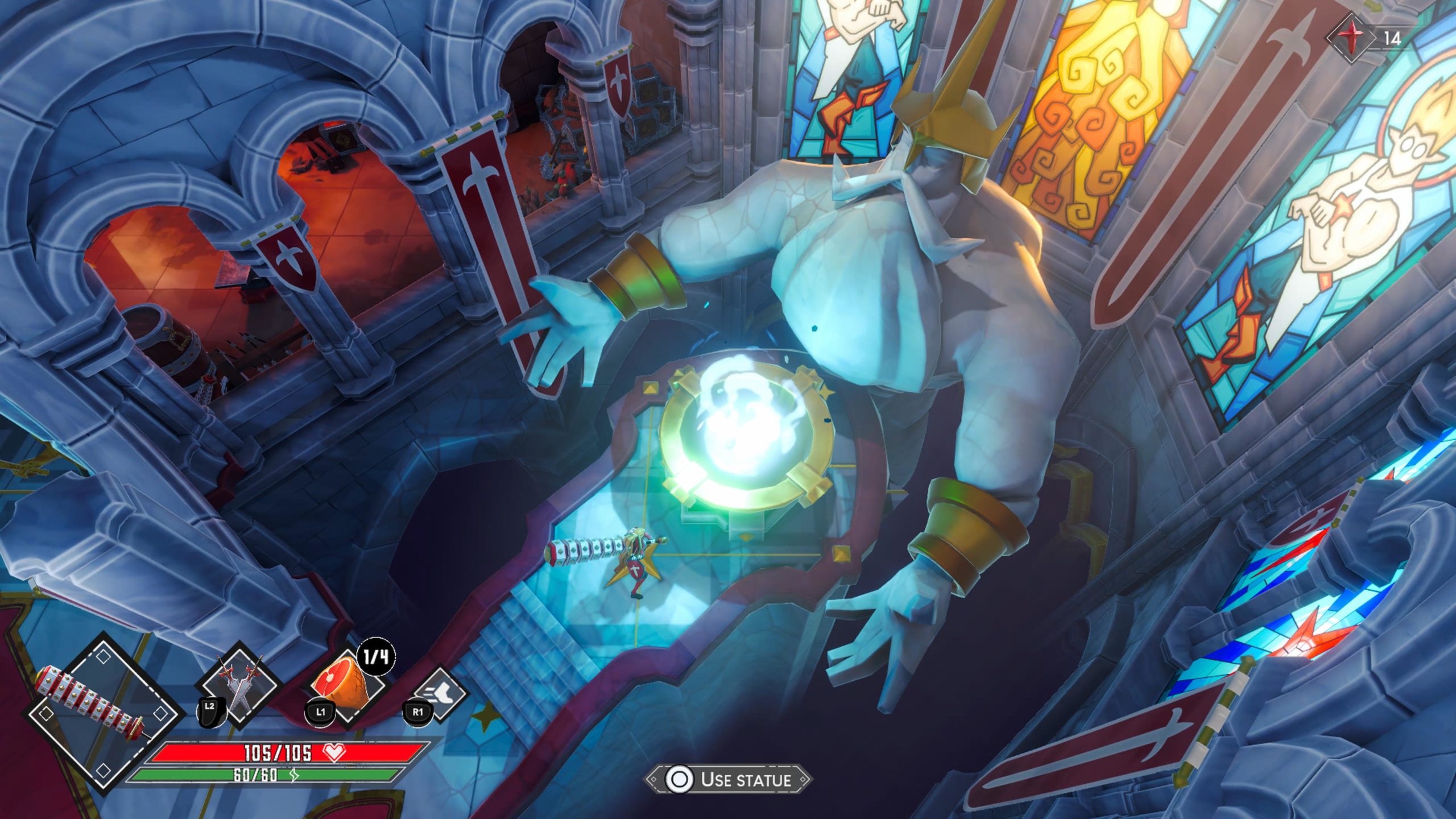
Combat is the most important thing in most roguelites of this format, and Savara is no exception. You’ve got stats and information everywhere, but the salient points can maybe be boiled down to this; you progress from room to room, you fight monsters, you collect broken parts, you die, you buy upgrades, armor and weapons with your loot, and you try again. Rinse and repeat.
There are seven different weapon types, and you can hold two at a time that you can switch on the fly. There are three types of damage, so you’ll always be missing one type on each run, and you’ve got to take notice of doing different damage to different enemies, all governed by colour-coded numbers popping up on screen. You’ve got to pay attention to their weaknesses.
You also have a fairly tight stamina bar (in a little circle like Link), and will need to regularly swap weapons to recharge it, or walk it off, and circle back into the fight. You have a dodge command that needs to be used with pretty skilled timing to keep ahead of the enemies. And you have normal attacks, hard attacks, and a kind of super attack you can build up to and unleash to devastating effect. I found the combat to be a little slow at first, and wished Savara would move faster, but with practice came more skillful timing and use of the moves and dodges the way they are designed. This is a system with a few frames of buildup for some moves to detonate.
I found the monsters a lot of fun, and the enemy variety just enough to keep me challenged. There’s five different types, starting with these mushroom-like creatures and a lot of beetles, and moving on up the food chain through a kind of purple wolf, and fun dragon birds that like to peck you so hard they get their own beaks caught in the ground, and finally dragons.
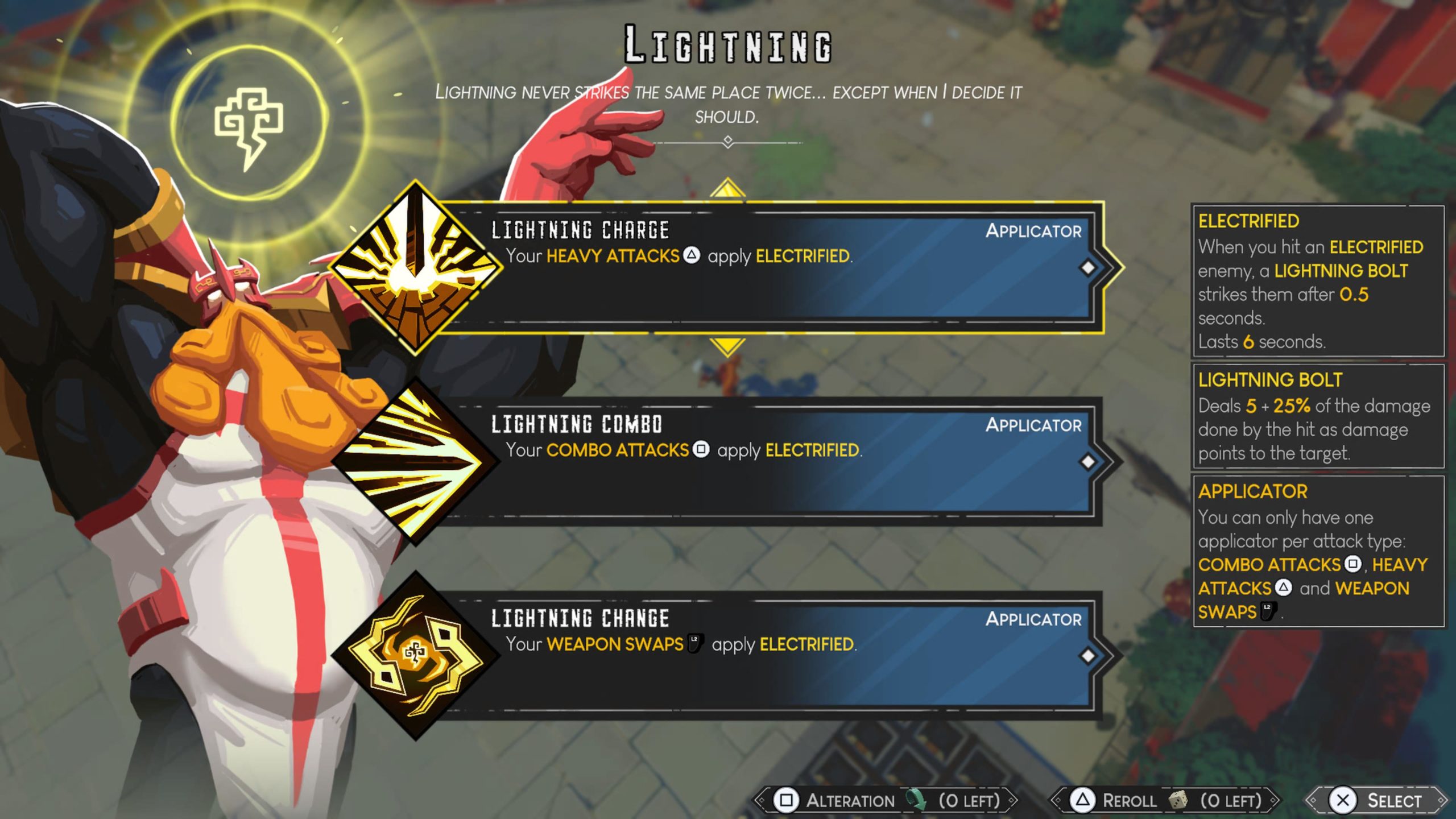
I found the roguelite progression, and the in-run perks constantly reminding me of Hades II. I mean, look at that screenshot above; it’s not even subtle. It’s Zeus, giving lightning powers, with the same UI and everything. The Warrior King (and his magnificent beard) give you all the different power-ups (there’s no other gods or pantheon), and they are different enough from normal roguelite fodder to be at least fun to learn.
Each room has power-ups, or money, or more permanent progression currency (Honor) that you can save to spend in the hub between runs. But saying it’s like Hades for the sixth or so time now is kind of redundant. Almost every roguelite has the same basic format; it’s just this one is even closer to that heavy-hitter than most. Comparing it like so doesn’t help it to come off favorably, but Savara has some of its own DNA, hopefully enough to make it stand out in the seriously crowded roguelite marketplace.
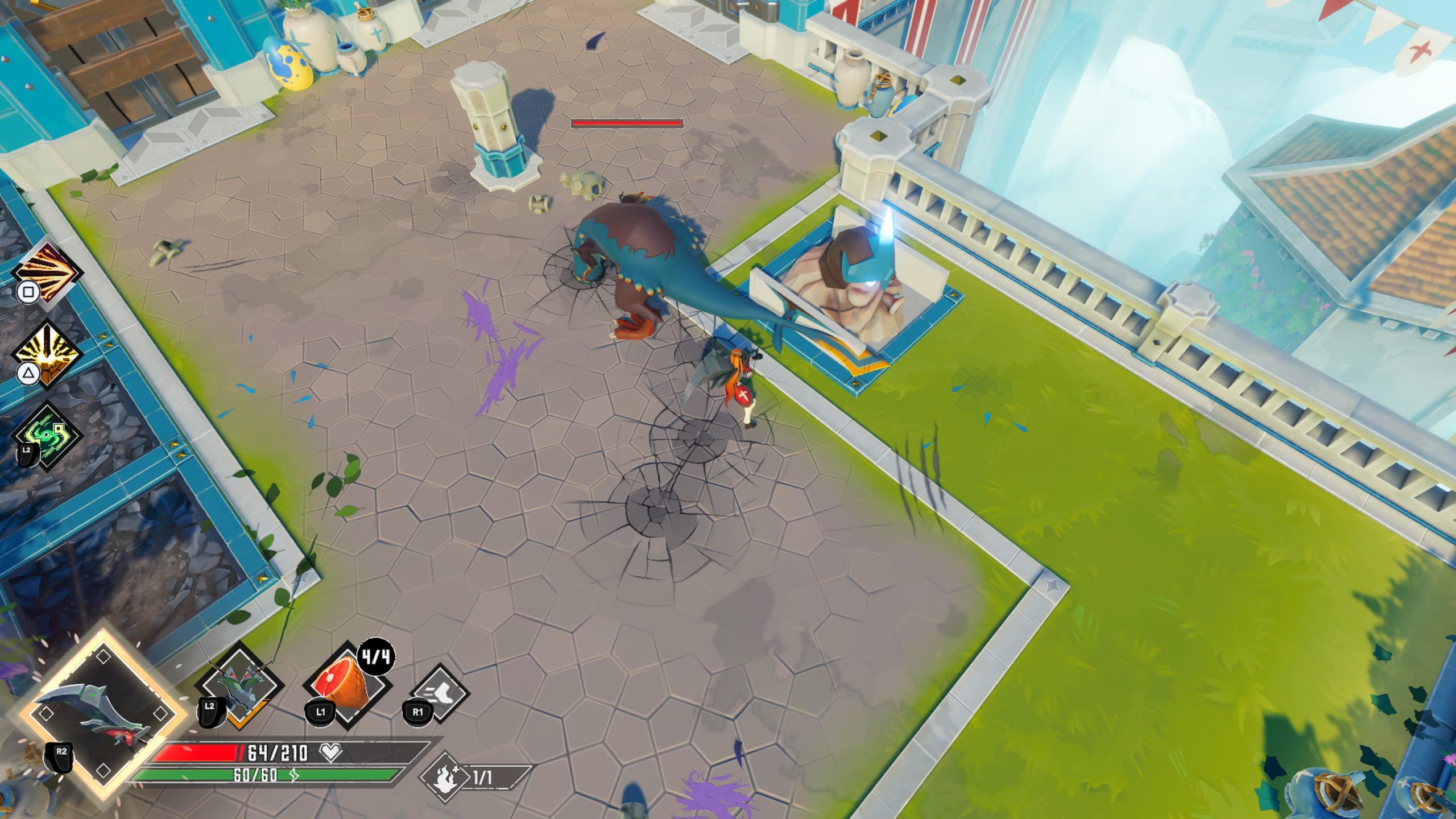
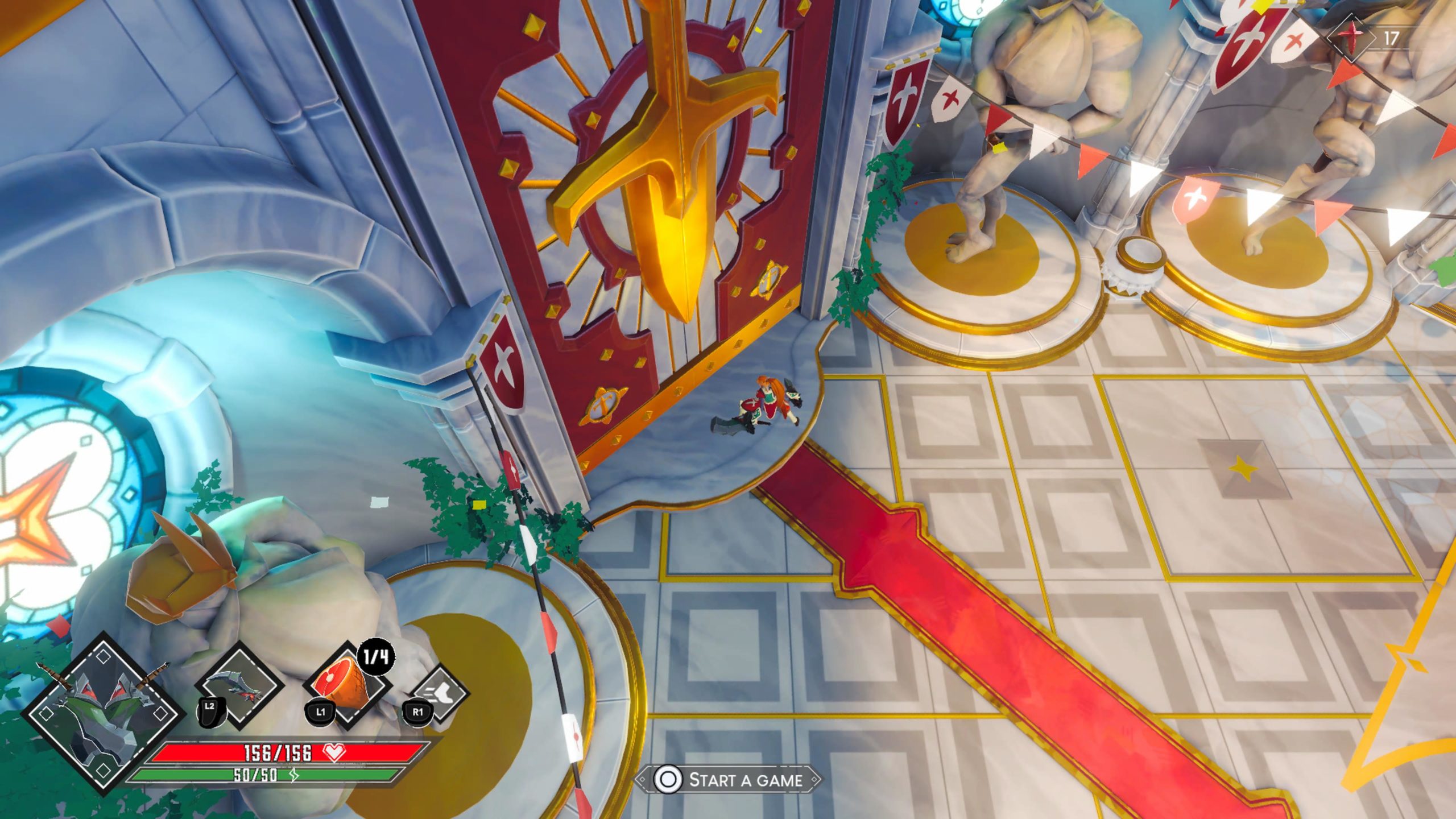
Maybe the graphics then are what help it to stand out. They are certainly what drew my eye in the abundance of roguelites to choose from. Where most roguelites target a darker and grimmer aesthetic, Savara is vibrant and primary in a way I can only compare to Fortnite. It’s got colour popping everywhere, which makes a welcome change, and everything is happening in daylight, instead of underground.
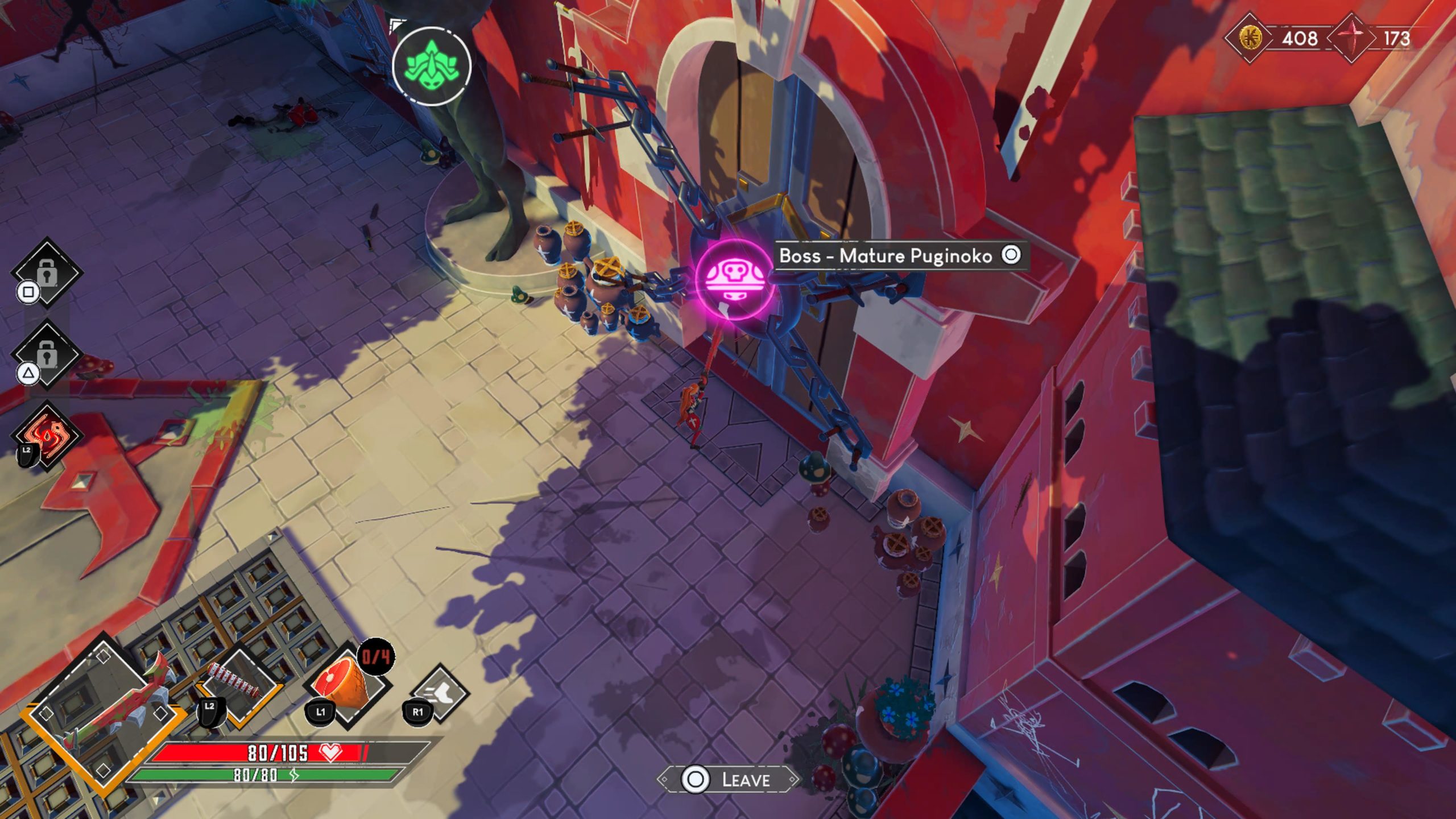
However, the procedural levels were not that inspired beyond some elaborate traps. I found the way going through a door on the left side of the screen and then facing out of a right-side door in the next room off-putting. Or finishing a room by going up some stairs, only for the next room to have no stairs behind you. It was just a lack of finesse in the procedural generation that pulled me out of the experience.
Savara is a middle-of-the-pack roguelite, and we’ve scored it accordingly. It’s got some of the good bits of Hades, but not all of them and not implemented half as smoothly. It’s also got some of what makes Monster Hunter’s armor and weapons systems so fun, but lacks the side where those monsters live and breathe and have ecosystems. So again lacking the finesse of that inspiration.
If either of those inspirations is one you enjoy, you will find a game worth playing in Savara. A score is just a number, and I had fun playing it. However, when spoken of in comparison to the big-names of the genre, it just doesn’t have the innovation or finesse to really compete, or remain in your mind and memory as those games do. With its vibrant graphics and Monster Hunter elements, it manages to rise just above the tide of roguelites flooding the modern gaming scene. Perhaps just enough to be worth your time in between more memorable escapism.
Savara is available now on PlayStation 5 (review platform), Xbox Series S|X and PC via Steam.
Developer: Doryah Games
Publisher: Ankama Games
Disclaimer: In order to complete this review, we were provided with a promotional copy of the game. For our full review policy, please go here.
If you enjoyed this article or any more of our content, please consider our Patreon.
Make sure to follow Finger Guns on our social channels –Twitter, Facebook, Twitch, Spotify or Apple Podcasts – to keep up to date on our news, reviews and features.