

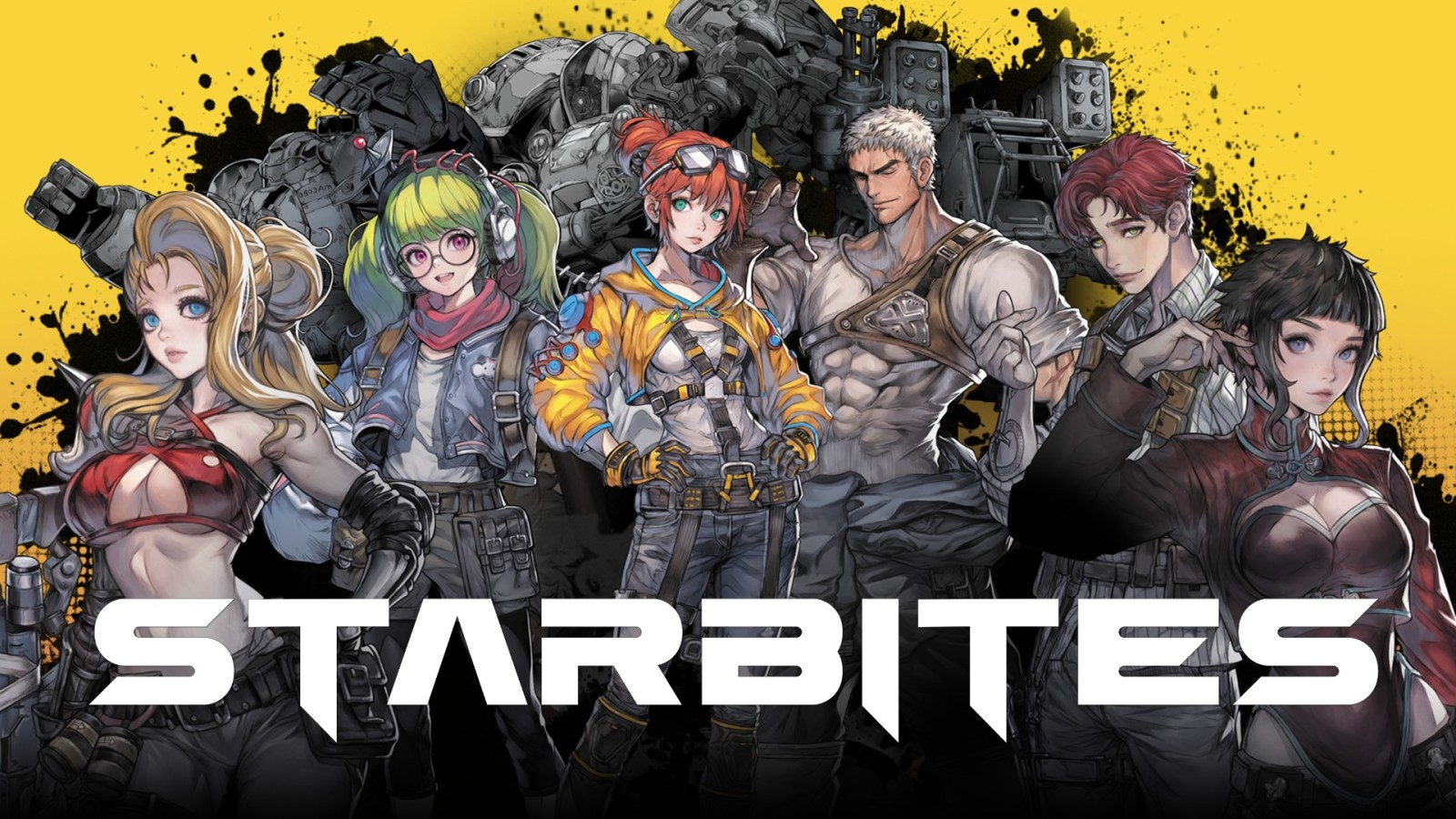
Starbites is NIS America’s latest JRPG but it’s actually South Korean-made. A low-poly JRPG that takes a competent shot at the mid-range of the genre, the Trails or Ys series, for example. It’s charming and can be funny, it doesn’t take itself too seriously, and it’s got lots of that stuff that made the golden generation of JRPGS so great. Yeah, I mean, turn-based battles.
Turn-based battles, great music, quirky characters in a sci-fi fantasy setting, mechs and salvage, and a real feel of a PS2 era JRPG, you know, like Star Ocean 3 or something. Let’s take a peek at this desert trash pile and see if we can’t find something to salvage?
A Bitter Pill To Swallow
Virtually everyone on the planet Bitter is in debt just for living and breathing, and healthcare, and everything else. Our hero, Lukida, has even inherited her parents’ debt. Indentured Servitude, baby. Bitter is also a wasteland desert planet chock-full of salvage after a space disaster that caused every vessel in the local vicinity to crash-land there decades ago. Lukida makes her way in a combat mech across a Mad Max-type world, salvaging and surviving.
But this is also a peppy, comic story, so she’s really over-eager, try-hard, and kind of annoying. But in an endearing way. Trying to break out of debt by literally getting off-world, Lukida begins the story losing her starship ticket and unearthing the local gang’s shenanigans and their possible corporate backer as she hunts for it. It’s one of those selfish plot reasons that lead to larger-scale outcomes.
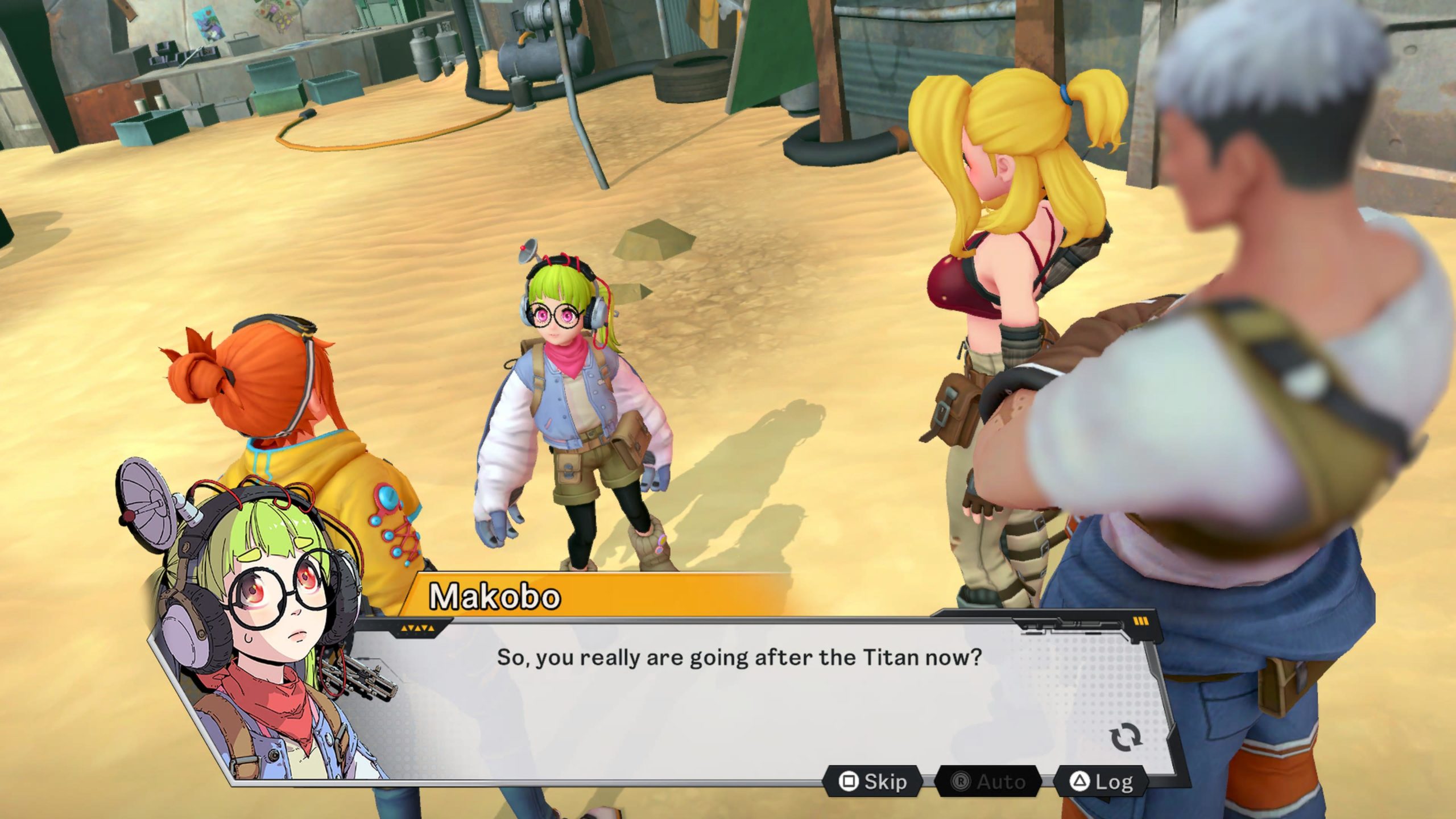
However, it doesn’t scale much. Without spoilers, let’s just say the story remains local to about 4 regions of Bitter itself, and the quirky characters that live there and make their way. It’s like a Star Ocean that never gets off the ground. And that comparison works in a few ways. Remember those Star Oceans that weren’t worth playing? Last Hope and Integrity etc. Starbites feels a bit like them.
For all the charm of the setting (and I like small-scale RPGs), the dialogue leaves a fair bit to be desired. These are basic interactions; the bad guys are one-dimensional caricatures or too thick to rip their way out of a paper bag. The world-building makes for a great setting, but it never really goes much deeper – there’s little explanation as to what you’re seeing most of the time. And then it doesn’t really go anywhere. Plus, more than one character is super annoying – another thing it shares with those oft-maligned Star Oceans.
The Bitter End
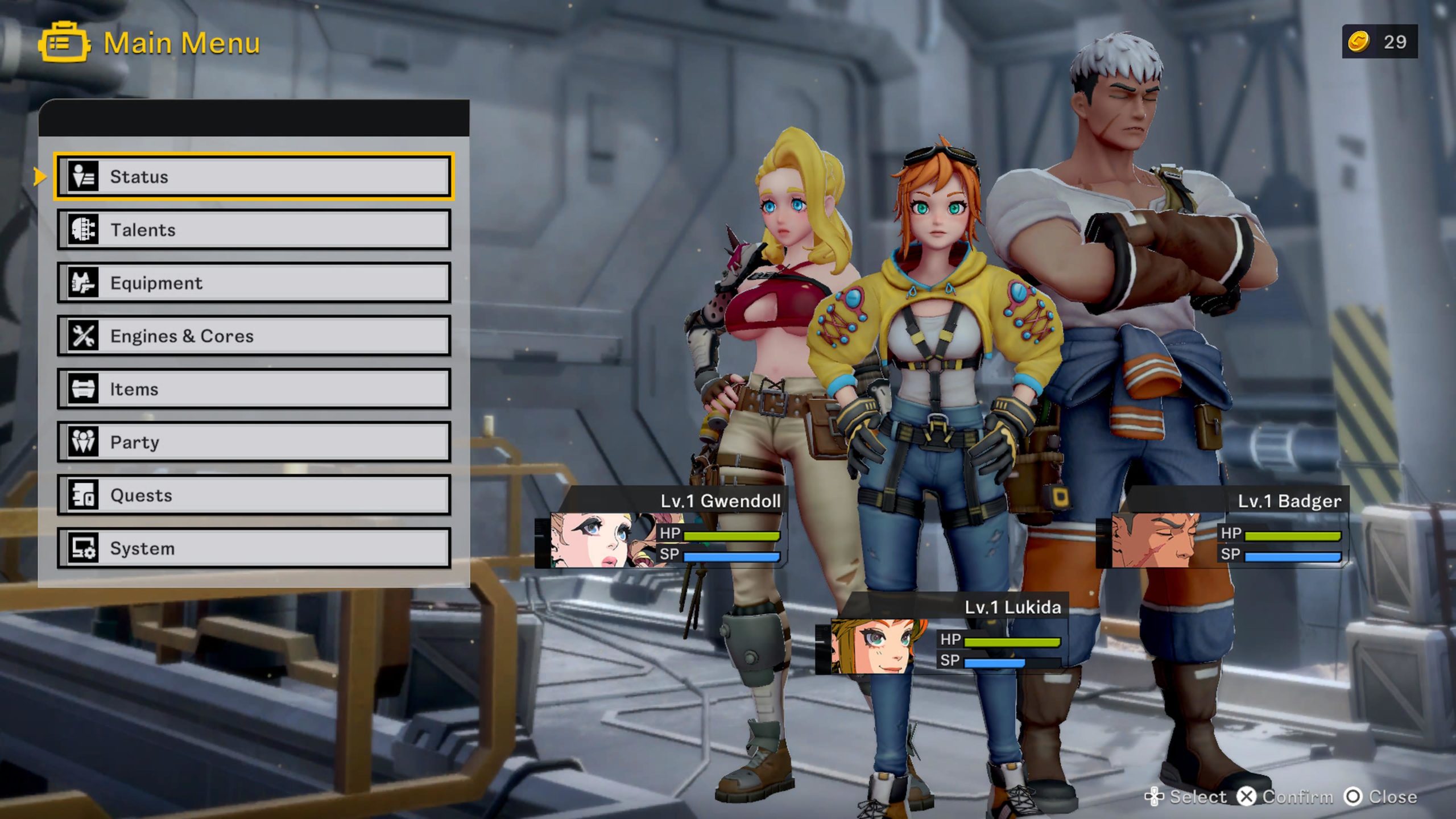
Starbites’ turn-based battles can be a lot of fun, especially early on. But I will caveat that by saying they get awfully repetitive. Enemies in each area are basically the same 2-3 varieties and require the same strategy, or lack thereof. There’s a normal attack that hits hard and restores SP, and there’s a skill attack that uses up SP, but is likely to do even more damage, or maybe hit multiple targets. Rinse and repeat, and you never run out of SP.
On top of that you’ve got Driver’s High, a nice Limit Break style move, where hitting enemies and taking damage charges a meter that lets you take extra high-powered turns out of sequence.
Weaknesses are handled fairly well, but not in a way you won’t have seen a bit before. Using different techniques and elements will reveal weaknesses, and then show up right there on the enemy’s health bar for you to exploit forever after. Add to that that hitting weaknesses breaks an enemy barrier, which then puts them in a broken state for temporary increased damage, and you’ve got a winning system.
However, after a few hours, it really struggles to change it up, and I found myself avoiding battle, and finding the process had lost any compelling factor. Add to that a really dull upgrade system of a few component parts for your mech, and I found little compelling me to keep fighting.
A Pint Of Bitter
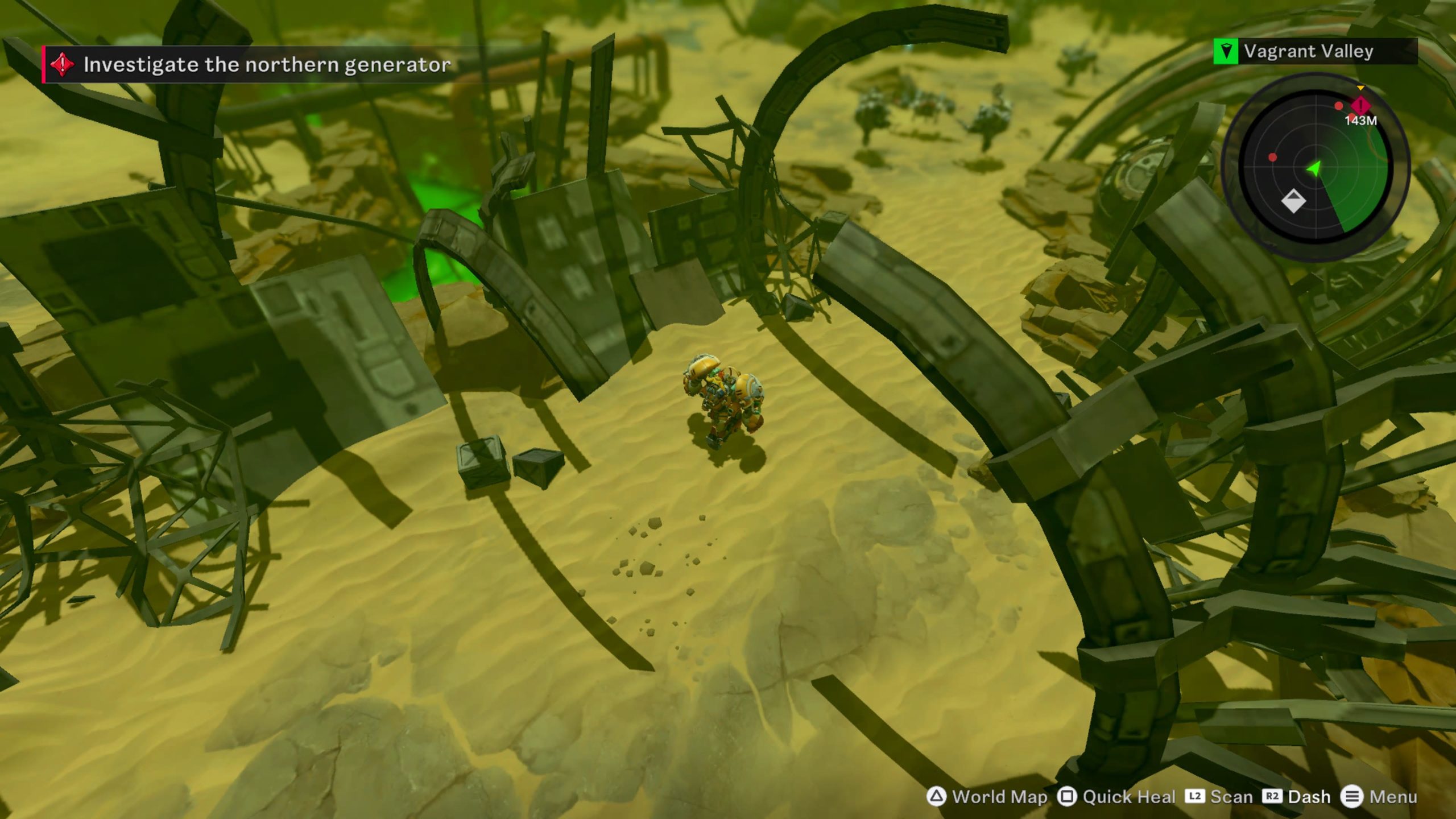
Battles happen on an open field, which is really just an open-air dungeon maze, and you drive your mech around it looking for items and running into enemies. While the environments are nice enough for the low-poly style, they were really just functional mazes hiding items, and I grew bored exploring them just to get the small array of upgrades. I needed the upgrades, but I couldn’t muster the drive to explore to find them.
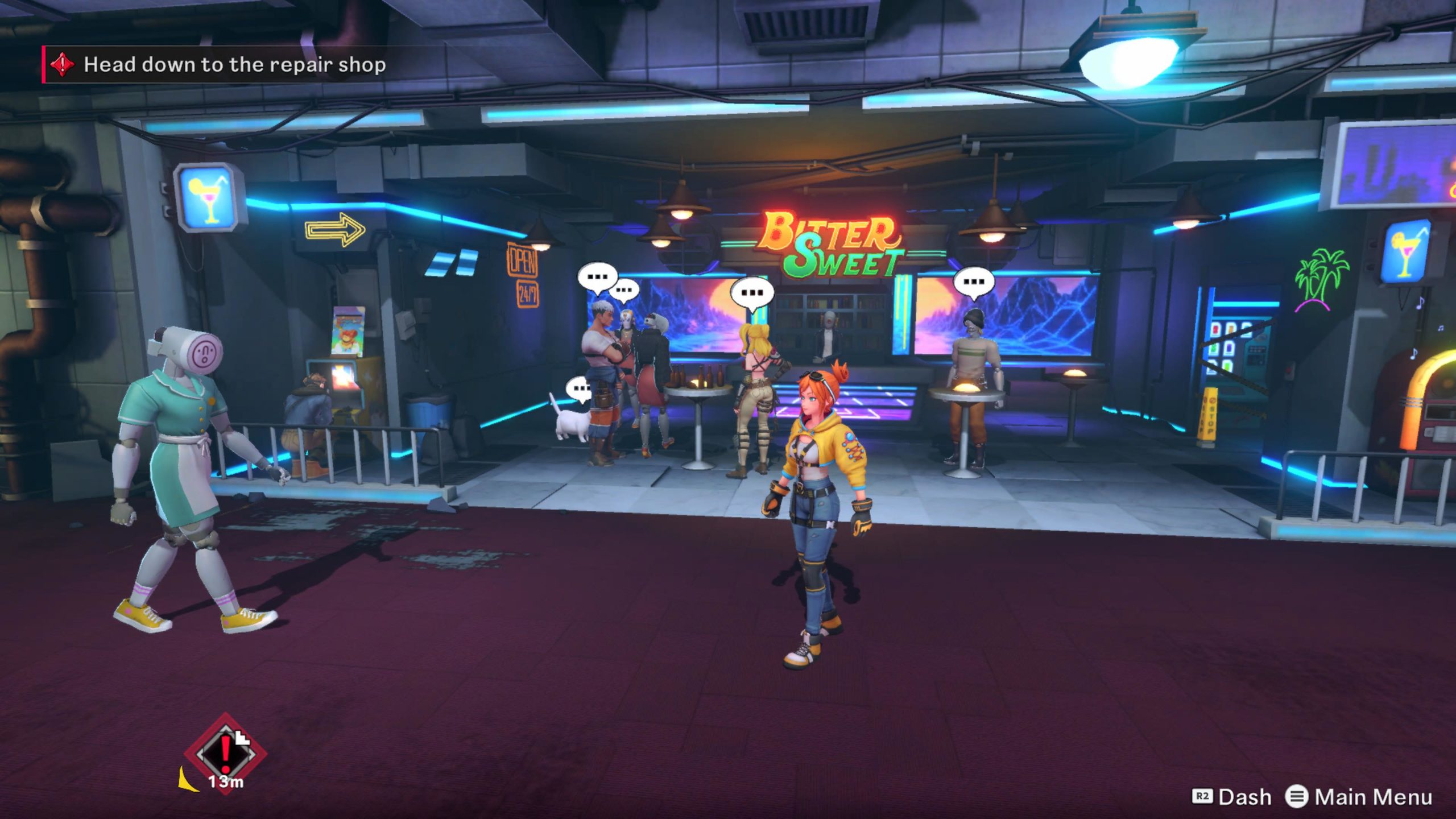
There are a few city/village hubs dotted around Bitter, but don’t expect them to be more than a single scrolling locale with a few NPCs and a handful of shop types. The opening city of Delight manages to add a lift to a couple of other floors, but never really explains if the building is the whole city or if this is some bunker – I just don’t know. There’s so little explanation and world-building. Starbites is far more interested in banter and character, even if it’s often retreading the same tired gags, or constantly showing that booze obsessed Gwendoll is as one-dimensional as we can see from her character design.
I also found a fair amount of glitches, especially in these city hubs. NPCs just walk through stuff all the time. You can be having a cutscene or a conversation, and a TV-headed robot will just casually walk in, through the party characters, stand inside a table nonchalantly, and then move on, shifting through people like they aren’t there. It’s disconcerting to say the least.
Bitter Sweet Symphony
I enjoyed Starbites music, plenty of upbeat bops as you explore, or recognisable themes in towns. Many of them had a funky chiptune edge that I appreciated. Starbites is also fully voiced throughout for virtually everything except a little incidental chat around a few quests. When I started, I found the default Japanese voices too grating to continue, but the English voice artists were mostly okay, with a few you’ll recognise from other anime or JRPG games.
Overall, Lukida’s story has some charm, but it was a shame that it was less concerned with a good plot and more a strung-together line of fetch quests and excuses to engage in the fun, if repetitive, turn-based combat. It didn’t overstay its welcome by being a mammoth Xenoblade-style story, but instead clocks in around 20 hours. No sooner have you gathered all the annoying party companions than the story just kind of ends.
The graphics may be low-poly, but Starbites has been made with deliberate care and love. There’s a fun turn-based system to while away a few hours. And while it may sound like I had a fair amount of criticism, there is enough shiny and good to find something worth salvaging, even if it’s just a rough low-poly diamond maybe, to keep you going when turn-based games are a hard thing to find.
Starbites is available on 21 May 2026 on PlayStation 5 (review platform), Nintendo Switch, Nintendo Switch 2 and PC via Steam.
Developer: IKINA Games
Publisher: NIS America
Disclaimer: In order to complete this review, we were provided with a promotional copy of the game. For our full review policy, please go here.
If you enjoyed this article or any more of our content, please consider our Patreon.
Make sure to follow Finger Guns on our social channels –Twitter, Facebook, Twitch, Spotify or Apple Podcasts – to keep up to date on our news, reviews and features.