

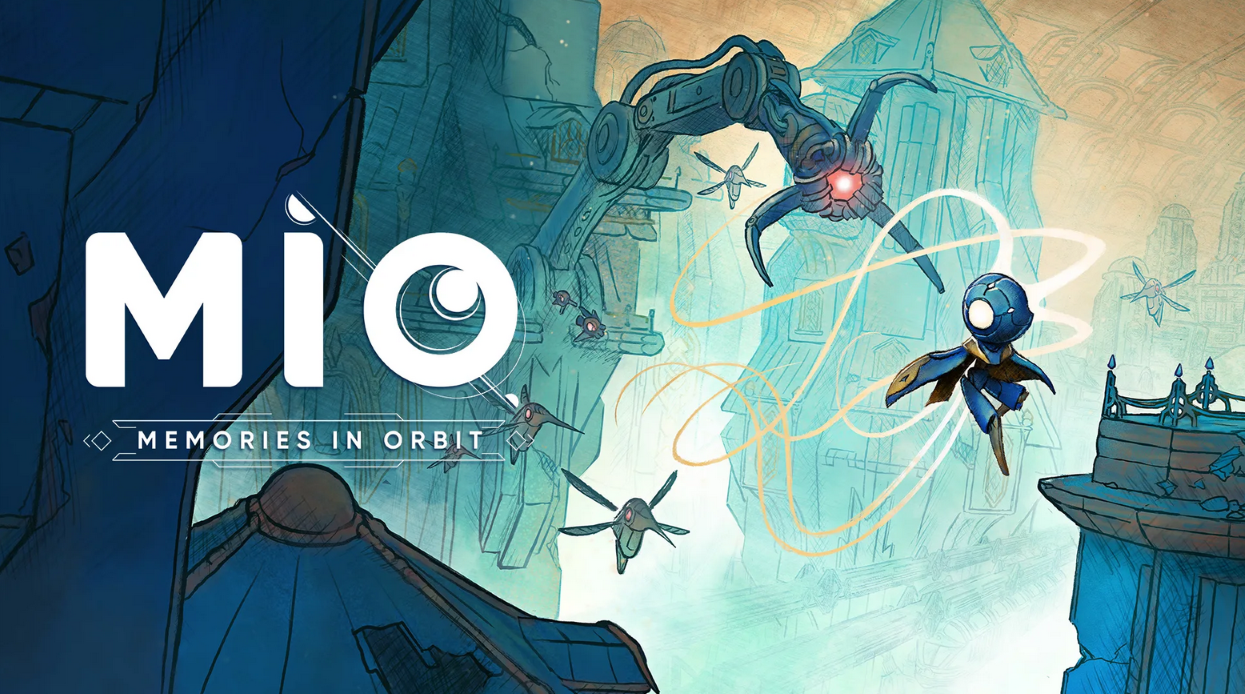
Before the mellow future-dystopian Hollow Knight vibe had really settled on me, and I’d downloaded and assimilated what MIO: Memories In Orbit really was, I noticed that my little MIO droid wasn’t hitting the enemies with her hands, or a blade. She was whipping them with her hair wires! My mind played Willow Smith’s I Whip My Hair Back and Forth straight off, and I realised that not since Bayonetta have I fought so hard in a game using my hair.
MIO is, of course, a lot more than hair whips. It’s a challenging little robot metroidvania, with a component list that includes precision platforming circuitry from Celeste, boss wiring soldered from Hollow Knight, a graphics card lifted from GRIS, midi files from Hyper Light Drifter, and of course an old core from Metroid. It’s also none of those things and all of them at once.
In a dystopian future, aboard an automated arkship lost in the stars, robots are the only remaining survivors. They have remade themselves over the millennia into creative images based on their functions, and they have degraded and broken down. It is a little more setup or worldbuilding than it is an explained plot, but that’s the gist. Little MIO awakens, given the power to resurrect the ship’s systems from their long dormancy, while searching for lost robot companions along the way.
While its scenery and music are quite striking, the plot of MIO is not much more than a reason to explore this beautiful organic techno wilderness. I found the robots had only the barest of personalities, and little MIO basically none at all, but it’s testament to its gameplay and level design that I found myself wanting to explore it for more gameplay-related reasons; upgrades, nacre points, health to take on bosses, and finding more ways to expand my arsenal of moves.
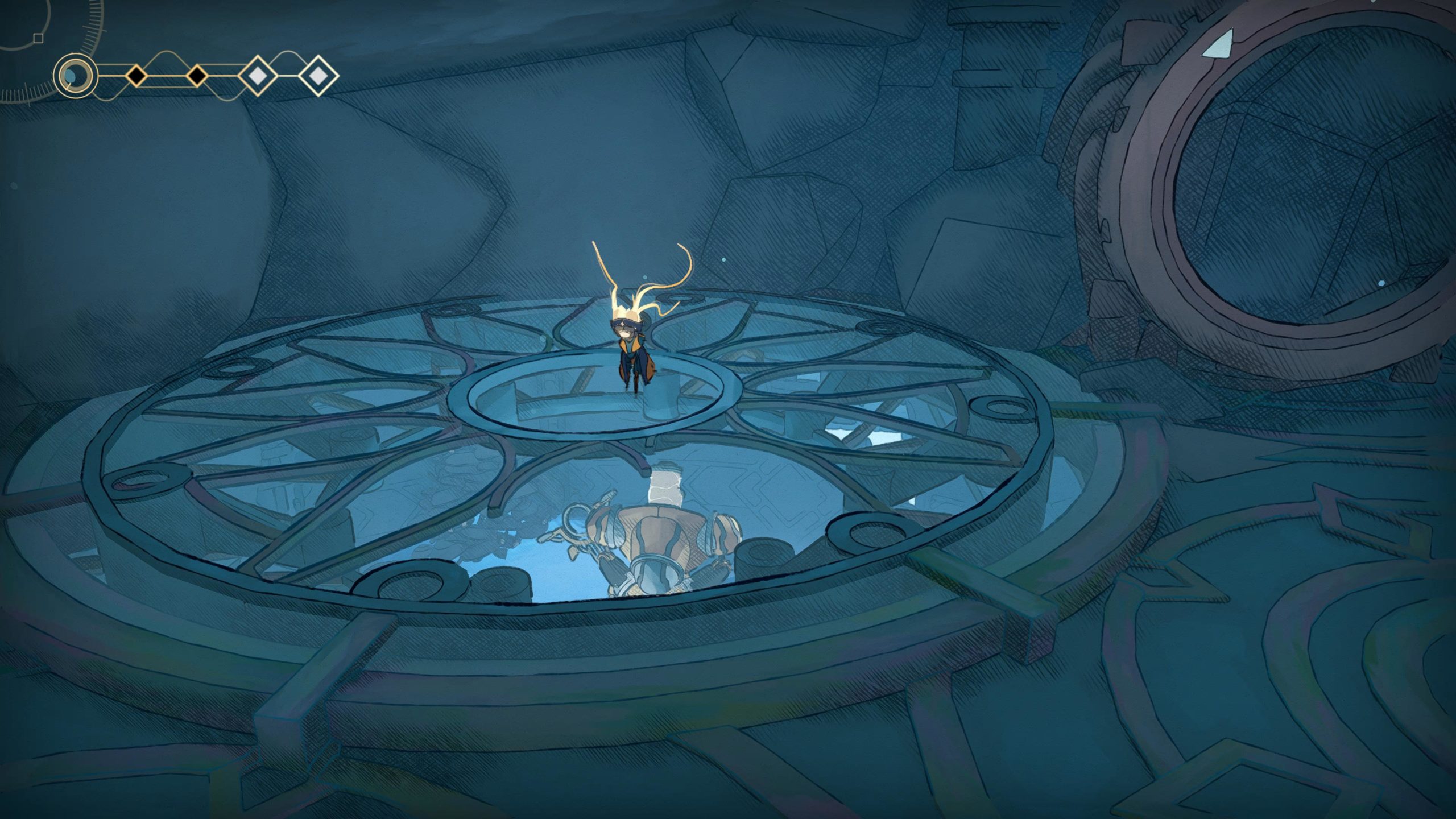
Like Celeste, MIO is a precision platformer much of the time, requiring the player to master double jumps, gliding, boosting in specific directions, slashing flowers in midair to repower the boost, and so on, and to do this multiple times, perfectly in quick succession. Players of Hollow Knight will well know the exquisite frustration that goes along with sequences like this, but it’s all very well put together, and very playable. Controls are tight, and nothing feels floaty, unless it’s meant to, like when you’re in a gust of air.
That said, it’s also a Metroidvania, and at some point near the halfway point you get the power to use your hair-trodes to climb up walls and ceilings and of course, access a whole raft of new areas. But to some extent, it was goodbye to the precision platforming at that point (not completely), and after the five dozen retries of some portions of the deep REDACTED section, I didn’t miss it. I revelled in my ability to climb the walls like a robotic spider. So satisfying after all the work to get there.
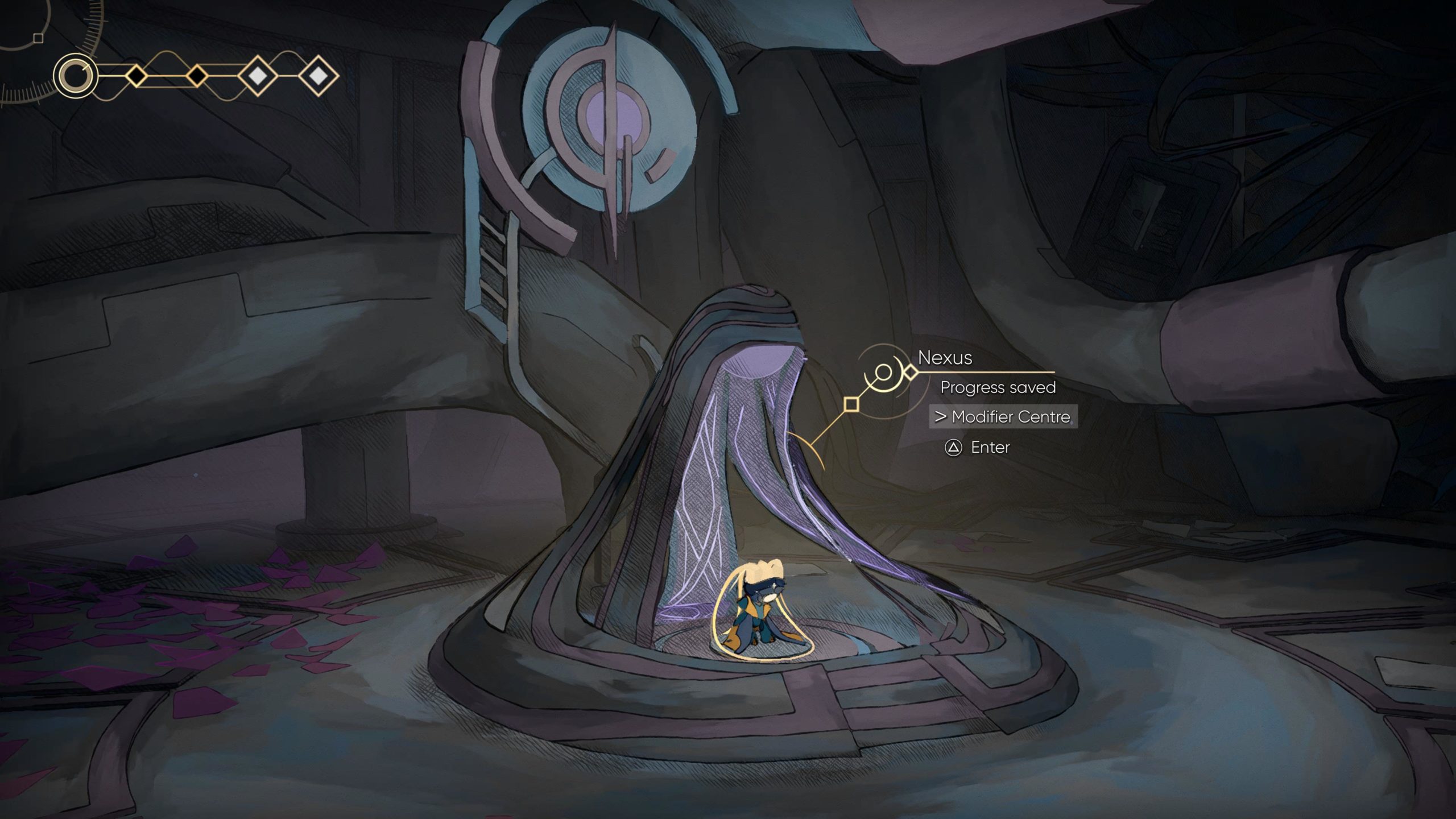
Also much like Hollow Knight, MIO Memories of Orbit is a soulslike metroidvania; There’s a kind of souls you accumulate called Nacre in this case, which you can use to heal at stations (like sub-bonfires), buff and permanently upgrade MIO (at full-bonfires); there’s the light pool, where all your lost Nacre goes when you die, helping you gain a better map of the world at the very beginning; there’s the difficult combat and the long winding routes to find shortcuts to the next area. If you think about it, soulslikes, or at least the Fromsoft variety and their nearest imitators, follow the same structure as a Metroidvania, seeking out shortcuts, keys, or new abilities to access the next area. The two genres synchronise here in MIO like a well-oiled dystopian droid.
Combat with your average enemies probably won’t have you doing dozens of retries, but some of MIO’s bosses are Hollow Knight levels of difficult and can present something like a skill check when you encounter them. Thankfully, there’s usually more than one way to explore at any one time, so you aren’t completely stuck. I found many of the bosses to have great unique designs and to require practice to master. The Unicorn and Atmos come particularly to mind near midway through the game.
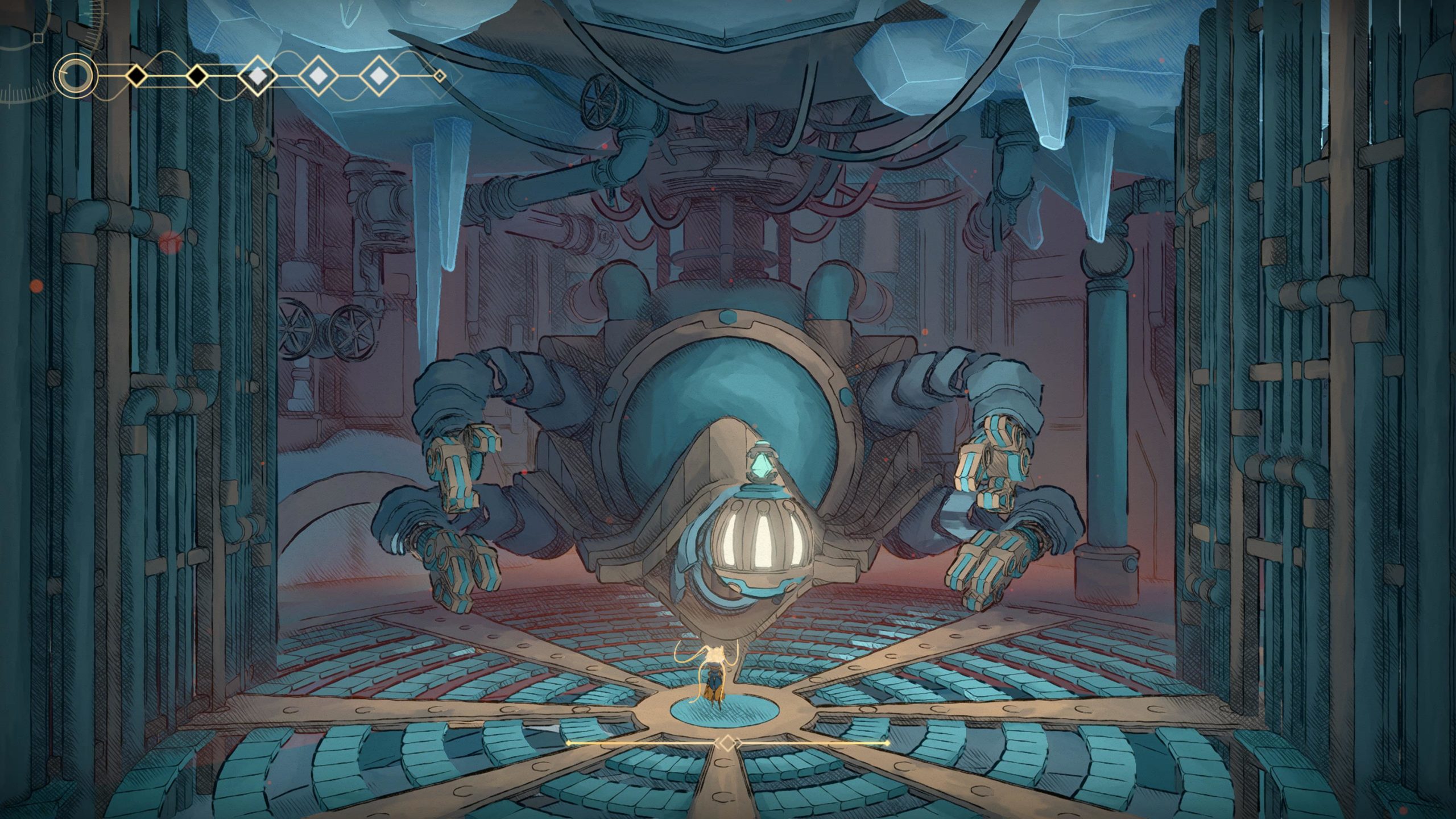
You have an upgrade system that can feel quite restrictive for a long time – this isn’t the kind of game to give you mountains of power-ups to make you feel invincible. Instead, the upgrades are drip-fed each time you open one particular robot’s locked pipes, as you search for their lost friend Tomo. This pillbug-looking robot rewires your head, drops you in a 2D line drawing level and gives you a new power to practice with. In this way, you gain a dodge, a hair grapple to whisk you towards enemies, and the aforementioned spider wall crawl eventually.
The other type of upgrades are more optional, found from scattered items, and functioning something like the badges in Hollow Knight. You have a finite amount of memory, and have to decide which upgrades fit your purposes; more nacre for when you are exploring perhaps, but maybe ditch that for more power and hit points when facing a boss.
And even with all the upgrades in the game, you never really gain the type of power-up that would make you fearsome. You are always a few hits from death, and bosses are always massively beyond your power to contend with. That is until you learn their moves and practice. I appreciated the focus on keeping the player weak, as it worked with the ethos of the game and the world and the aesthetic of the whole bundle.
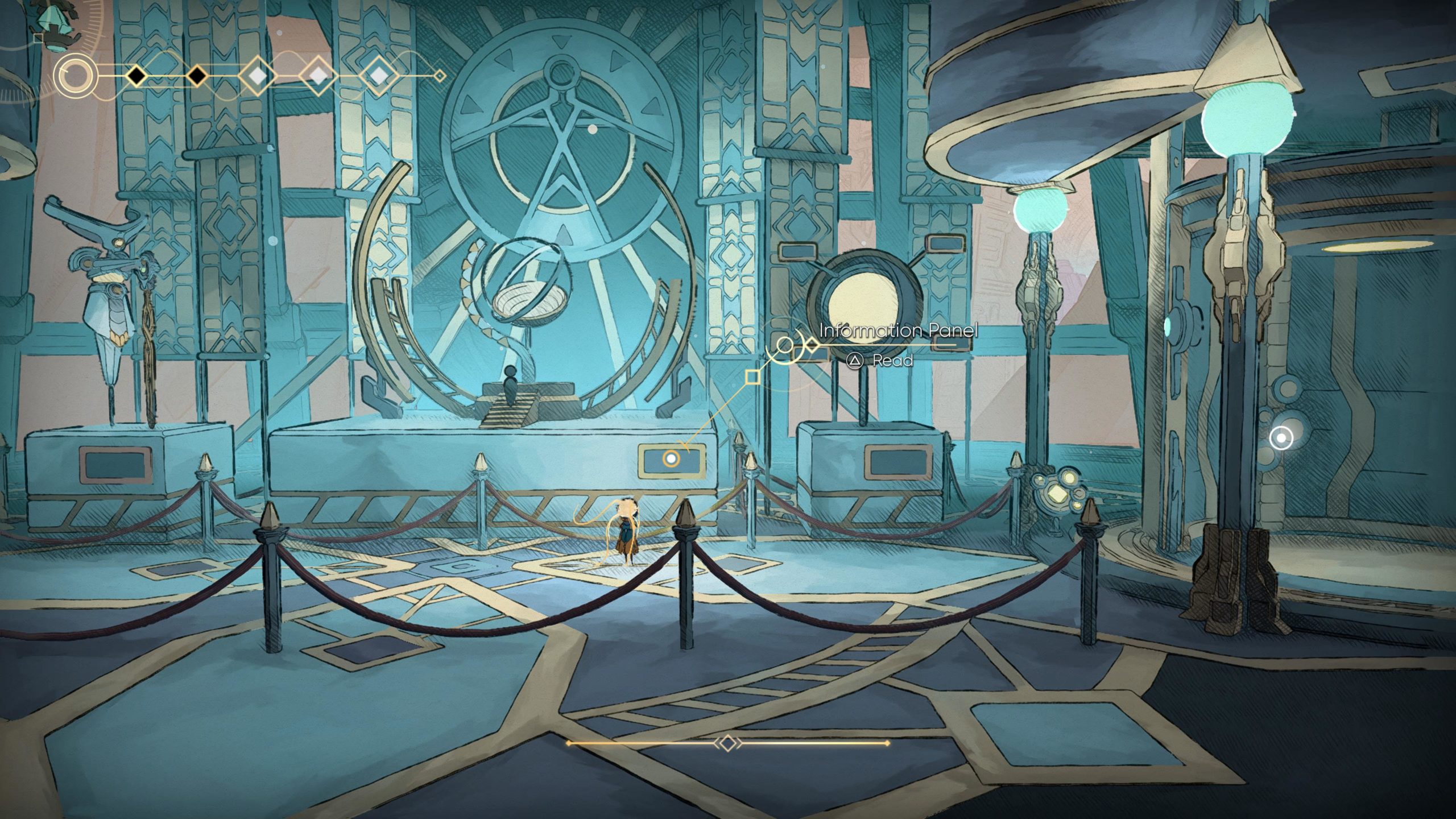
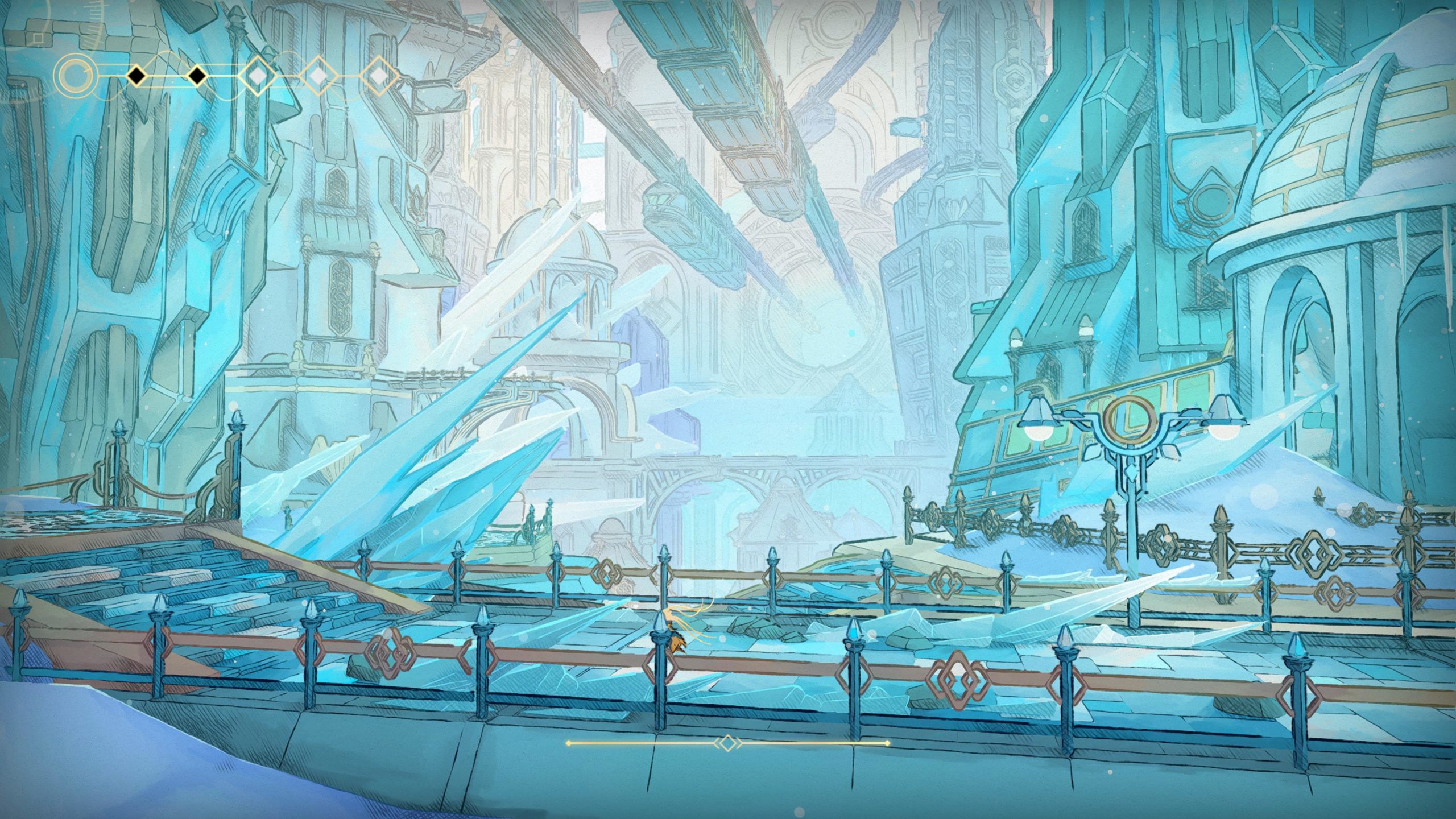
MIO: Memories In Orbit is a strikingly pretty game taking more than a passing inspiration from titles like GRIS; it’s got this lovingly applied crosshatched pencil effect over all the shadowing in the game that I loved from first seeing it back in demos and reveals. There’s some fantastic organic world design as well that makes great use of the robots, wiring, and tubing to make something both living and technological. I could see the millennia of machine evolution and organic overtake throughout.
I also found something I hadn’t known to expect – a beautiful and engaging soundtrack that squeaked and booped and evoked Disasterpeace and his Hyper Light Drifter soundtrack in all the right places. This is one for the OST lovers, even if they don’t play the game.
While I found MIO: Memories In Orbit to be fairly lacking in an interesting plot (the usual part of games that engages me most), I found instead an organic robotic world compellingly designed to encourage exploration and reward practice. I found the designs, colours, and stark beauty of both the graphics and the soundtrack kept me playing long past the point where similarly unfocused narratives have left me cold. Gameplay is king, and MIO: Memories In Orbit really nails the fundamentals, the tight controls, the loop of satisfying exploration, upgrading and finding new ways to reach new places.
MIO: Memories In Orbit releases 20th January 2026 on PlayStation 5 (review platform), Xbox Series X/S, Nintendo Switch, Nintendo Switch 2, and PC via Steam.
Developer: Douze Dixiemes
Publisher: Focus Entertainment
Disclaimer: In order to complete this review, we were provided with a promotional copy of the game. For our full review policy, please go here.
If you enjoyed this article or any more of our content, please consider our Patreon.
Make sure to follow Finger Guns on our social channels. Twitter, Facebook, Twitch, Spotify or Apple Podcasts – to keep up to date on our news, reviews and features.