

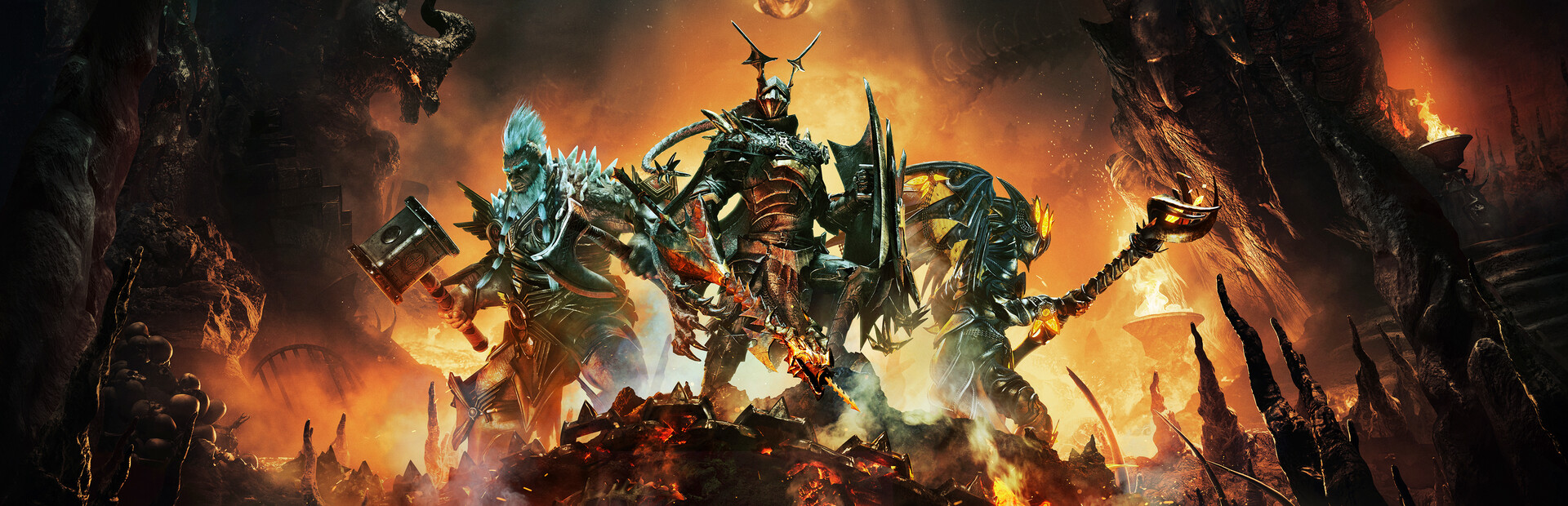
Imitation is the most sincere form of flattery, or so they say. If the old adage is true, then Diablo must be blushing something fierce after laying eyes on Dragonkin: The Banished. An ARPG that’s been cultivating in Early Access for some time, this draconic hatchling has reached adulthood and is ready to besiege the world in fire and flame.
While Dragonkin: The Banished makes no secret of its Diablo inspirations, it’s no mere knock-off or clone. Rather, it’s an addictive and compelling proposition in its own right. Did it activate the same muscle memory from my time with Blizzard’s demon-slaying series? Of course, but it’s hard to argue that as a bad thing when the slaughter of thousands of baying monsters is so ludicrously entertaining.
Would You Dragonkin-dly?
Have you ever played an action-RPG before? If you’ve answered yes, you can safely go and pick up Dragonkin, and you’ll know what to do right off the bat. If you answered no, then this could well be your gateway drug into the addictive void of hack-and-slashing, looting and upgrading. Dragonkin: The Banished is primarily focused on the brutal destruction of mobs of foes, and when is that not a great time.
The game is comprised of extensive questlines that’ll have you traversing varied biomes, wreaking bloody havoc at every turn, before returning to your city hub to manage your bountiful supplies of loot and upgrade various facets of your town and character. It nails almost every aspect of this loop, with a couple of caveats here and there, which hold it back from usurping the Lord of Hell’s throne.
First and foremost, the hack-and-slashing, coupled with the class customisation, is fantastic. There are four core classes available (Barbarian, Knight, Mage and Rogue), which can be completely overhauled via skill selection decisions and your choice of sub-class Wrymling. Yes, you do get your very own floating mini dragon, and yes, they are adorable in their suit of armour.
Banished To Exile
Character builds are somewhat more complicated in Dragonkin: The Banished, owing to the Ancestral Grid system. Instead of simply selecting your chosen skills on a traditional tree, you have a space-limited grid upon which you place various hexagon-linked tiles. This is where the extensive options become apparent, and where the confusion can often kick in.
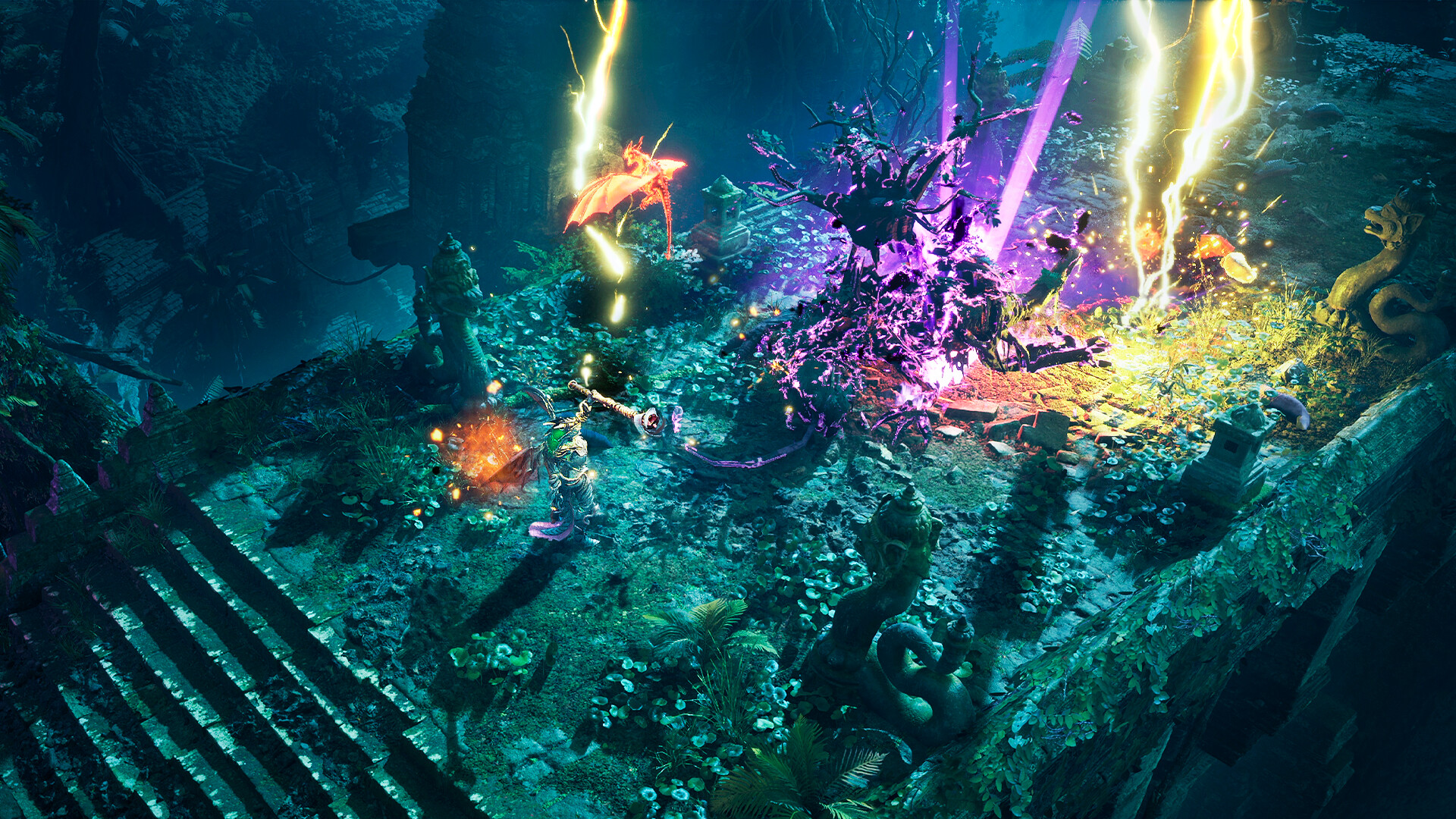
It’s a complicated and cumbersome approach, but one which is also supremely rewarding if you take the time to learn it. My Oracle Mage became a toxin-electric hybrid, dealing out explosive poisons in all directions, before calling down the wrath of Zeus himself in all manner of powerful electric spells. Sometimes, it would be my basic attack that could melt dragon spawn with ease; other times, it would be my special skills dishing out armageddon.
The potential diversity that comes from the four classes and four Wrymlings, as well as various buffs that can all be moved, tinkered with and changed on the fly in the Grid is both impressive and daunting in equal measure. I wasn’t always a fan of having to stop my flow of gameplay to spend 10+ minutes working out compositions, only to realise I’d screwed something up and tanking my previous build. Equally, when I threw things together randomly, I could come out with a Lucifer’s child capable of upending the world’s natural equilibrium, so you win some and you lose some.
Hack Me Down, If You Dare
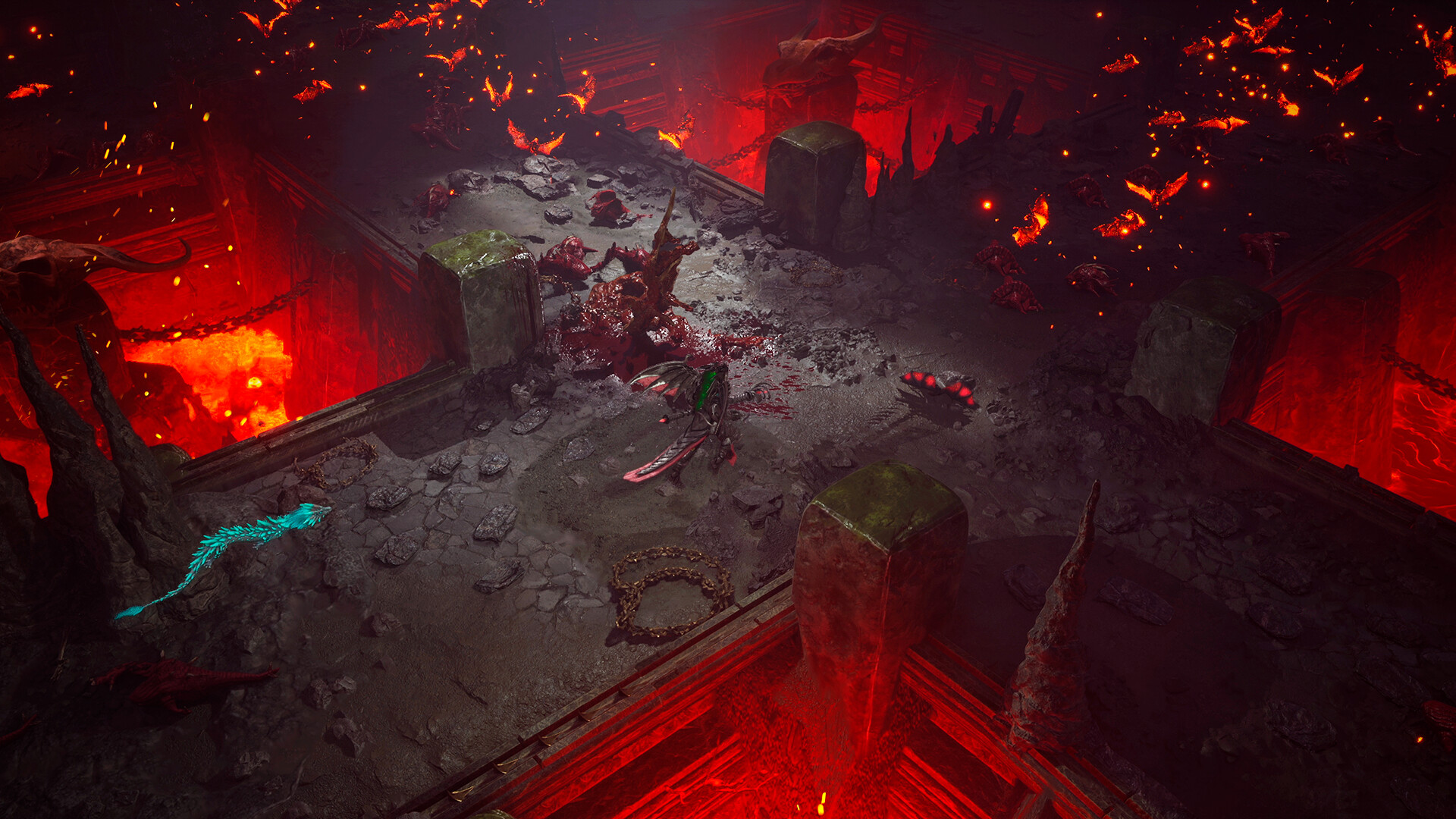
As this is an ARPG, you can expect to start out as a lowly runt, before ascending to near Godhood once you hit the level cap. The combat itself is the expected fare of utilising up to five skills to rain hell down on your enemies. Enemy variety is good, with mixtures of fodder mobs, harder-hitting grunts and a plethora of elite or Champion foes who’ll take far more punishment.
The meat and potatoes of the action is great. Learning how best to counter certain biomes’ most fearsome opponents is satisfying, and the draconic boss battles are full of spectacle and bombast. I did have slight issues with the targeting system, which can often wander off with a mind of its own and focus on an off-screen whelp despite a Champion bull ploughing right through my barrier. Shifting focus from one enemy to another can also feel too “sticky” or cumbersome.
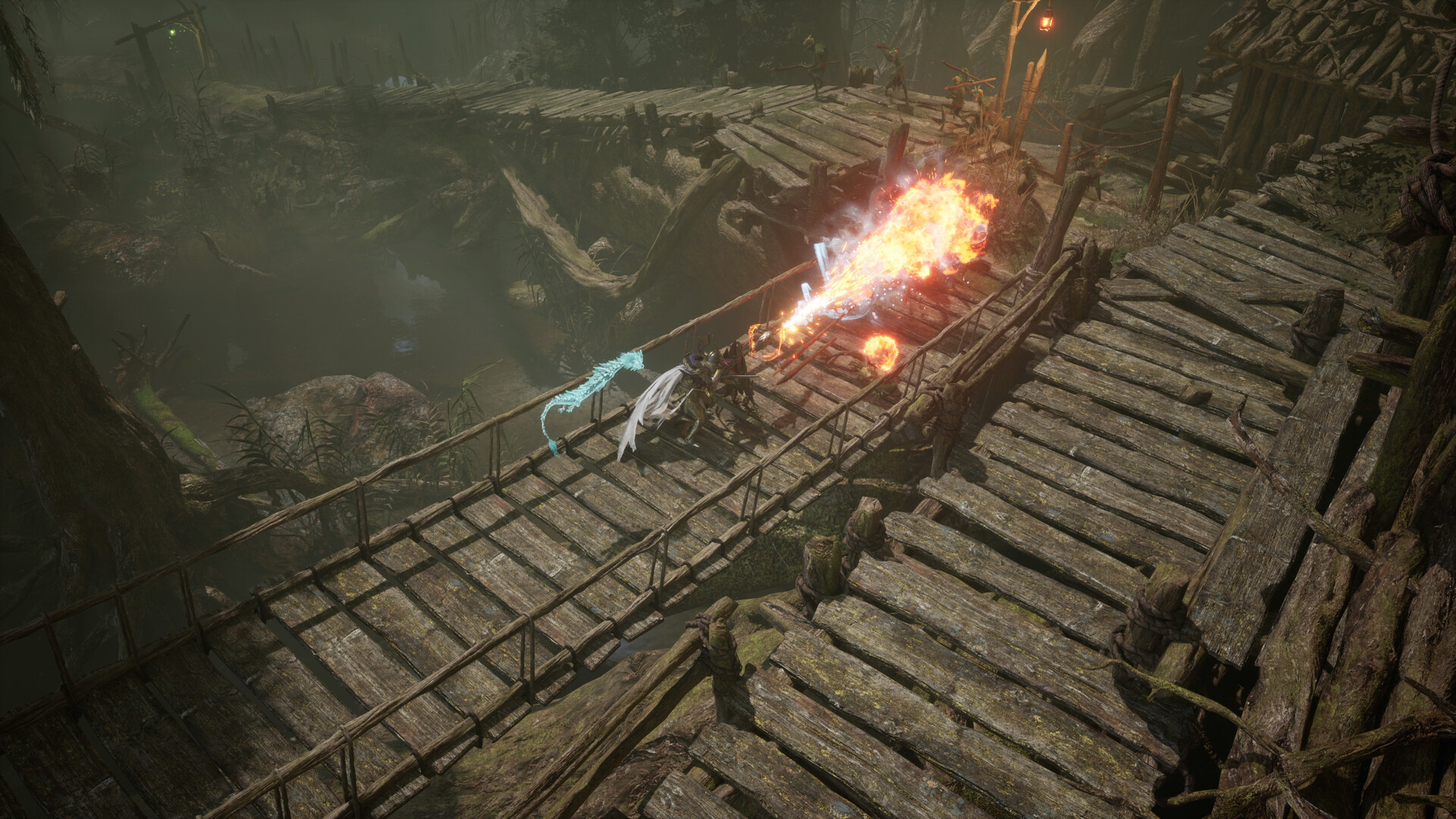
Dragonkin: The Banished’s level design is also thoroughly linear, with constricted walkways the universal language the game speaks. I did suffer a few times when I was ganked into a corner, with no means of redress but to throw my most powerful spell relentlessly and pray I came out the victor. However, there are multiple routes to follow if you choose, with XP-earning collectibles to find dotted about, as well as a gluttony of chests.
Loot Me Not, Dragonkin
Speaking of loot, what would a Diablo-inspired game be if not a colourful equipment collector sim? I’m pleased to report that if your brain gets a thrill at the sight of overflowing inventories, you’re going to love Dragonkin: The Banished. Loot is dropped constantly, with a mix of common to legendary varieties, before throwing in Mythics, Divine and Draconic options.
More importantly, dumping your inventory is relatively painless and flows into the progression cycle. In your city hub, you can sell unwanted gear, dismantle it for passive skill buffs, craft accessories or new potion types, and almost everything else in between. It’s easy to navigate, and sorting out gear is pretty straightforward, which is a blessing. The crafting resources are quite stingy, leading to some bottlenecks at points, but it’s easy to see that a lot of balancing was done in Early Access to smooth much of the progression.
While Dragonkin promises a city that expands over the course of upgrading it, it’s more simple than that. Acquiring city XP via collectibles and feats allows you to select improvements for vendors and shops, which get a visual uptick to boot. It does the job, but maybe not quite as exciting as advertised. At least the upgrades are impactful and tie back into the power fantasy well.
Scale The Dragon
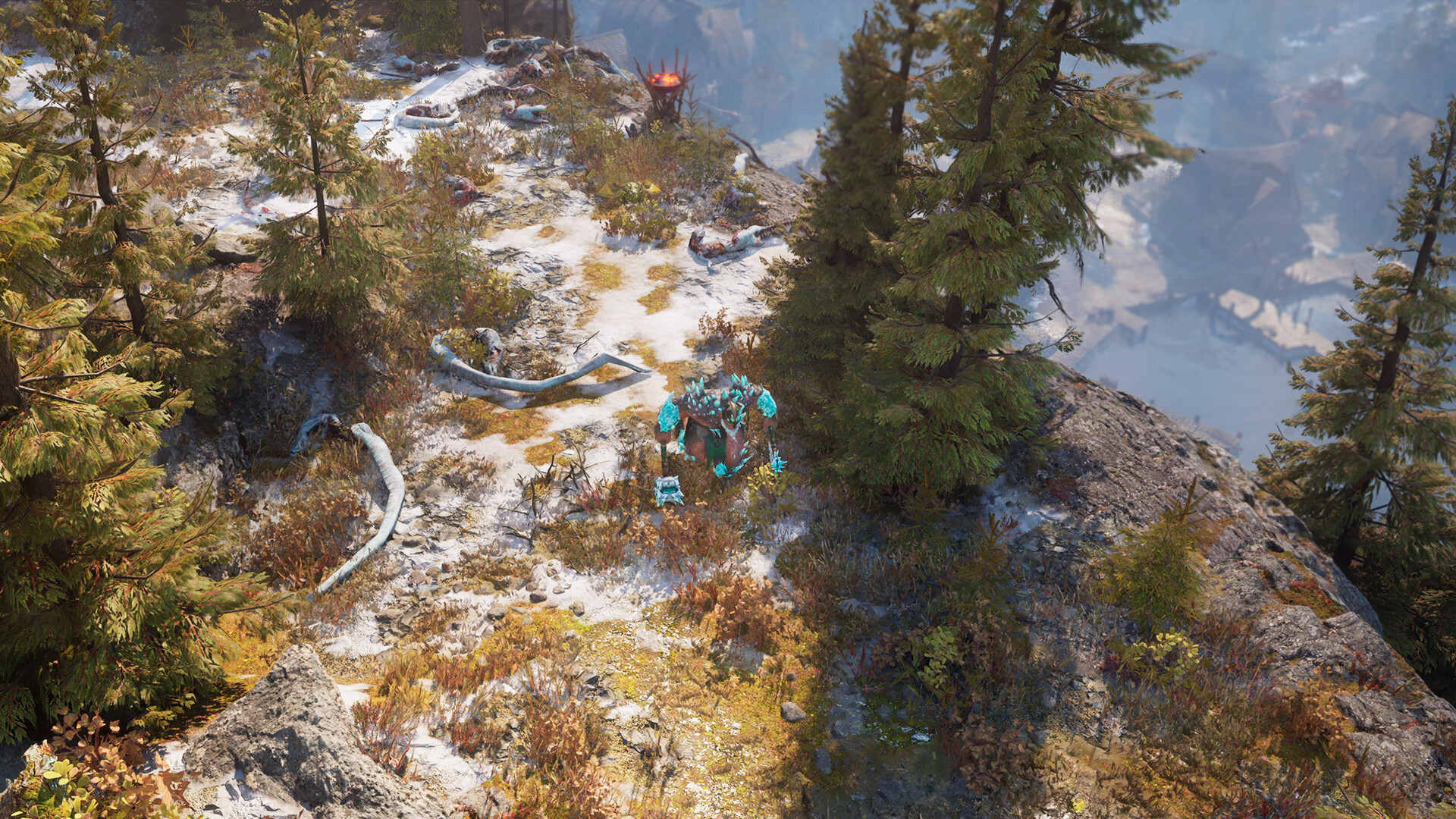
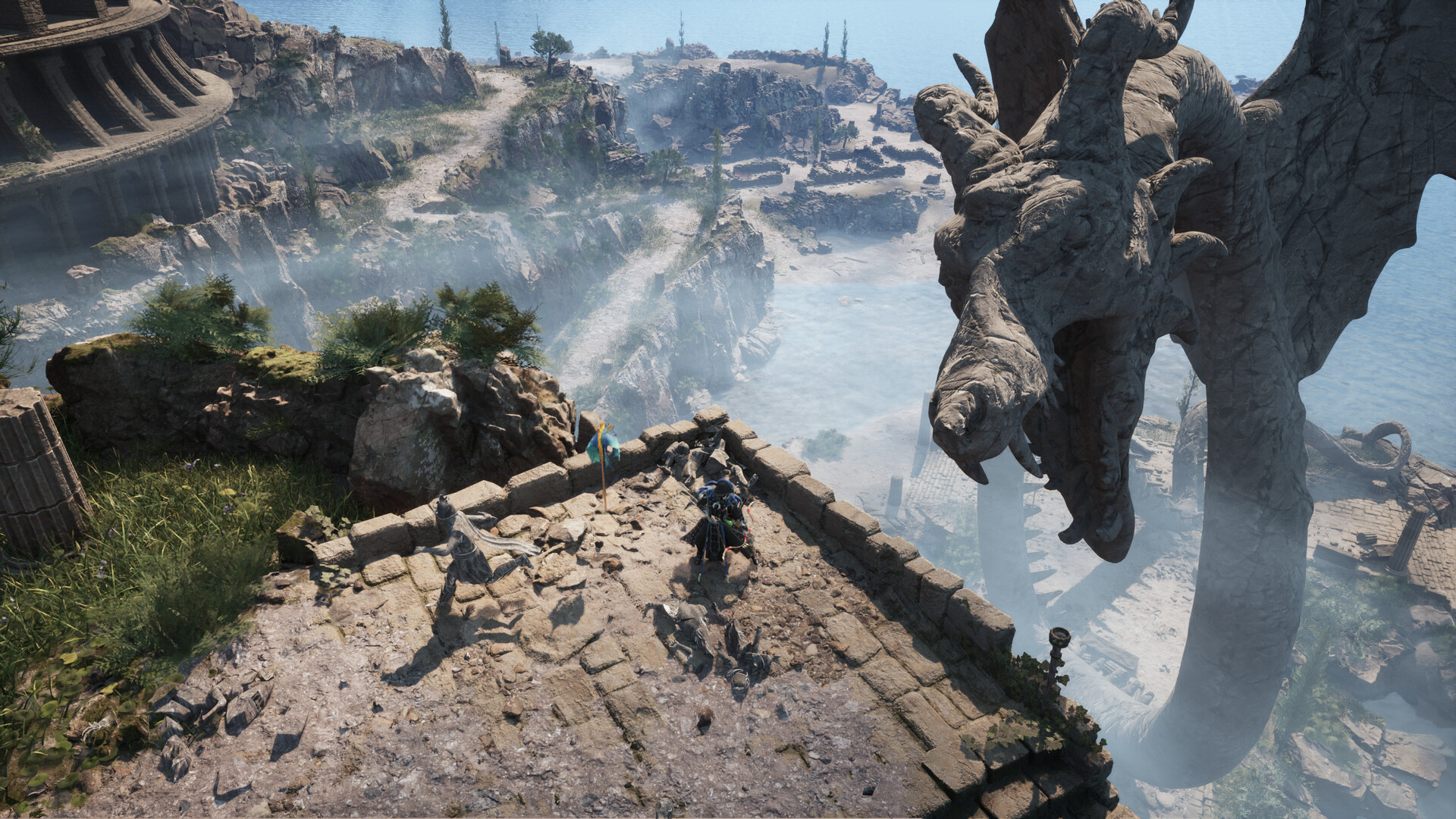
While we’ve all become accustomed to the ridiculous production values of Blizzard’s series, with stellar cutscene direction and stunning vistas, Dragonkin: The Banished holds its own, despite the lower budget. Each area of the world is a diverse and beautiful vista. Sunkissed shores with gorgeous blue seas collide as you wage war with dragonborn. Active volcanoes erupt in the background as you fend off yet another crowd of enemies.
Do enemy animations stop working after an extended period in a location? Certainly. There’s a particular charm to seeing an overly large, toxic frog animate like it’s in a PS1 de-master. The framerate can just about keep up with the impressively high enemy counts, though you may spot some on-screen spawning of enemies just in the distance. However, it runs relatively seamlessly, and the scale of battles is genuinely jaw-dropping in places.
Dragonkin: The Banished also launches feature-complete, with a compelling endgame filled with hunts. Each hunt blends previous questlines with new modifiers and random encounters, and you can start new characters in the same City, allowing you to skip the story and go straight to the grind, while still keeping all of your unlocked vendors. Many ARPGs fall foul of running out of steam come the end point of the story, but not on this occasion.
We Are Dragonkin
I played through Dragonkin: The Banished solo for my runtime, but there is the option of up to 4-player co-op to enjoy, if you have some like-minded dragon hunters to join you. As ever, any game played with buddies is a better time, but Dragonkin is more than worth the price of admission even if you’re a loner like myself.
It bottles that compelling ARPG addictive lightning perfectly. The constant gauntlet of mobs to unleash your power upon, the endless realisations of new builds, the ongoing joy of dumping entire armouries’ worth of goods to upgrade your skills. It all culminates in a confident entry into the genre, one that’s clearly had time to grow its wings and become its own scaly beast.
If you’re one to lose dozens or hundreds of hours to a Diablo campaign, Dragonkin: The Banished will be an ideal alternative should you wish to trade demons for dragon spawn. Assemble your squad of fantasy heroes and watch the hours trickle past; you won’t regret it.
Dragonkin: The Banished is available now for PlayStation 5 (review platform), Xbox Series X|S and PC.
Developer: Eko Software
Publisher: Nacon
Disclaimer: In order to complete this review, we were provided with a promotional copy of the game. For our full review policy, please go here.
If you enjoyed this article or any more of our content, please consider our Patreon.
Make sure to follow Finger Guns on our social channels –Twitter, Facebook, Twitch, Spotify or Apple Podcasts – to keep up to date on our news, reviews and features.