

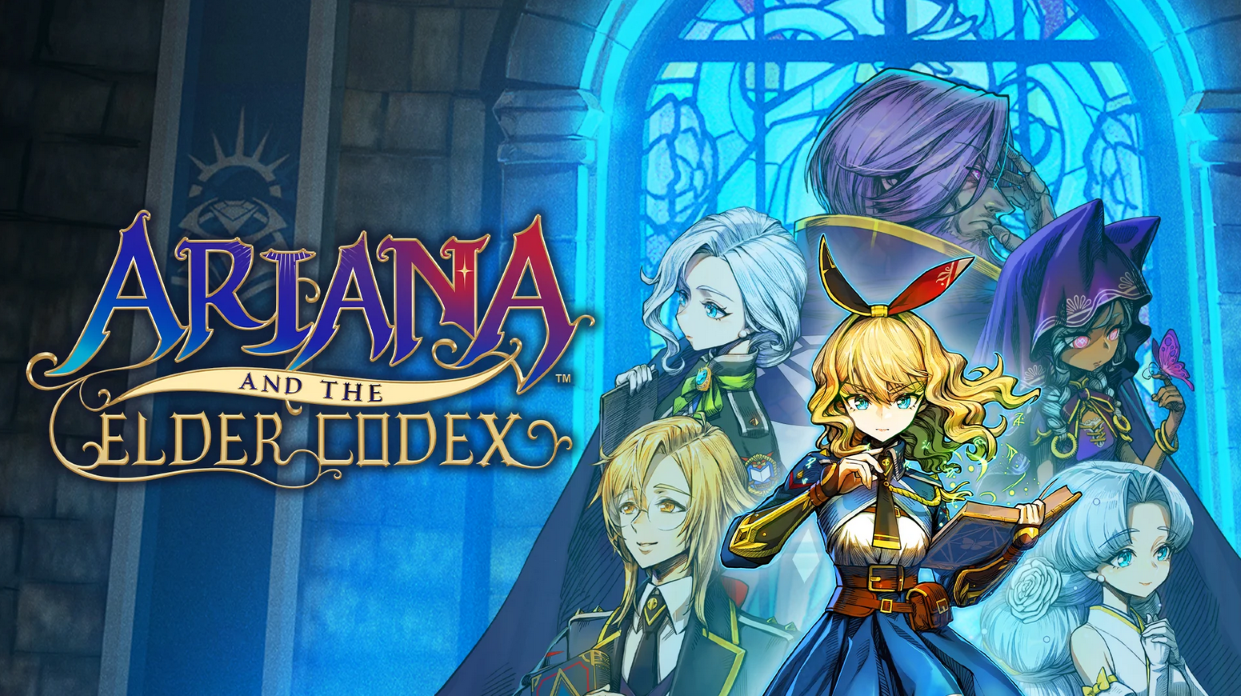
Ariana and the Elder Codex looks, on first glance, to be a long-lost entry in Vanillaware’s catalogue, with that similar intricate artwork and 2D side-scrolling style that made Muramasa and Odin Sphere so memorable. But do not be fooled by a quirky protagonist and delicate artwork. This is not a Vanillaware title, this is not in the same league as Vanillaware’s titles or even games with passable 2D combat systems. Ariana and the Elder Codex is vanilla at best.
Ariana and the Dull Stories
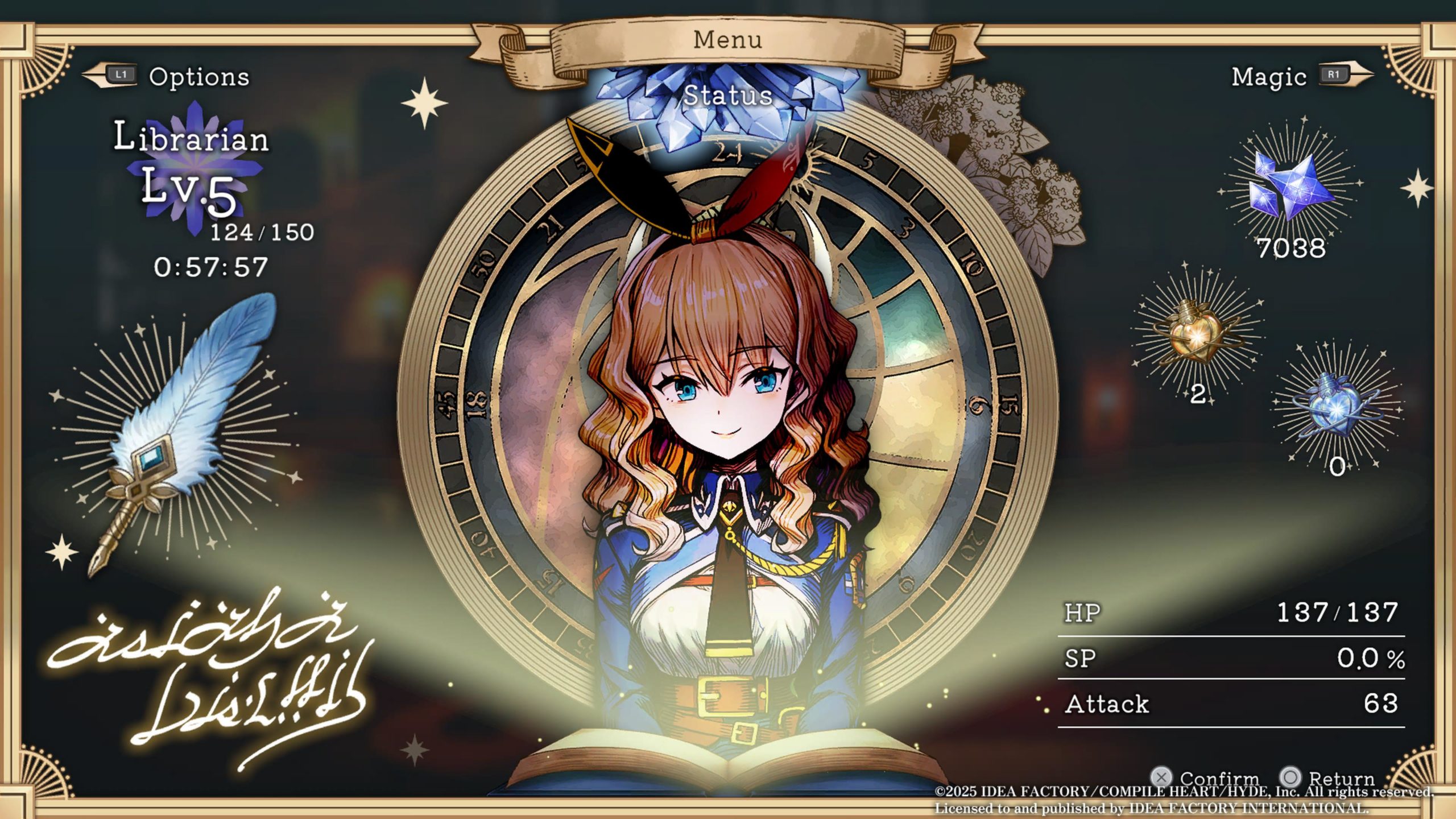
The titular Ariana works at an ancient magical library that contains and repairs the magical codices (books) that set down the very elements themselves. The stability of the world, the use of magic, these things are controlled by the state of the books the library contains. So when a nefarious villain sabotages the seven most important Codices of all, it is up to Ariana to repair them.
Ariana can quite literally warp into the story inside a book and repair its pages from within. As this is a game, that takes the form of defeating enemies and bosses and completing levels and areas, which then restores this story to its original form. As you progress within the books you follow exceptionally dull tame little vignettes that go basically nowhere, and a slightly more intersting narrative in the library upon Ariana’s frequent returns, regarding the magic shortage and Ariana’s efforts having an effect on people’s lives. There’s also the mystery of why Ariana was targeted, as demons and enemies should not be in the stories, and only she can reach into the stories themselves, and finally the mystery of who the culprit indeed is.
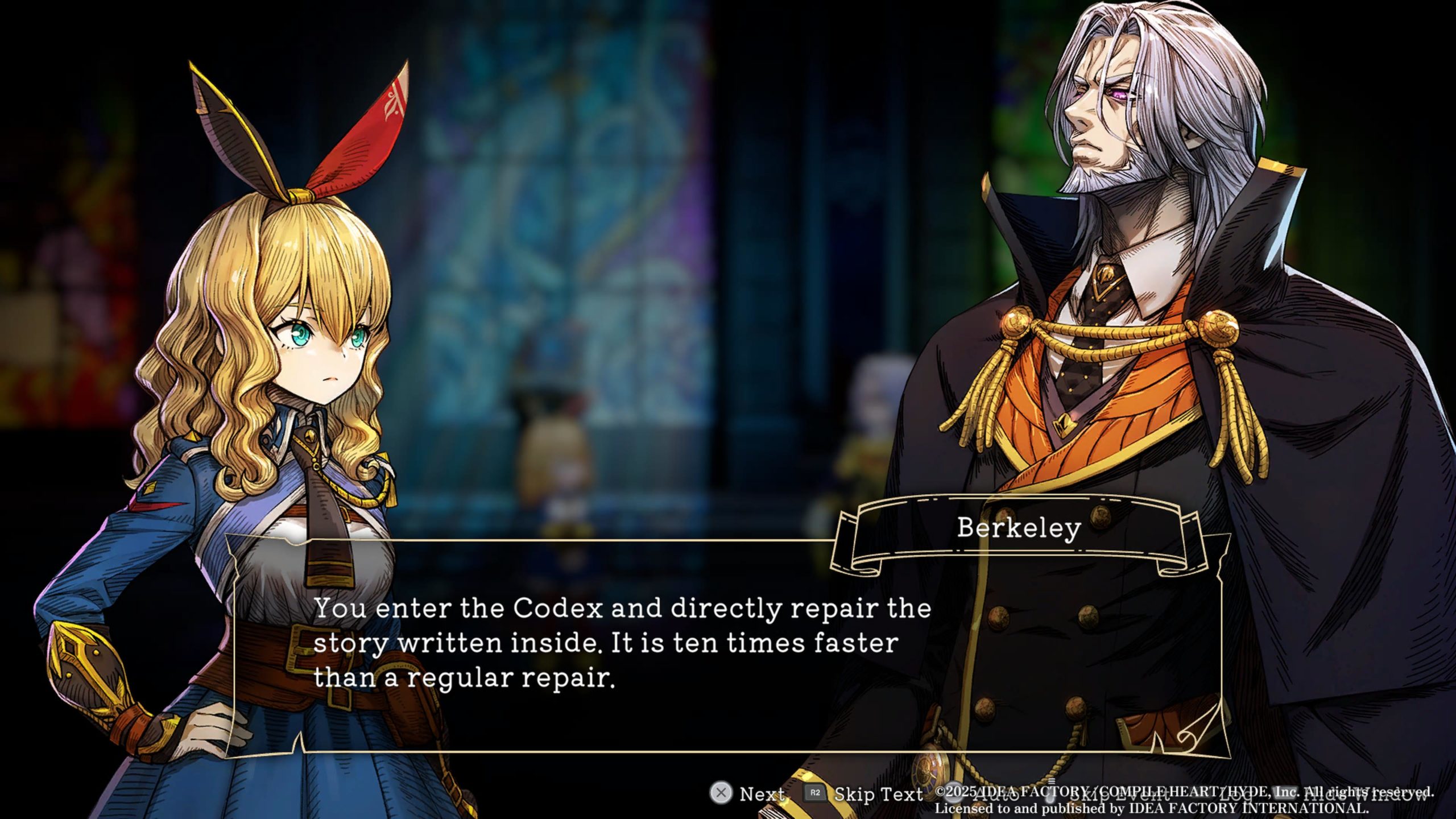
On the outside of the Codices and levels, the characters in the library were passable, but it’s also quite pedestrian and doesn’t do anything particularly inventive that you haven’t seen in any other story about entering a story – it reminded me constantly of The Never Ending Story, for example. However, the stories inside the codices are really dull and lifeless tales of weird little sliding ghosts that you then have to follow from point to point to make their stories play out. I had absolutely zero investment in these vignettes, full of wonky dialogue and dull plots. I wished constantly for something interesting to happen in the plots, and it never did.
Lastly, even in the passable stories in the library, the anime side of things is heavy on the over-the-top exchanges and dialogue, and can be trying at times. There’s a fair bit more exposition than even decided to share above, and it’s just thrown into conversation regularly, making characters sound unreal quite often. And then it all just kind of goes nowhere interesting.
Ariana and the Lifeless Platforms
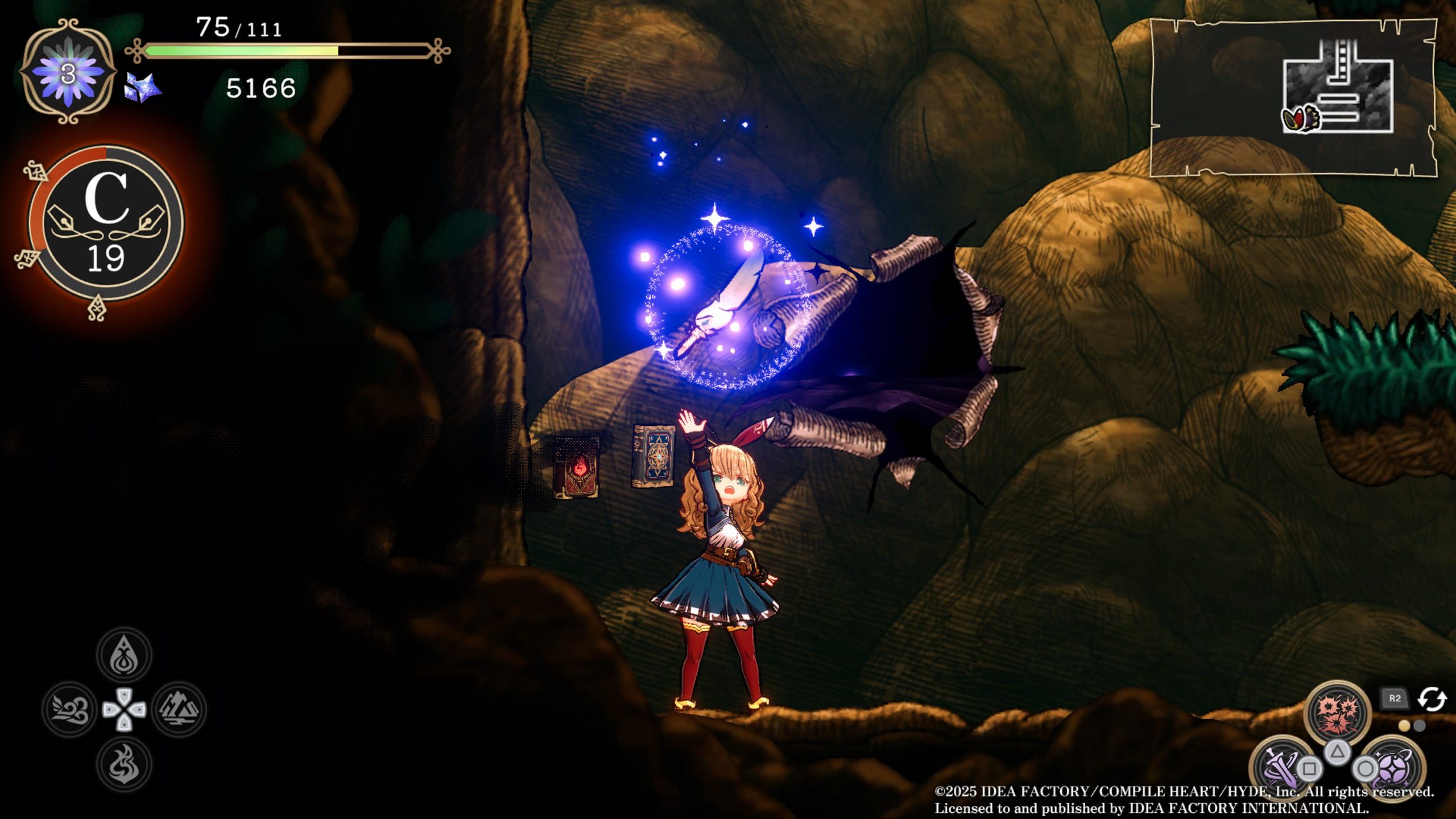
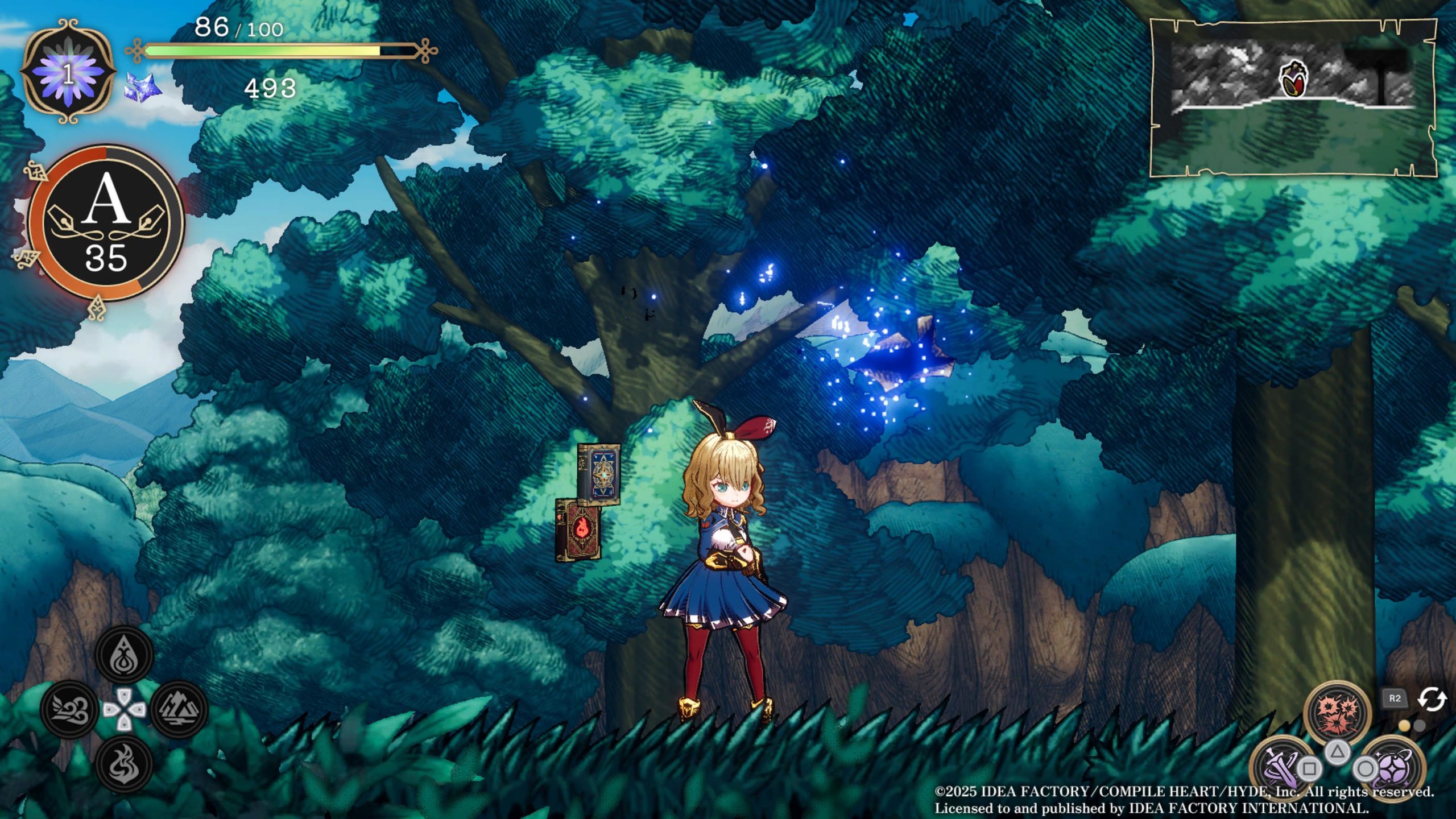
The gameplay of Ariana and the Elder Codex is largely combat-based, apart from perhaps a little light exploration. You are making your way through platforming levels, but these are simplistic to the point of feeling like placeholders during the development of the game rather than the finished article. They have that look and feel of procedural levels you find in roguelikes, but many good roguelikes can make levels hundreds of times more interesting than these.
Ariana can double jump and dodge about to get to a few tricky jumps, but for a game employing platforming to even this cursory degree the controls are very floaty, and she falls off ledges all the time. She has this sort of slide as you change direction or land, and that can just slide you straight of the tiny ledge you are trying to make.
Ariana and the Wonky Combat
The rest of the game is combat, and I wish I could say the game turns a corner here. But combat is painfully bad in Ariana and the Elder Codex. You dart about on a 2D plane, wapping your sword around and perhaps your short-range magic, and a lot of the time just hope for the best. Hit boxes are crude and the game takes little notice of directional commands. You are constantly flailing about trying to hit fast-moving enemies, and Ariana can’t seem to change direction with anything like the speed I need her to. She also can’t turn while in a combo, and you can be holding the other directions, and she can’t obey until she finishes.
Enemies take virtually no notice of you or where you are in combat. Mages-like sprites seem to just fire off at random, which can make them easy to dodge, but also unpredictable. The larger guardsmen with big shields in the Earth Codice annoyed me no end. You’d think that dashing behind them and hitting their back would get the good hits in, but whether they are facing right or left, if they hold up their shield, you can’t hit them. It takes no notice of whether you are on the right or left. They can virtually only be hit when they are walking towards you.
Bosses here are laughable, and present almost no challenge beyond fighting against the badly implemented mechanics of the game itself. One was simply a case of dodging right and left and then button-mashing half its health away while it simply stood there. I felt bad. Another was a ridiculous bird you have to fight before you get the double jump. Meaning you cannot reach it in the sky, and have to wait for every slow descent to have a single shot at it – I spent something like ten minutes just chipping away at its health. Only then did I get given double jump, which would have made the fight last seconds.
I found combat so lifeless, bland, broken and soul-destroying I didn’t want to progress in the game inside the codices at all. I didn’t want to play it, and if I hadn’t been playing for review, I think I would have given up after the first dungeon. As it is, I did three more, and I never want to play this combat system again.
Ariana and the Vanilla Flavoured Water
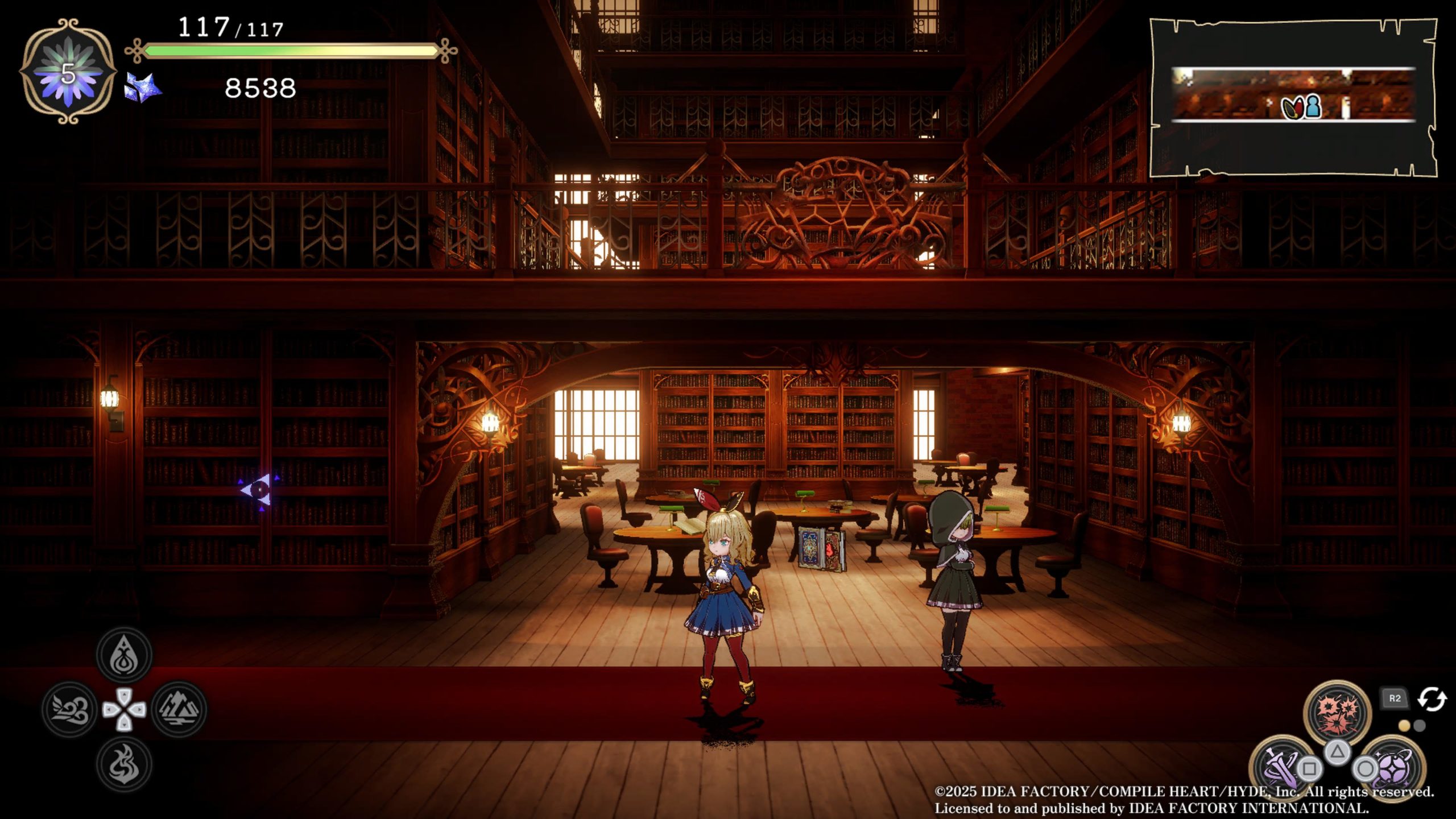
The game’s one plus might be the nice character designs and artwork. When in the library, if you can bear the dialogue, art is allowed a little time to shine. However, elsewhere, the game is light on graphical pop. The simple levels are only barely enhanced by some colourful artwork. However, those whose interest was piqued by the Vanillaware look of some of the promotional material, beware, that is where it ends.
There are a few tunes that didn’t annoy constantly in a few of the codices, but there’s no music here you haven’t heard in a dozen guises elsewhere, done a lot better. The voice acting, while serviceable if you don’t mind that anime style, is painful when out in the actual levels, where Ariana pipes up incessantly with her ‘that’s better’ on every heal, or ‘hup hup hup’ all the time you are hitting with your sword.
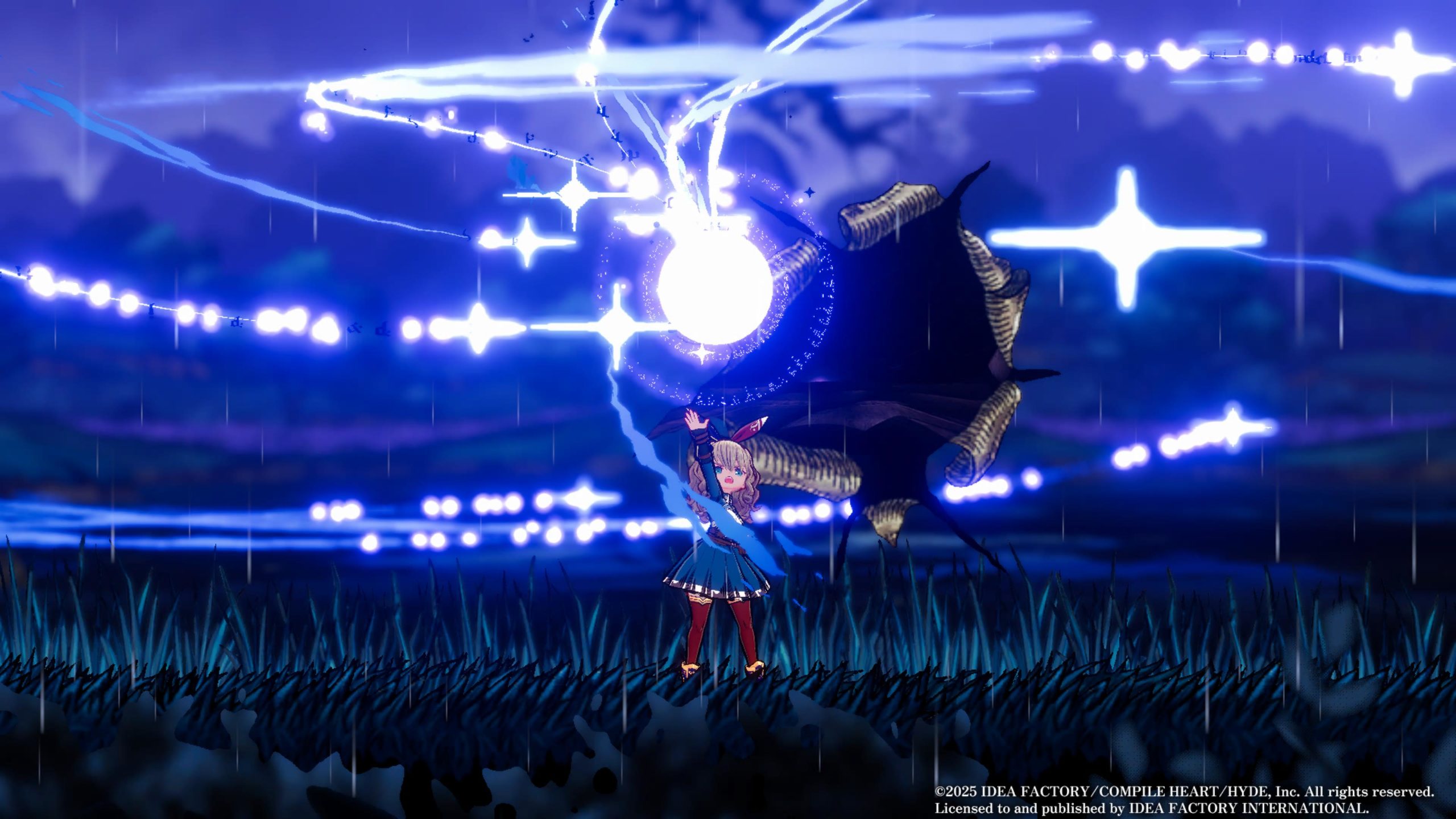
Please be warned that Ariana and the Elder Codex is a very bland and dull game dressed up in a little nice artwork. Its combat is virtually broken and for me, never even approached the level of fun, and its story isn’t worth the price of admission, or the price in time and frustration getting to further chapters. Do not judge this game by its cover.
Ariana and the Elder Codex is available on 24 March 2026 on PlayStation 5 (review platform), PlayStation 4, Nintendo Switch and PC via Steam.
Developer: Idea Factory, Compile Heart, Hyde
Publisher: Idea Factory International
Disclaimer: In order to complete this review, we were provided with a promotional copy of the game. For our full review policy, please go here.
If you enjoyed this article or any more of our content, please consider our Patreon.
Make sure to follow Finger Guns on our social channels –Twitter, Facebook, Twitch, Spotify or Apple Podcasts – to keep up to date on our news, reviews and features.