

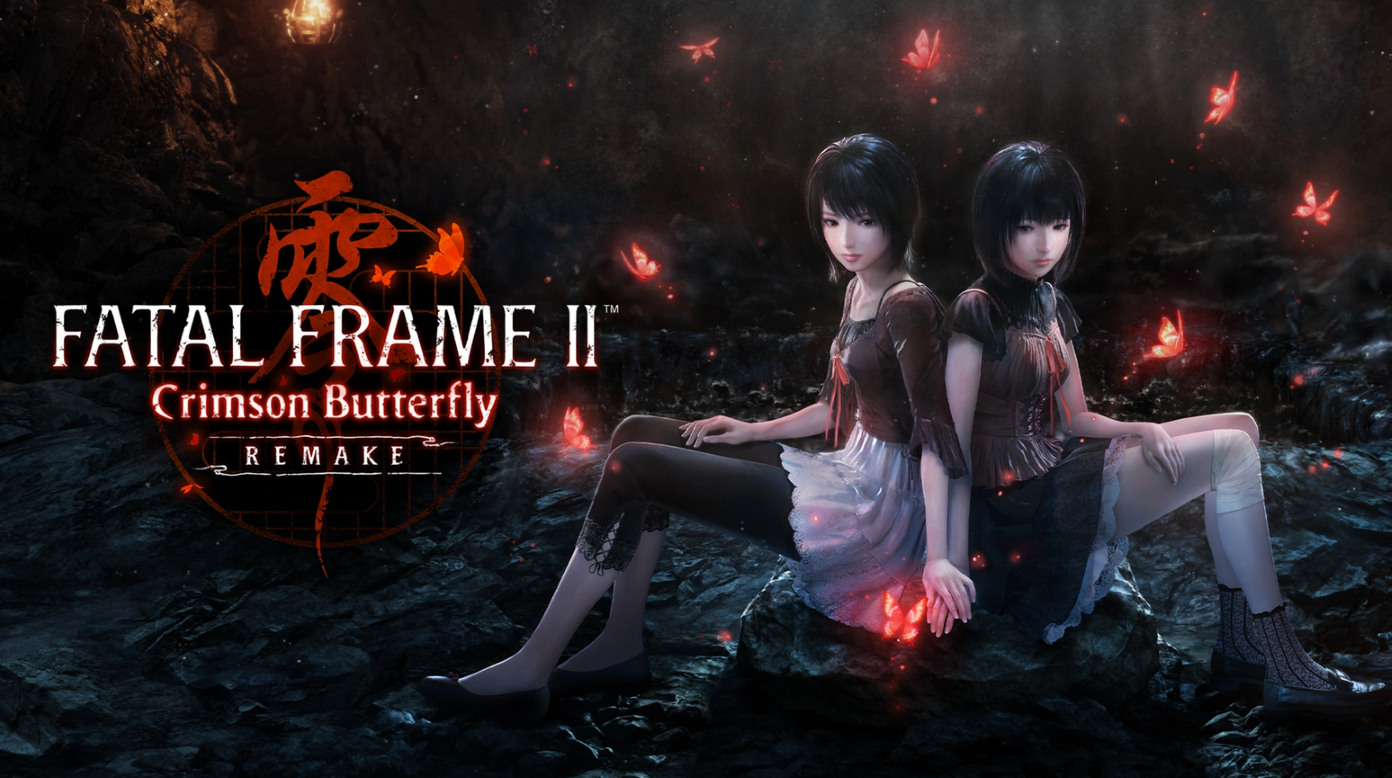
The truly terrifying Fatal Frame II: Crimson Butterfly has been remade, the game that has you facing off against a creepy village full of ghosts and spirits, with only the lens of an even more creepy camera to defend yourself. The Survival Horror genre loves to underequip you, have you take on everything with a two by four or a shiv, but I think perhaps the Fatal Frame series really takes the cake. No weapons at all for these hapless sisters, just your best Insta.
Full Disclaimer: I never played the original Fatal Frame II. It looked scary, and I was young, and I always meant to, but never got around to it. You know, backlogs. A terrifying curse then, that the first time I play Fatal Frame II should be in gorgeous remade HD graphics, where it’s arguably even more horrendous than it would have been back on PlayStation 2. This review is not going to pretend at much foreknowledge, so if you too are new to the lauded but long-dormant series, come hold my hand, and follow along with me, down this dark forest path…
Graven Image
A remake of a classic this one; a little lesser known maybe here in the west than recent remakes of Resident Evil 2 and 3. Fatal Frame II: Crimson Butterfly is often cited as the best of a generally well-received horror series, and all these years on is still held in very high regard.
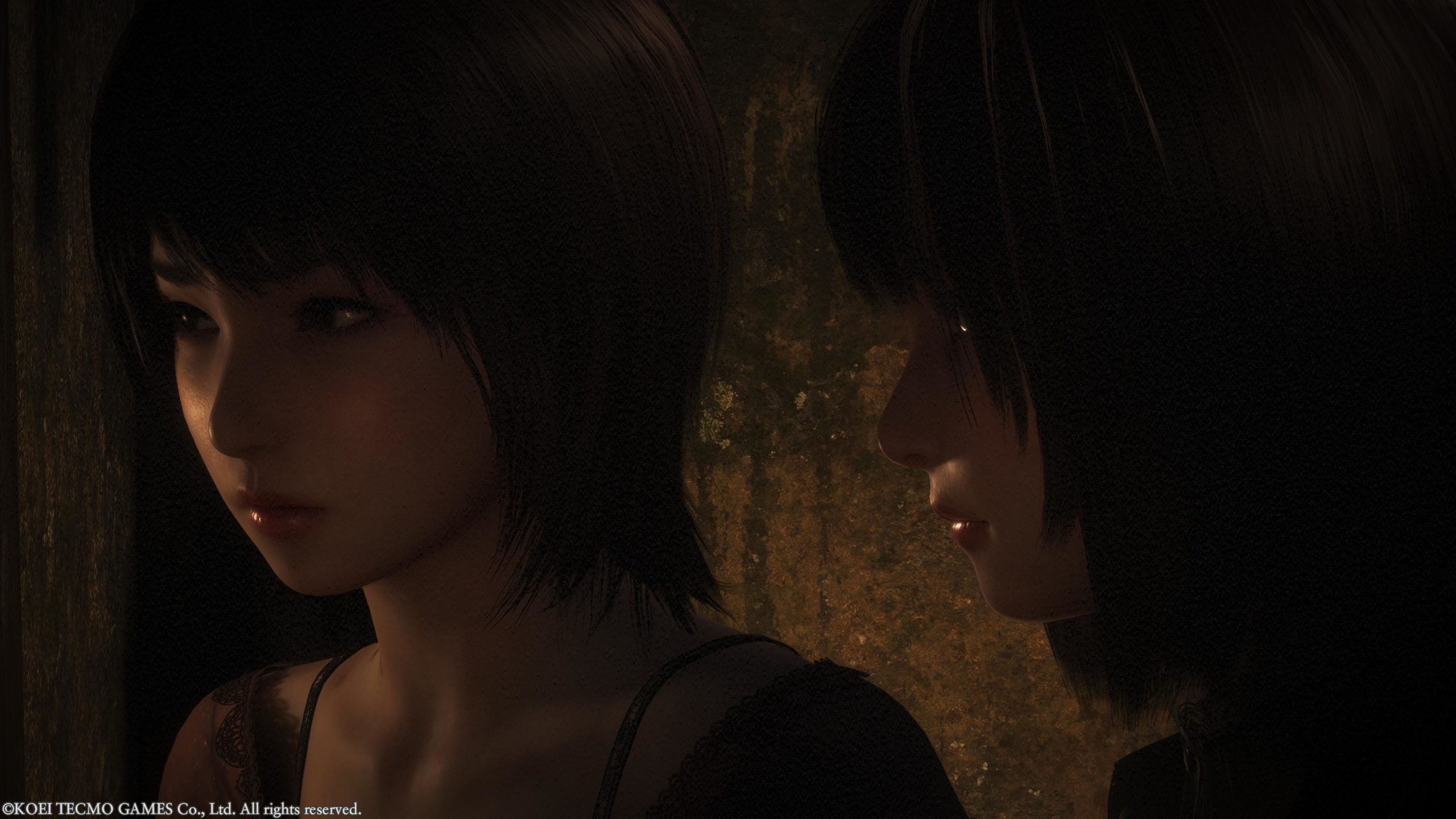
Twin sisters Mio and Mayu are out for a stroll in the woods when all manner of creepiness starts to befall them. Even right from the first moments its clear there’s a question of whether Mayu is even there, as she seems to move and disappear at a moment’s notice. You witness an old memory of Mayu falling down a small cliff and getting hurt, we assume? Dying, who knows? In the present, Mayu draws her sister Mio, your player character, deeper into the woods, and they soon stumble across a village that should not be there. The lost village of Minakami.
In the very first building, the sisters discover the village is heaving with spirits. Groaning with them. It’s probably the single most haunted village I’ve ever been in. Mio stumbles across the Camera Obscura, the creepiest occult symbol-covered camera you’ve ever seen. But however horrible and cursed it probably is, it is your only weapon. Attacked by the first of hundreds of ghosts, Mio raises the camera, and each shot she takes saps the very essence of the spirit itself. With each shot, she leeches the ghosts of their power and can defeat them.
Fatal Frame II is full of gentle touches that then spark bursts of horrifying images, barks of sound, black-and-white epilepsy-inducing barrages, and jump scares galore. It’s got a dark and foreboding mystery to it, what happened in this village, what is the fate of these two sisters, why are there two hanging kimono-wearing corpses, you name it. It’s all highly compelling and draws you in, almost against your will, making it seem like the right decision to explore just one more ominous old building, or just go round one more corner. Which is always a terrible idea.
I was really impressed by the incredibly dark and ominous atmosphere. Turn off the lights, sit in a room on your own, and let the lost village of Minkami and your sheer helplessness wash over you. Fatal Frame II is meant to scare, and if you let it get under your skin, is a seriously creepy game.
Camera Shy
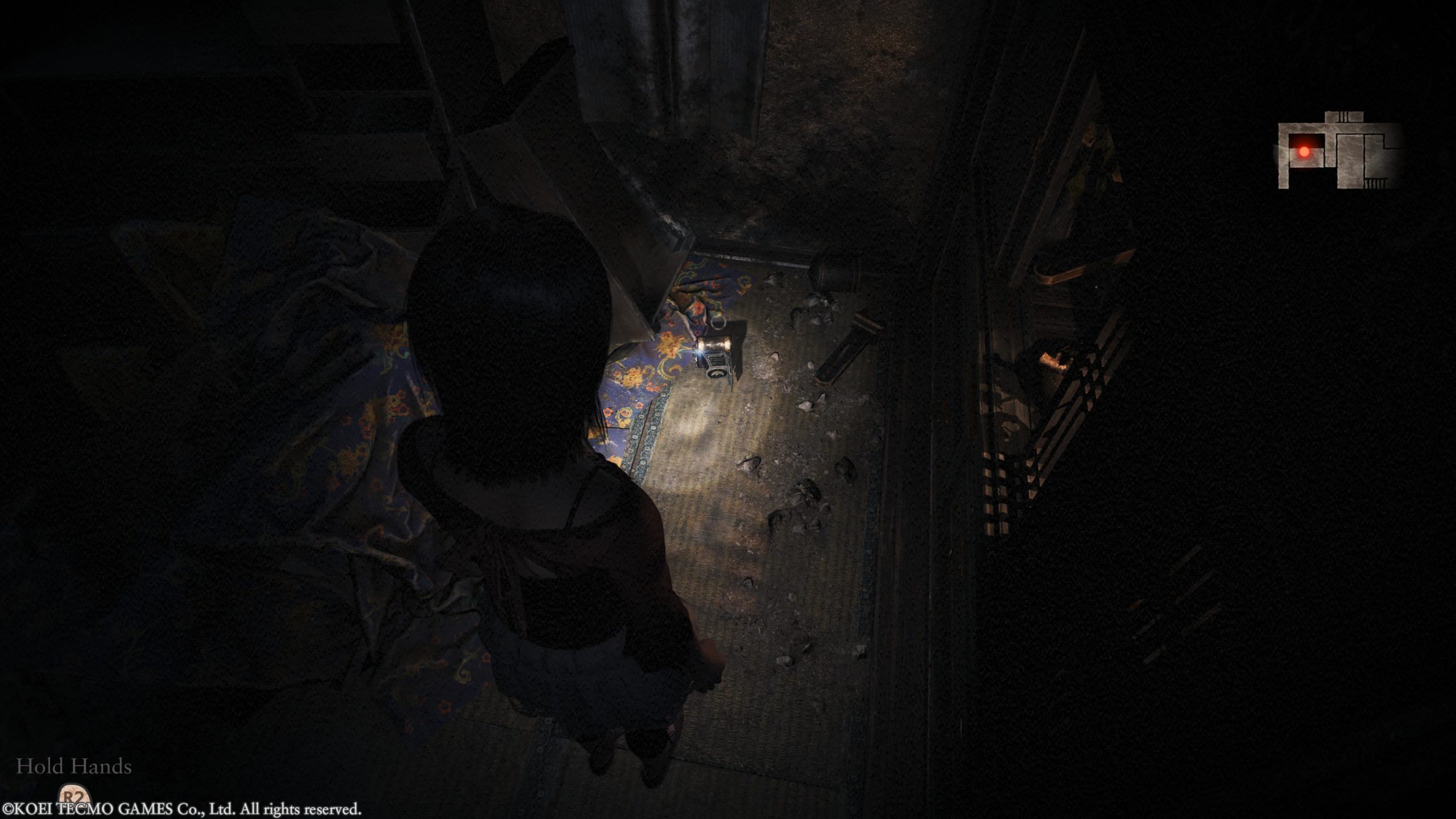
Most of Fatal Frame II’s gameplay can be split into two systems; the photography combat of the Camera Obscura, which we’ll cover in more depth in a moment, and the survival horror of exploring Minakami Village. It’s a terrifying village to explore, but I say ‘explore’ kind of loosely, because it did feel like, for great swathes of the game, I was just moving from point A to point B, rather than finding my way or exploring. The player really lacks much agency. Mio just follows her sister around, or just follows a crimson butterfly from point to point, and yes of course, you can go off the beaten path, but I mostly just encountered locked doors when I did. Fatal Frame II can be guilty of leading by the nose far too often.
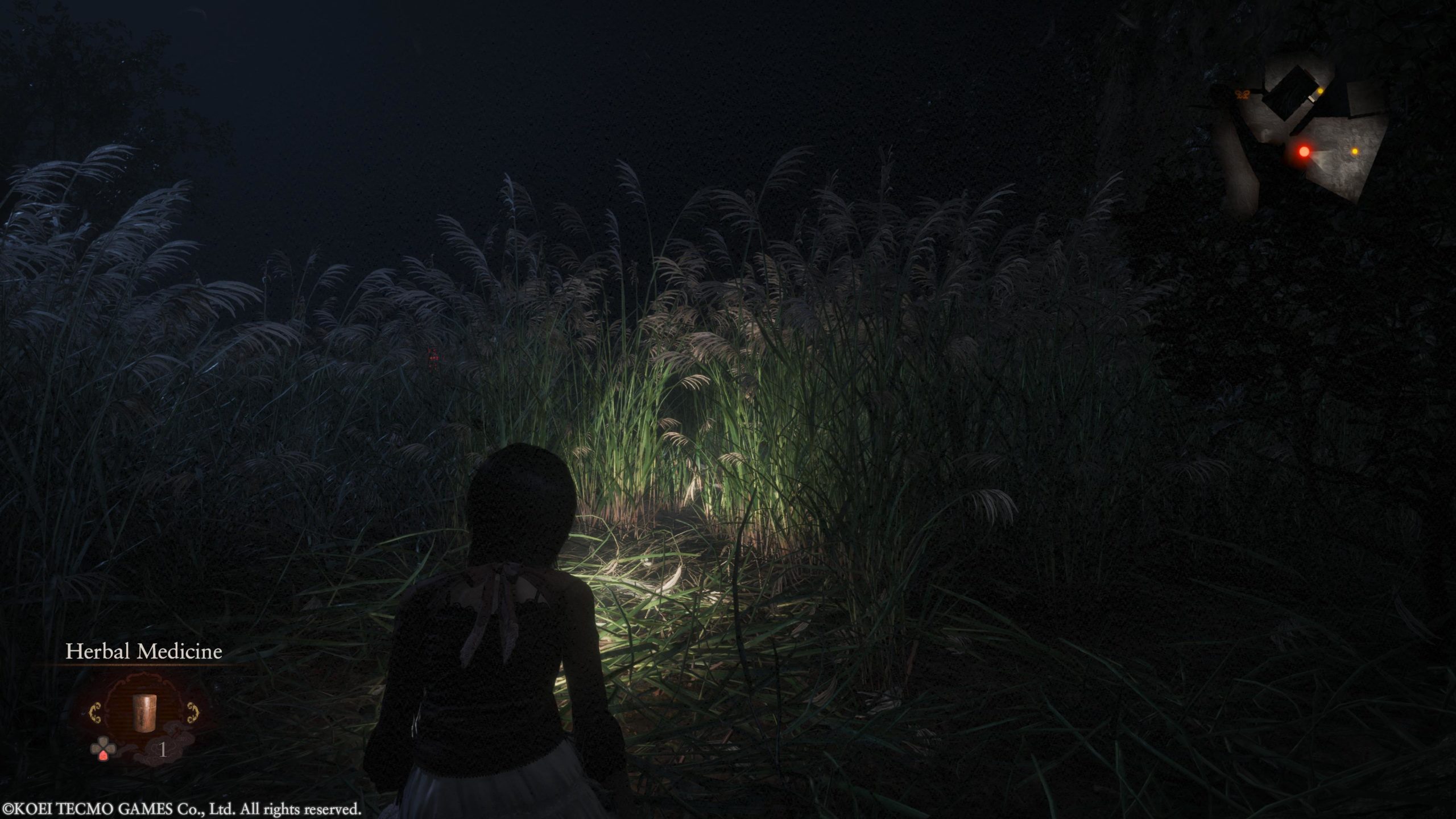
When you are given agency to do something yourself, those moments really stuck out. For example, a few hours in, a butterfly led me straight down a lane where three ghosts were prowling, literally searching for prey. I ran into them, had the battle of a lifetime with just a camera to defend myself with, and got summarily flattened.
But the next time through, I noticed a side house, where sliding paper screens looked out on the same street. This time, I turned off my flashlight, crept crouched down through the pitch-dark and watched the prowling spirits go by with their blue lanterns, before leaving from the other end of the house and making my way back to the butterfly. It was a pretty thrilling stealth section, and virtually the first moment of real choice and agency I’d had in the game up to that point. I played as stealthily as I could from that point on, avoiding every spirit and every fight that wasn’t mandatory.
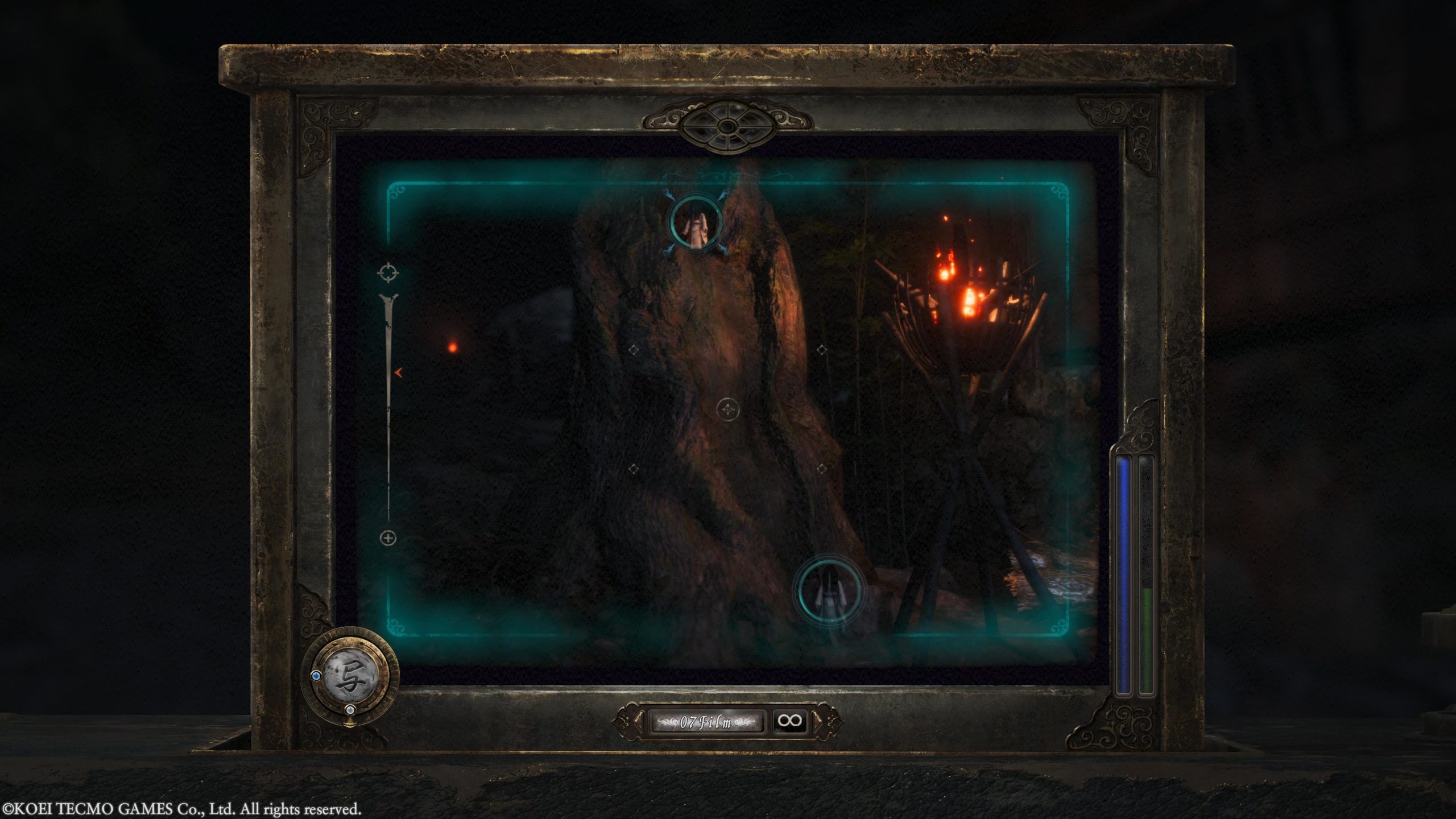
Photo Mode
And speaking of mandatory spirits, those are the ones you have to fight. With a camera. Fighting a ghost with a camera should be simple – point and shoot, right? While most of Fatal Frame II is a survival horror not unlike Silent Hill or Resident Evil, you have no gun or weapon, just the camera. Hold L2 and you enter a first-person view frame, which is where all combat happens in Fatal Frame II. You need to hold the ghost in shot, wait, or manually focus and also try to get the most key parts of the creature in. Different types of film can do more or less damage to a spirit, and can take more or less time to load into the camera.
As you progress, you gain upgrades to your Camera Obscura – such as other modes and the ability to focus under your own control – and each gives you more ability to fight back against the ghouls. Going from third person into first person is more than a little jarring; it’s outright cumbersome, and I know I didn’t play the original, but it doesn’t feel like something that was fixed, more like a fatal flaw that has been honoured and kept.
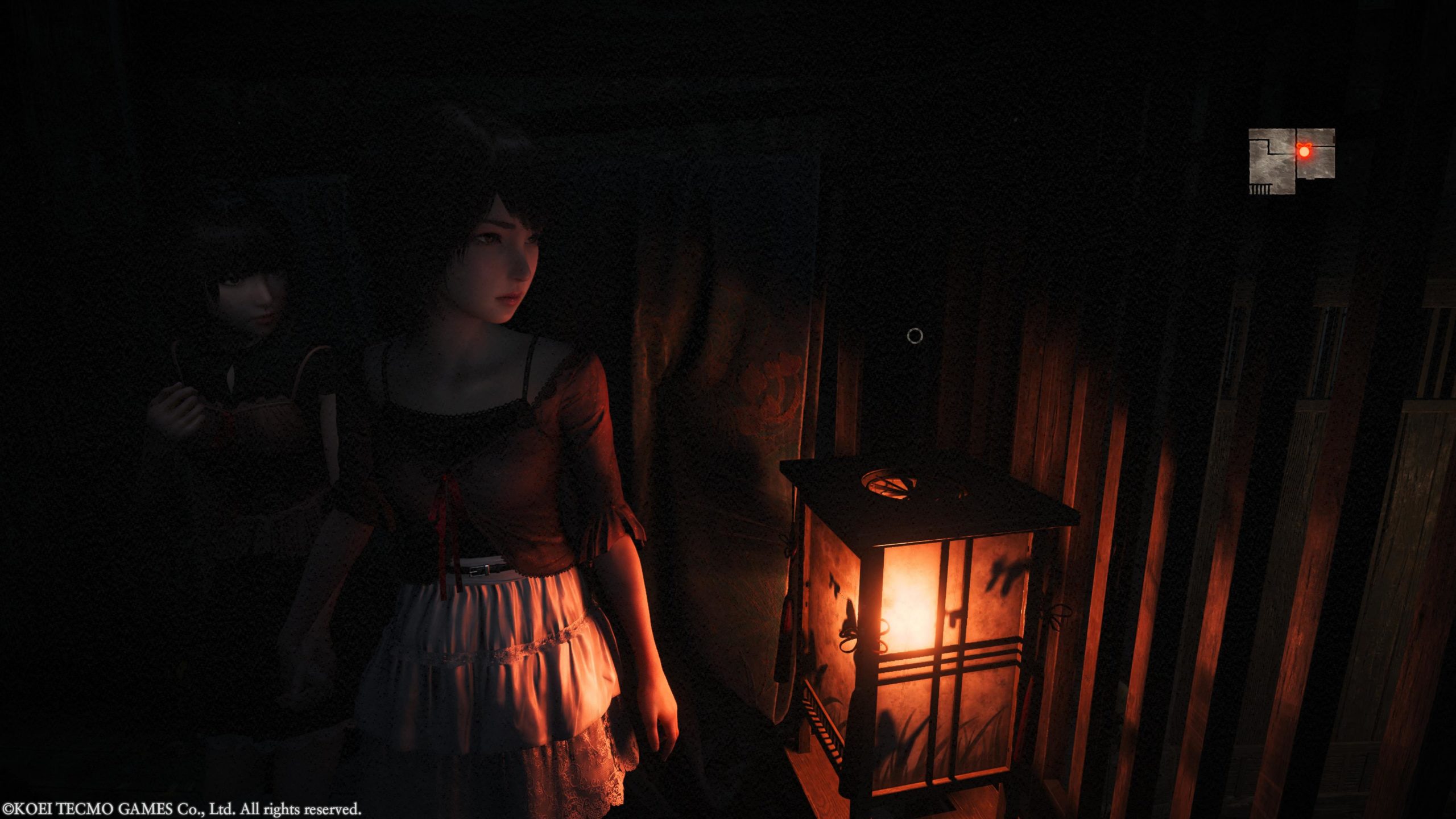
I found combat wasn’t just against the ghosts, it was against the very mechanics of the game. Focussing, getting the most damage points, actually doing any kind of worthwhile damage to a ghost was hard, and the slow focus and reloading was repetitive and dull. Most enemies, let alone bosses or scripted encounters can take multiple minutes to defeat, which makes battle an absolute slog in an otherwise atmospheric and well put together title.
You’ve got to work the third and first person modes in tandem, get out of the ghost’s way when they are right on you, even while holding up your camera. Back off, get a good shot in, run away, get another good angle and repeat. I often stayed stock still early on and tried to rely too much on reflexes with the camera to keep enemies at bay. There’s a red focus reticule that flashes at that perfect ‘Fatal Frame’ moment, when you can really get in good damage, and I waited for that way too often. And died.
Everyone is going to have their own mileage with it, and if you are enjoying everything else, you may give the camera combat systems a lot more of your patience than I was prepared to. But for me, the combat was so cumbersome, so repetitive, and so frustrating as to bring down the whole experience.
The Money Shot
Graphically, Fatal Frame II’s remake is stunning. The twins literally pop from the screen, exquisitely subtle and well designed, the motifs of butterflies even in things as easy to miss as the knots on the backs of their blouses. Minakami is also vibrantly rendered, but so dark that it’s hard sometimes to really appreciate the detail. When you creep around ‘empty’ houses – we all know they are full of spirits – the era-specific furniture, tatami etc are beautiful. But when you go outside, it really manages to bring to life the terrifying atmosphere of that village. The darkness is a palpable thing in Fatal Frame II, even more so than some of its more famous contemporaries. It’s a game where darkness feels very real, in the way it did the first time I played Splinter Cell Chaos Theory.
The music is a dark and disturbing mix of intensely atmospheric, ambient, almost silence, along with chimes and more traditional Japanese instruments. I found it haunting and evocative throughout.
Difficulties were a strange mark against otherwise passable systems. I understand ‘Normal’ and ‘Hard’ should have tricky combat with weight to it, but with all the issues I was having with combat, I thought I’d try ‘Story’ because I still really wanted to progress in the creepy story of the Lost Village. However the Story difficulty doesn’t really help with the issues I listed above when it comes to combat. Ghosts still had huge health bars, I still could barely damage them, and I still had the same battles representing barriers to progression. A story mode shouldn’t really have much in the way of any barriers to progression, isn’t that the whole point?
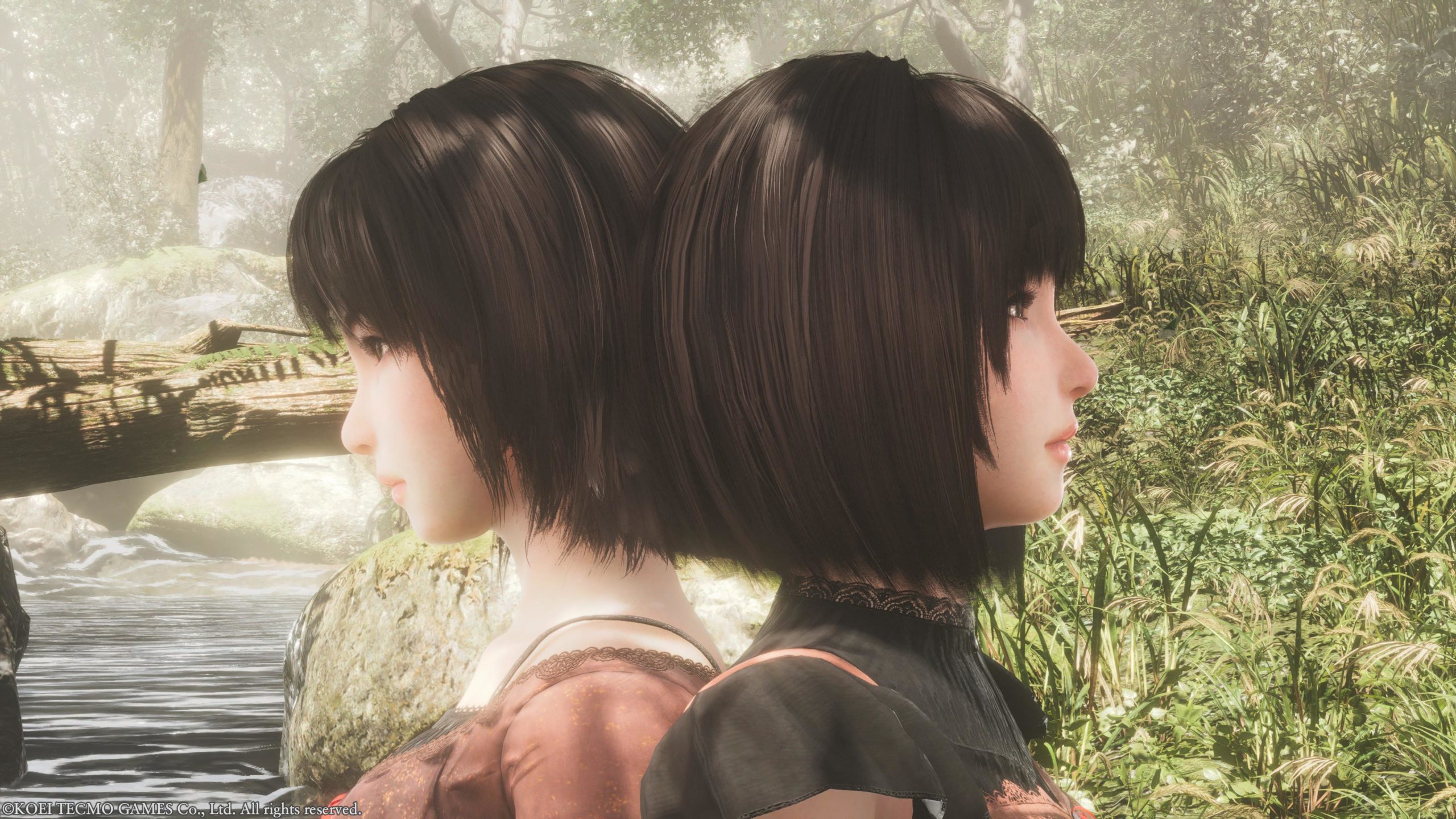
Photo Finish
I’m reminded that this is my first time with the series, and if you are a fan of the original Fatal Frame II it’s likely that these systems are largely the same as what went before. Those players are likely to enjoy this remake, or notice and be irked by other changes that I would have missed. But for those who, like me, let Fatal Frame pass them by the first time around, I don’t think there’s a good reason to jump into this series here.
This is a pattern with me – story in games is usually the biggest deciding factor. Basic gameplay can be saved by an impressive story, but I also think gameplay I don’t like can drag down a passable story. And while I find the story of Mio and Mayu and the weird ritual they are destined for to be compelling, it wasn’t compelling enough to endure the gameplay that I had so many issues with.
In the end, it is a passable story that, for me, is brought low by Fatal Frame II’s central concept, its main mechanic, the camera combat. It’s Fatal Flaw, if you like. Poor control, first-person swinging and flailing about trying to take photos, off-putting systems, and constant repetition against spongey enemies, drags the experience down from the heady heights of something like the recent Silent Hill f, and leaves it cumbersome, repetitive, and worst of all, frustrating to play.
Fatal Frame II: Crimson Butterfly Remake is available on 12th March on PlayStation 5 (review platform), Nintendo Switch 2, Xbox Series X/S and PC via Steam.
Developer: Team Ninja
Publisher: Koei Tecmo
Disclaimer: In order to complete this review, we were provided with a promotional copy of the game. For our full review policy, please go here.
If you enjoyed this article or any more of our content, please consider our Patreon.
Make sure to follow Finger Guns on our social channels –Twitter, Facebook, Twitch, Spotify or Apple Podcasts – to keep up to date on our news, reviews and features.