

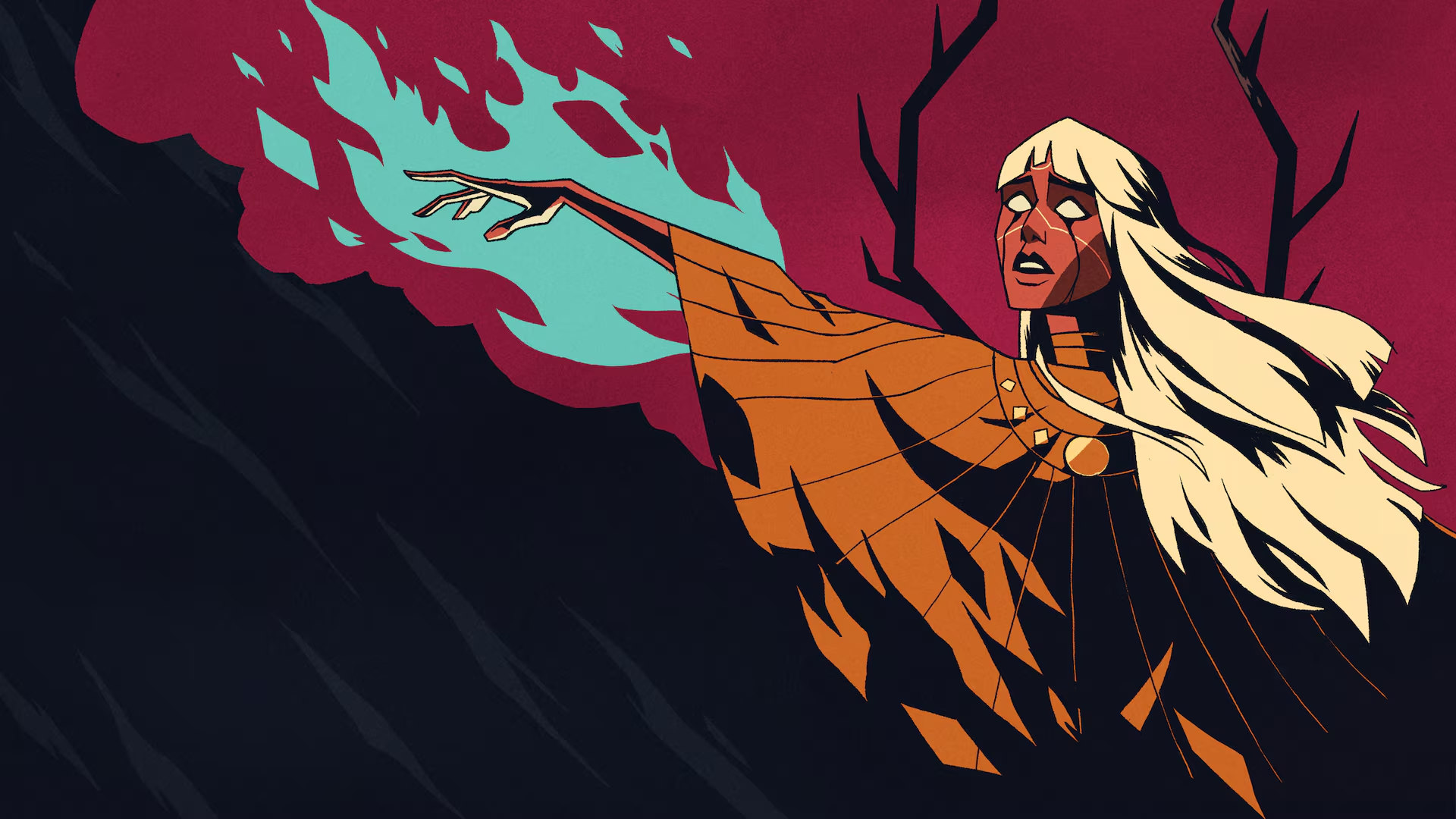
Death Howl is not for everyone. A damning indictment without further context, but when has anyone been able to recommend a Soulslike to everyone? Much like the complexities From Software has cultivated with the Soulslike genre, The Outer Zone’s Death Howl is a perfect representation of what it’s inspired by. It’s not hard for difficulty’s sake to spur the “git gud” crowd to jeer from their cubiculum; the challenge is our protagonist, Ro’s, turmoil. Grief takes many forms, but it’s universally hard, and for Ro’s journey in Death Howl, it’s a crushing soulslike deckbuilder.
I’m over the 30-hour mark at this point, and I’m close to beating it, although I somehow feel like I’m still a ways off. Every battle is tooth and nail. Every death is time lost but knowledge gained. And every moment I wanted to quit, I was compelled to see it through to the end. Whilst having a completely different set-up to your Dark Souls’ and your Bloodborne’s, Death Howl presents that same addictive cycle of improvement and conquest through sheer practice and patience. For some, this might be a game to get stuck into the various systems it presents and lose hours to. For others, this may be just too stand-offish. It has a bad first impression, along with a glacial sense of progression, so it’s hard to promise players that it gets good after four to five hours.
But it’s true, there’s no real tutorial, you’re just thrust into this game and forced to figure it out for yourself – sound familiar? You’re introduced to its grid-based format and how the card-based combat works almost immediately. Cards and movement across the grid cost a differing amount of energy, which you have five to use every turn. Cards can range from melee or range attacks, buffs to Ro or curses to enemies, in which there’s an RNG element to what cards you draw each turn. I quickly learned to utilise position, thinking on my feet with the cards I’ve been dealt and even how enemies would respond on their turn, in a chess-like manner.
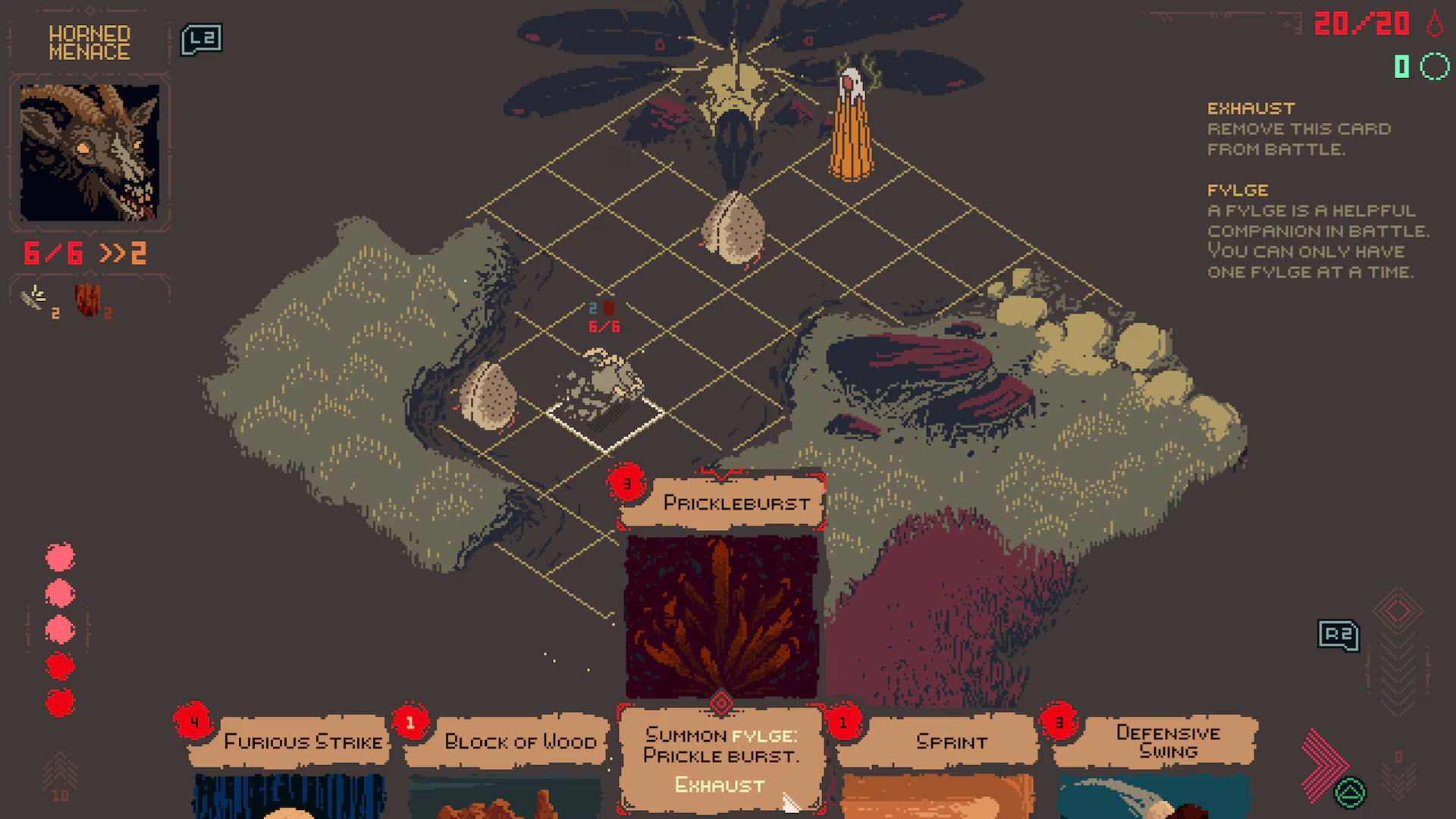
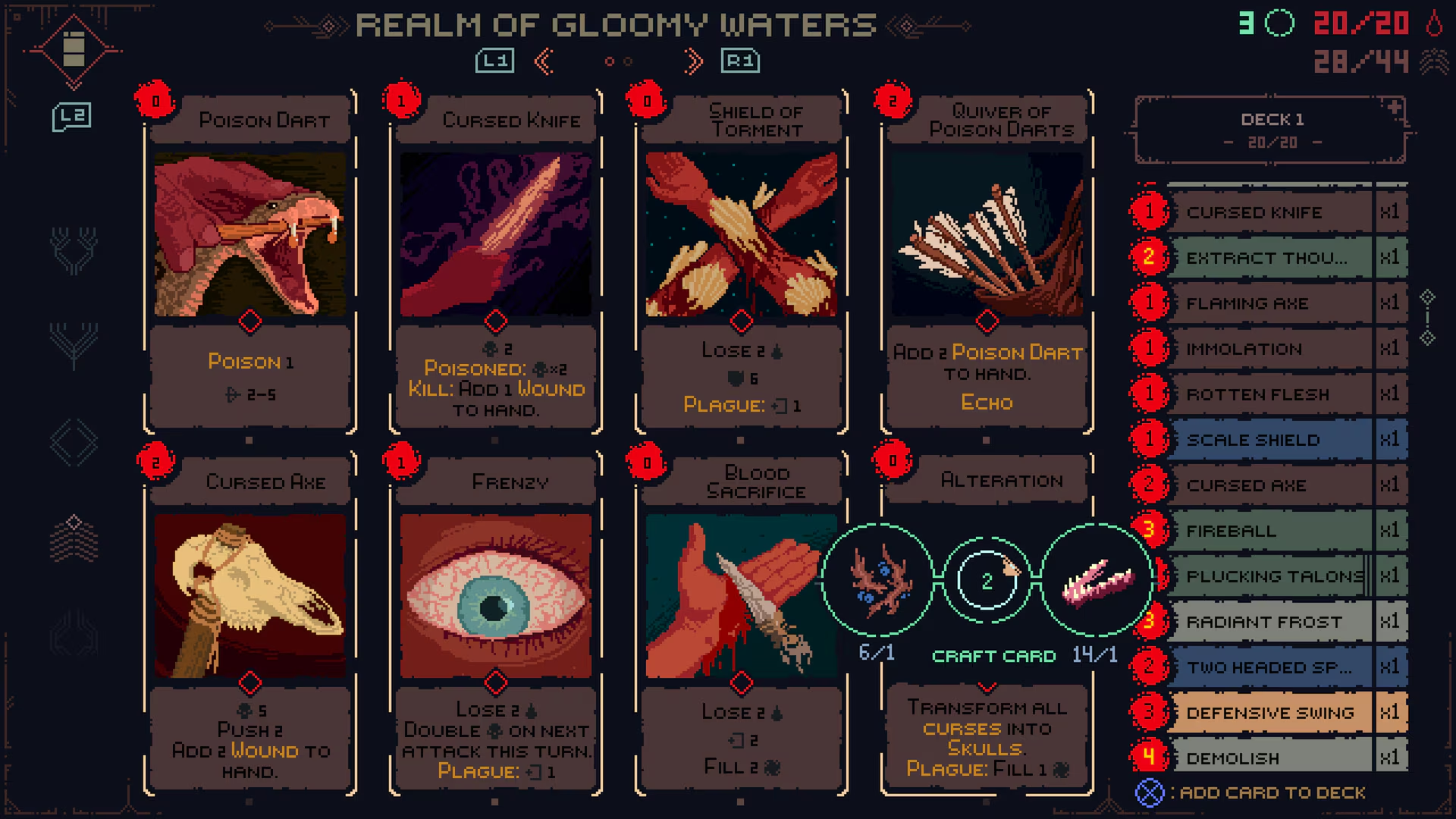
With over 150 cards to choose from and a decent variety of enemy types, you are constantly thinking of different strategies and builds to gain the advantage. There are four realms to explore, all with a different set of cards to befit that realm. It’s not impossible to use a card from another realm, but it does take more energy to use it. This incentivised me to experiment with different builds, giving me a deeper understanding of the combat. Whilst I loathed the thought of starting on a new deck of cards, I came to appreciate that Death Howl doesn’t let you become idle, playing the same few cards you’ve become comfortable with.
However, you don’t just pick up a new set of cards and take them into battle. You’ll gradually unlock them as you pick up materials from the spoils of combat – along with the spirits of the creatures you’ve beaten. You can use this gained spirit to either unlock upgrades for Ro or craft new cards along with the materials you pick up. It’s a nice way to create player agency, but I didn’t enjoy the grindy aspect it proposes. It was hard enough wading through the realms, let alone taking these fights multiple times to essentially level up.
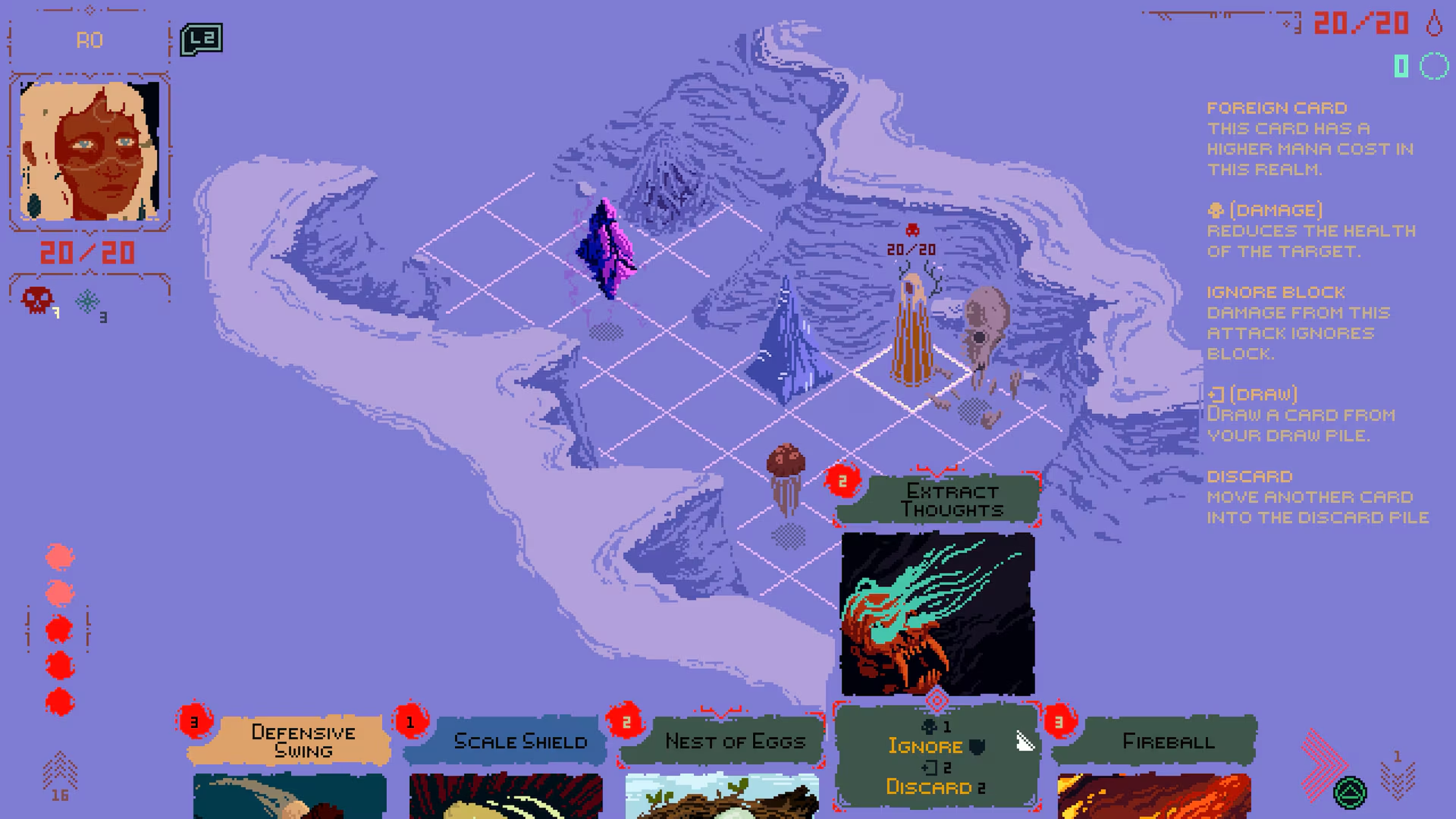
Moan as I like about the number of times I had to re-engage battles, it’s an addictive loop to get stuck in. Every battle is engaging, with new quirks becoming apparent through trial and error. I learned to be reactive and think on my feet when RNG comes into play when drawing your cards each turn. Playing on controller isn’t perfect, as navigating between using the cards or moving Ro requires extra button prompts sometimes.
With that said, every navigation is signposted by borders around what you’ve selected, so you’re never really pressing anything mistakenly. It’s quite a menu-dense game, which isn’t ideal on console, but I don’t think there’s much improvement that could’ve been made when navigating it.
In the very limited time you spend outside of combat, you’ll wander this hauntingly beautiful spirit world from the Mesolithic period. Animals are sacred, nature and humanity are cyclical, and it all builds to something quite ethereal as you explore.
Instead of applying music to the setting, there’s a droning soundscape that heightens how otherworldly Ro’s journey is. There’s a faint narrative that’s in pieces as you progress. Ro’s asking for the spirits’ help in finding her son, as death has seemingly taken him too early. It’s quietly touching and reflects succinctly how difficult the gameplay is.
Death Howl is deep, textured and unforgiving in execution. As I mentioned in the beginning, it’s not for everyone. However, if anything I’ve said about it has piqued any interest, then I implore you to give it a go. I’ve not played something that’s blended so many genres seamlessly to create something so primary, in a gaming landscape that can often be derived.
Death Howl is out now for PlayStation 5 (review platform), Xbox Series X/S, Nintendo Switch and PC via Steam.
Developers: The Outer Zone
Publisher: 11 bit studios
Disclaimer: In order to complete this review, we were provided with a promotional copy of the game. For our full review policy, please go here.
If you enjoyed this article or any more of our content, please consider our Patreon.
Make sure to follow Finger Guns on our social channels. Twitter, Facebook, Twitch, Spotify or Apple Podcasts – to keep up to date on our news, reviews and features.