

There was a time, oh around the release of Wo Long, that we feared the Nioh series was over. An impressive torchbearer for the soulslike genre, bleak as the bleakest Fromsoft poison swamp, playable, bite-sized, and overflowing with unnecessary loot. It was also hard as all get out, and the third boss in Nioh 1, I remember as being a skill check for me so high, I swore off the whole genre for a year. It was feared that Sekiro had outdone the Nioh series at its own game, and it had cowered away to lick its wounds.
But no, rejoice fellow tarnished, fellow lamp bearer, for Nioh rises again for the third installment in what is now a trilogy. Shrugging off the shackles of Nioh 2’s static maps and bite-sized mission design, Nioh 3 embraces the most overblown gaming conceit of the modern era; the open world. Yes, Nioh 3 is no less than Koei Tecmo and Ninja Theory’s answer to Elden Ring.
But with great ambition comes great expectations. Is this the best Nioh has ever been? Is it leaner, meaner and more awesome than ever, or is it a bloated mess? Does open world solve all problems, or does it just make a whole world load of new ones? Read on, fair reader.
You play as Takechiyo, and in a slightly unique use of character creation you are both a created character of your own design, and a named one. There’s a fair amount of customisation for those who like to put their own spin on avatars, but you keep the name so that it can be used in voiceover throughout the game.
Takechiyo is the heir to the Shogunate, son/daughter of Tokugawa Ieyasu, and is being prepared for rule when Edo castle is beset by yokai, demonic thugs and monsters from Japanese folklore who pillage and destroy everything in their wake. If you’ve played any Nioh game in the past, or Onimusha, or Sekiro, you know their type.
But that story and its little opening twist are left aside very quickly, and instead you are spirited away back in time to the height of the Warring States period that Koei Tecmo know so well. Takeda Shingen and a young version of your father Ieyasu are at war for the ‘peace’ of Japan. As the progeny of Tokugawa Ieyasu, Takechiyo gravitates to his cause, dispelling yokai and then literally freeing their castle stronghold from a Crucible – an infestation of Yokai, and that foreboding orb and skeleton in the sky.
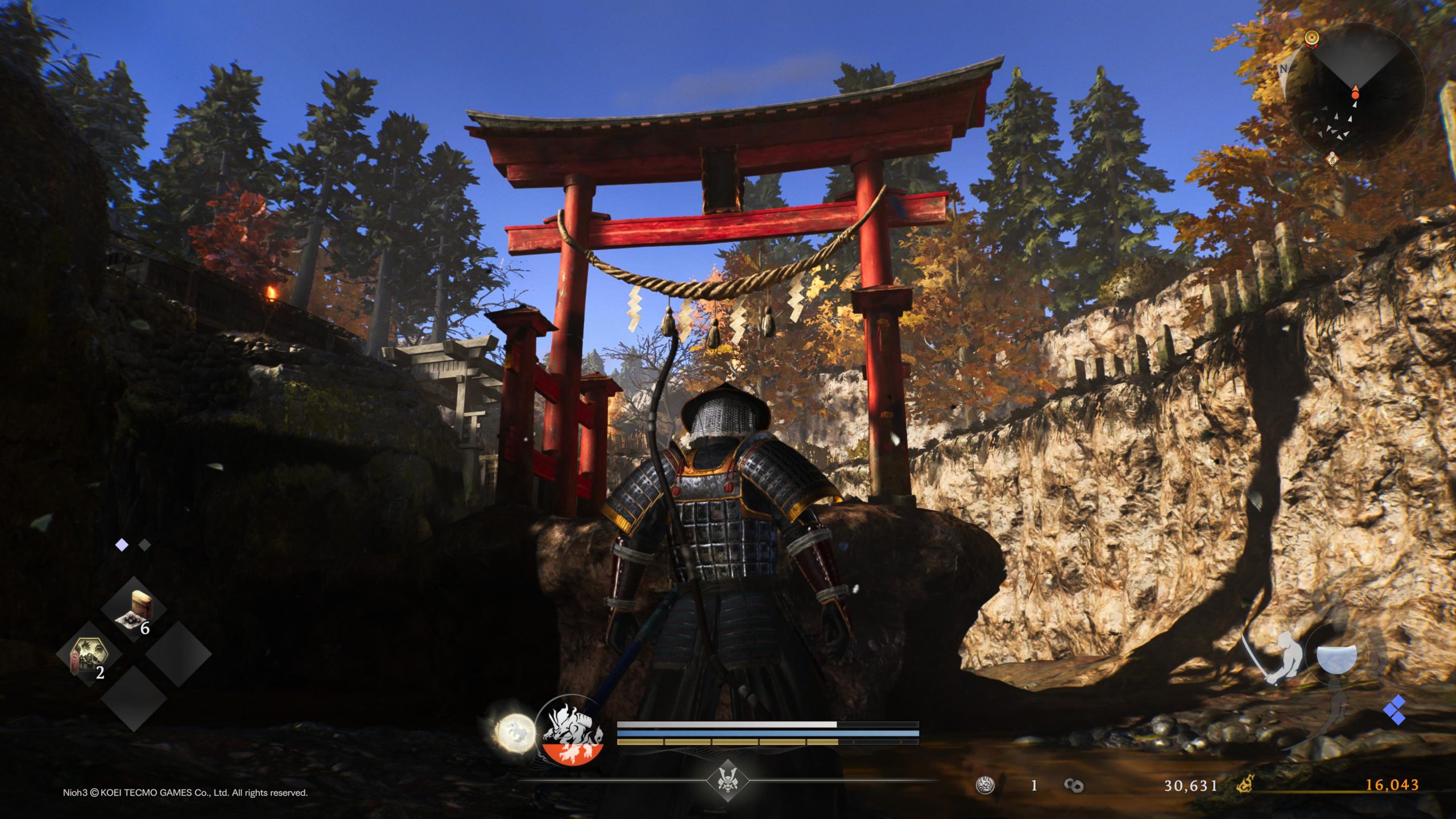
From here, the plot becomes mostly superfluous, just a series of excuses to venture here or there. It lost any meaningful impact, and just devolved into excuses to move into higher level areas. It also leaves you to explore without much plot at all of hours at a time, no where near a quest giver, and those moments, while they felt unstructured, were actually my preferred parts. I did not care for the quests I was given, one in particular stood out being sent on a fetch quest into high level territory, to find medicine because Ieyasu had a headache. I mean, really?
The bones of it are that you are this figure of light who can dispel these Crucibles throughout different eras in time. Much slow progress in Ieyasu’s time, but also much flitting to different periods and back to your own ensues. It allows for a fair bit more variety than just the one time period and its open world, which I appreciated, however it also makes the story hard to care about and feel very video-gamey – hunt down these Crucinite stones across time, explore, fight bosses, reach the end. You can probably tell, I wasn’t all that invested in the plot, but kept playing for the joy of discovering more places, powers, bosses, and challenges.
Combat in Nioh 3 varies very little from that seen in Nioh 2 where I personally think it was perfected. The same high, mid and low stance structure survives, the same basic actions, controls, and the same selection of melee weapons and their respective movesets. The ki system returns, where you can recover a little of your used stamina if you are quick to press R1 after combos. More importantly, it dispels the enemy-strengthening Yokai Realm aura that enemies incessantly put out, which slows your stamina recovery to almost nothing. All present, all largely the same. But why break a good system, right?
Well, the trouble is they have. They’ve added more on top of it. Now, instead of just being a samurai, you are also a ninja. And with that comes style shifts to the other movesets, learning another whole style, a new group of weapons, the head-scratching differences of the ninja style over the samurai style, such as not being able to use ki in the same way, and many more issues besides. In Nioh 2, you could use a small variety of ninjutsu and ninja tools, like kunai and spells, but the way you controlled the character, your practice, and muscle memory were all being built on the same system.
In Nioh 3 its like trying to play two different soulslikes at the same time, two different ‘systems’ at the same time. I find it nigh on impossible to git gud at these games even when I’m concentrating solely on one game, training my reflexes and learning the controls perfectly. Trying to play Code Vein and Lords of the Fallen at the same time is virtually impossible, each one so different from the other that you are disadvantaging yourself – parries work or are timed differently, jumps and dodges, and even attacks are on different buttons.
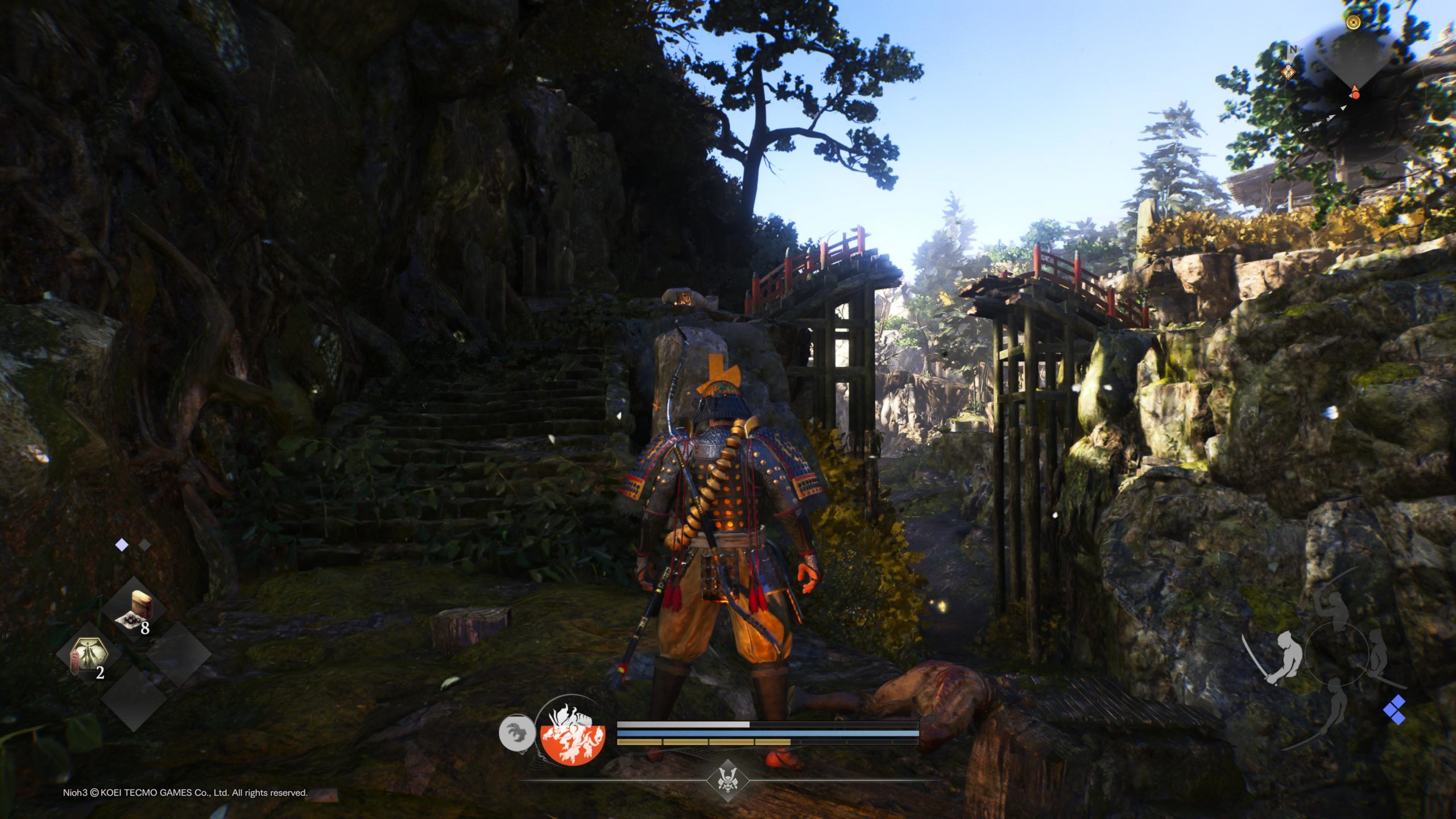
But Nioh 3 says you should do that within the one game. Ninja and Samurai aren’t so different that you’ll dodge instead of jumping, but their systems work differently enough to make it a pain, and to be detrimental in battle. There is no ki, and no stances, in the ninja form, for example, so you can’t dispel the miasma; you can’t parry in ninja form, but you can dodge using the ki button (which is super confusing).
The worst offender was the burst break – that moment when the enemy does an even worse than usual move, and it’s unblockable. A big red cloud comes over them, and you’ve got to press a specific button – R2 – at the right moment. I’ve got no issue with that in principle, but in Nioh 3, the R2 trigger is used for burst break, but also tied to flipping from Samurai to Ninja style. It means that every time I hit that crucial moment and block a red burst power, I become a ninja and my counterattack is always hampered by suddenly using the ninja system, instead of the samurai style I prefer. I found it harder to block and fight as effectively in ninja style, so this would then mean using up precious seconds to swap back, and a lot of the time this meant tanking a few hits to the face. Timing a burst break right often meant losing the battle.
The only real way I found to combat this was to toggle the burst and style buttons to unlink, but it’s not a foolproof thing – it doesn’t go to a different button easily. Instead, once unlinked, ‘burst counter’ is a click of R2 and ‘style change’ is holding the button down. I got used to clicking it just the tiny bit with time, but you can’t tell me you don’t sometimes hold down the parry button in these kinds of games and pray to Amaterasu that you timed it right, thereby changing to ninja and shooting yourself in the foot with a kunai. I digress…
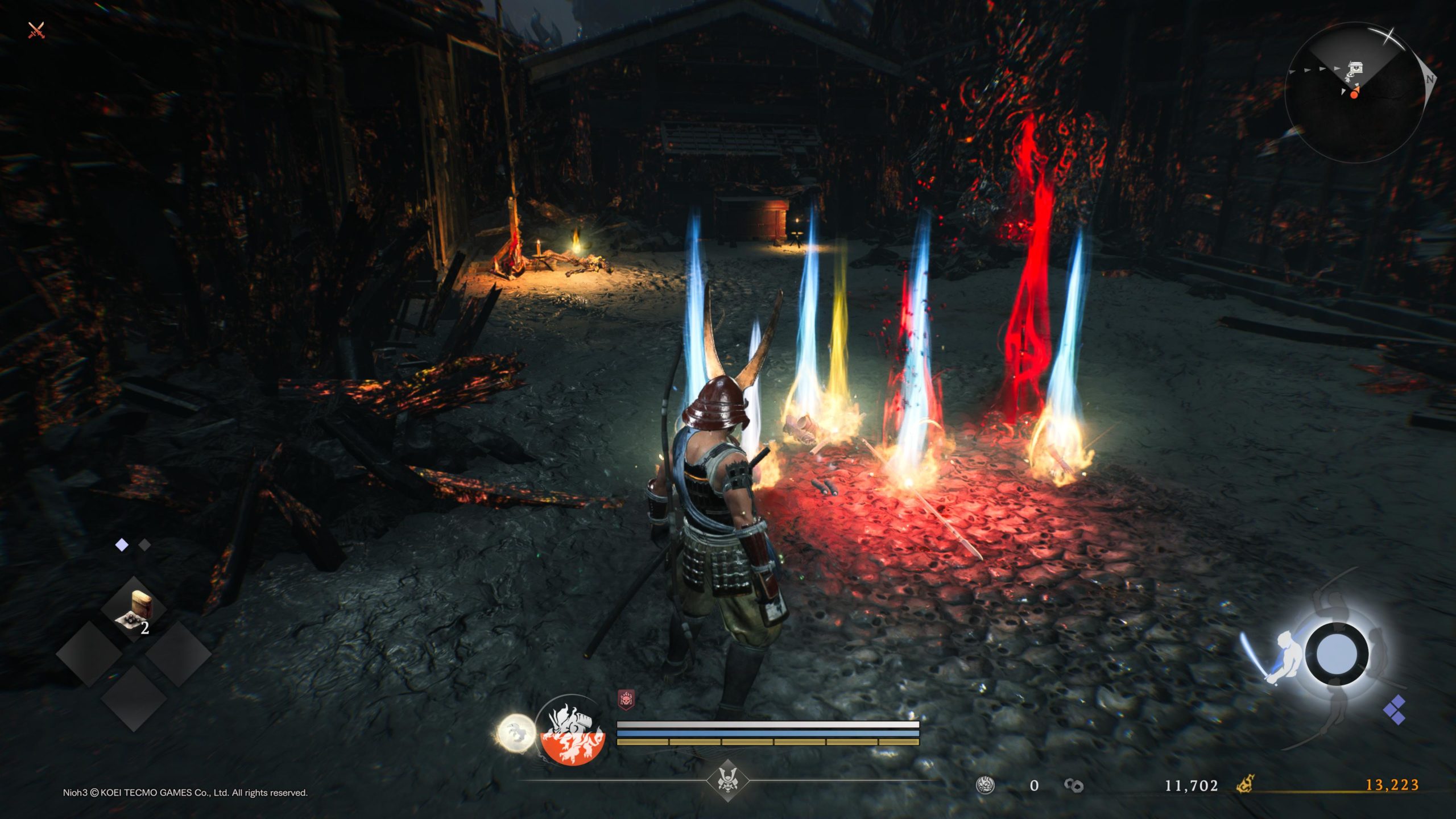
Many of the features of Nioh 3’s open world are holdovers or enhancements from Nioh 2 systems. The Crucibles you’ll encounter, like locked-in challenge areas, feel much like the red zones of the last game, but then when you encounter the really big Crucible levels, you see the vastly enhanced version. The first one I encountered only a few hours in, reminded me of the final level of the original Nioh, so far above that installment has the dial been cranked for this one. You can also find ‘missions’ often to revisit an area for a different purpose after you’ve cleared it in the open world.
But this ‘enhancement’ to open world may not be the breath of fresh air you might hope. This is the open world style we’ve mostly grown tired of, the maps full of icons to clear off like a gaming vacuum cleaner, the progress counters and recycled uninteresting open spaces. Bosses and a vast number of the enemy types are recycled from the previous game, and where they used to be dense and tightly designed gauntlets and skill checks, they end up being spread few and far between.
The style of the game doesn’t quite suit just being able to go anywhere, so areas have level guidance, and the density of enemies is vastly reduced. I could barely get past an Enki (gorilla-type enemy) in Nioh 2 until I learned a near-perfect strategy, but the rest of the game and available routes were virtually closed off until I’d mastered it. Here, I can just go around him, not fight him at all, or, because he’s largely a recycled enemy, beat him senseless the first time from muscle memory.
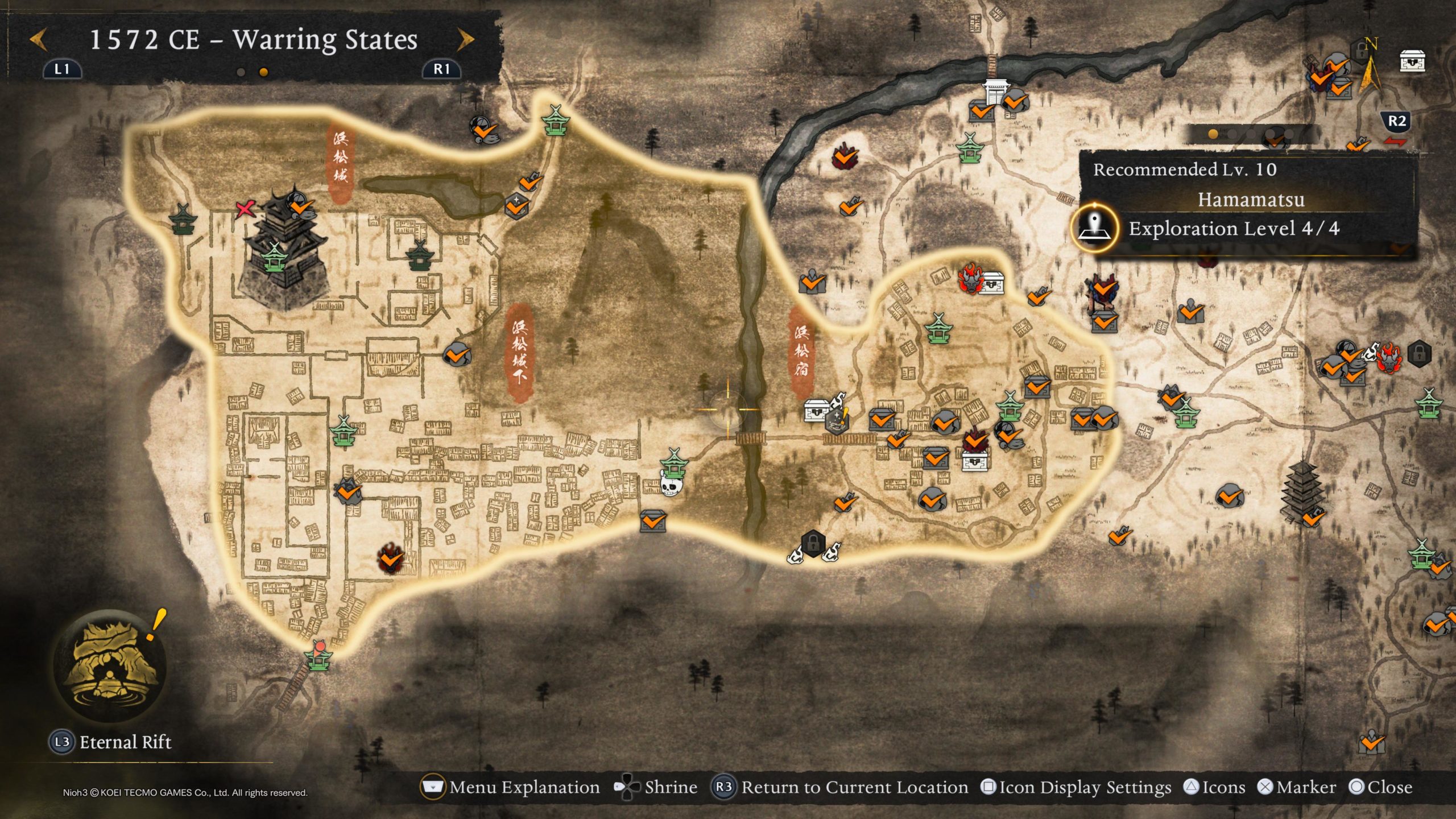
That’s a problem throughout Nioh 3. I’m not a great soulslike player, and I found enemy difficulty vastly reduced from that of Nioh or Nioh 2, both well known as pretty solid and punishing soulslikes. Nioh 3 is relatively pedestrian in comparison, and I was many hours in before I fell to a normal enemy just by accident. Bosses are still fiendish tests of skill and often patience as you bait them out and punish them. Very few fell into the category of pushover, or could be wiped out in a few quick combos – they took time, practice, and above all patience. As with all soulslikes, be not overconfident, or punished you will be.
The second proper boss of the game, the chimera-like creature at the end of the first crucible, was a massive issue for me, and took many many tries to finally beat. But on the other hand, another boss just a few hours later in the depths of a very cool cave system, was a reskin of the umbrella-twirling vampire lady who so skill checked me in Nioh 1. This time however, I found her a pushover, due to knowing exactly how to fight her from experience in Nioh 1 – oh so the long hours of experience were not wasted, because I could beat her again nine years later?
Nioh’s notorious loot system also makes its not so welcome return. You are still overwhelmed with loot, often multiple items, armors, weapons and accessories even just from single enemies or bodies, and not only do you have to sort through it all for your samurai outfit, but you now have to cover your ninja outfit as well. You can only carry a few thousand items, so once again a vast amount of item management and quantity selling of old items awaits in Nioh 3.
I have no idea why feedback on this issue was not listened to, or was deliberately ignored. It was almost laughable in Nioh 2 (albeit one of that game’s only real flaws), but it’s even worse here. Nioh 3 needed an item system rethink; far fewer items, with far more meaningful stat differences. Instead, as with the open world, it’s like a doubling down on the parts that didn’t work.
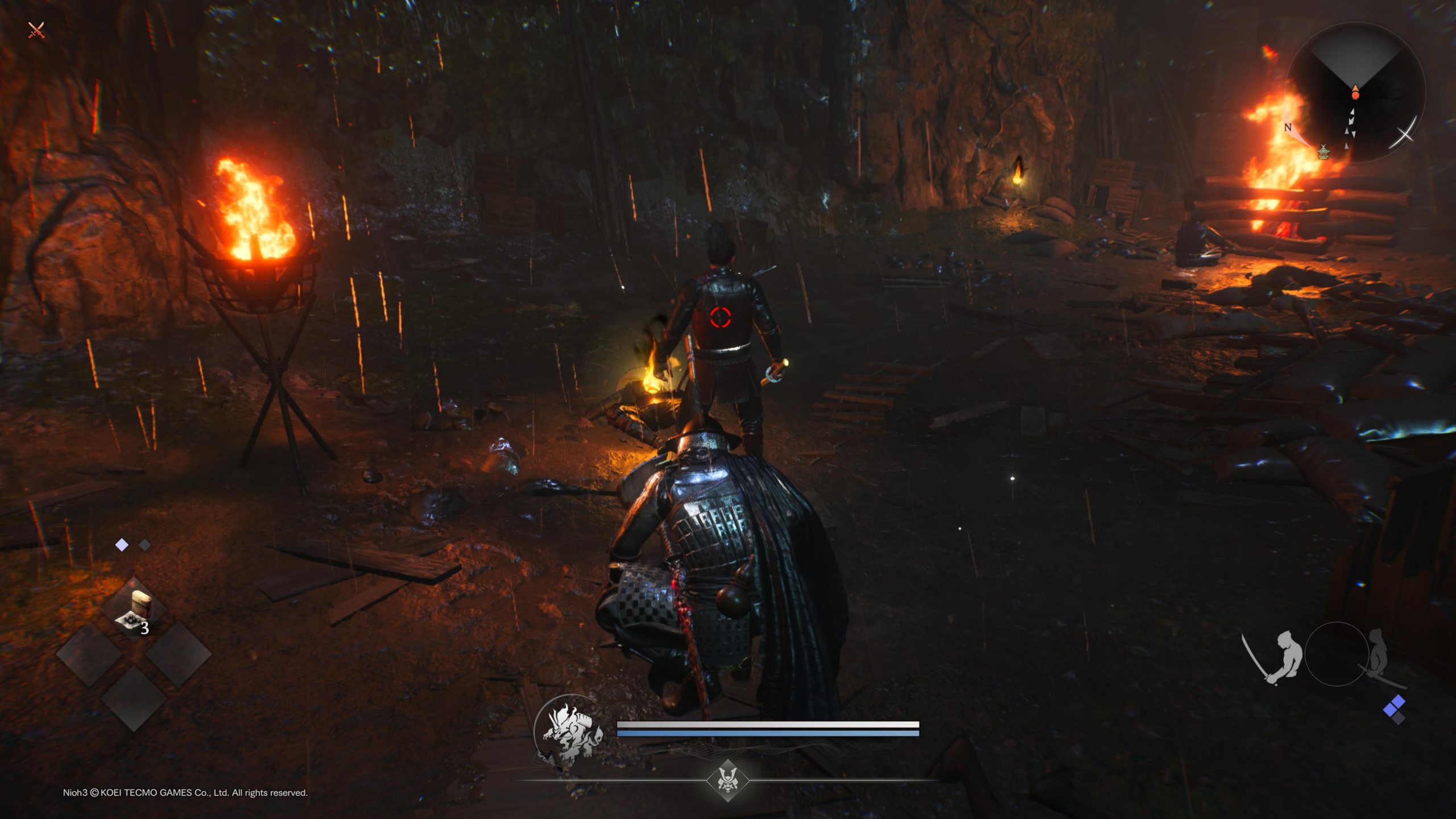
Let’s move on to more positive territory. One of my favourite parts of Nioh 2 was the constant search for Kodama, an actually engaging collectible (which is a rare thing) that had me scouring every area and trying to 100% the maps. Nioh 3 actually manages to up the ante on that, making Scampusses (yokai cats you chase), Chihiro (yokai weasels you shoot from afar) and Kodama all worth seeking out, and bonuses meaningful. However, it wasn’t tied to permanent upgrade of the amount of elixirs, and so I found my interest waning.
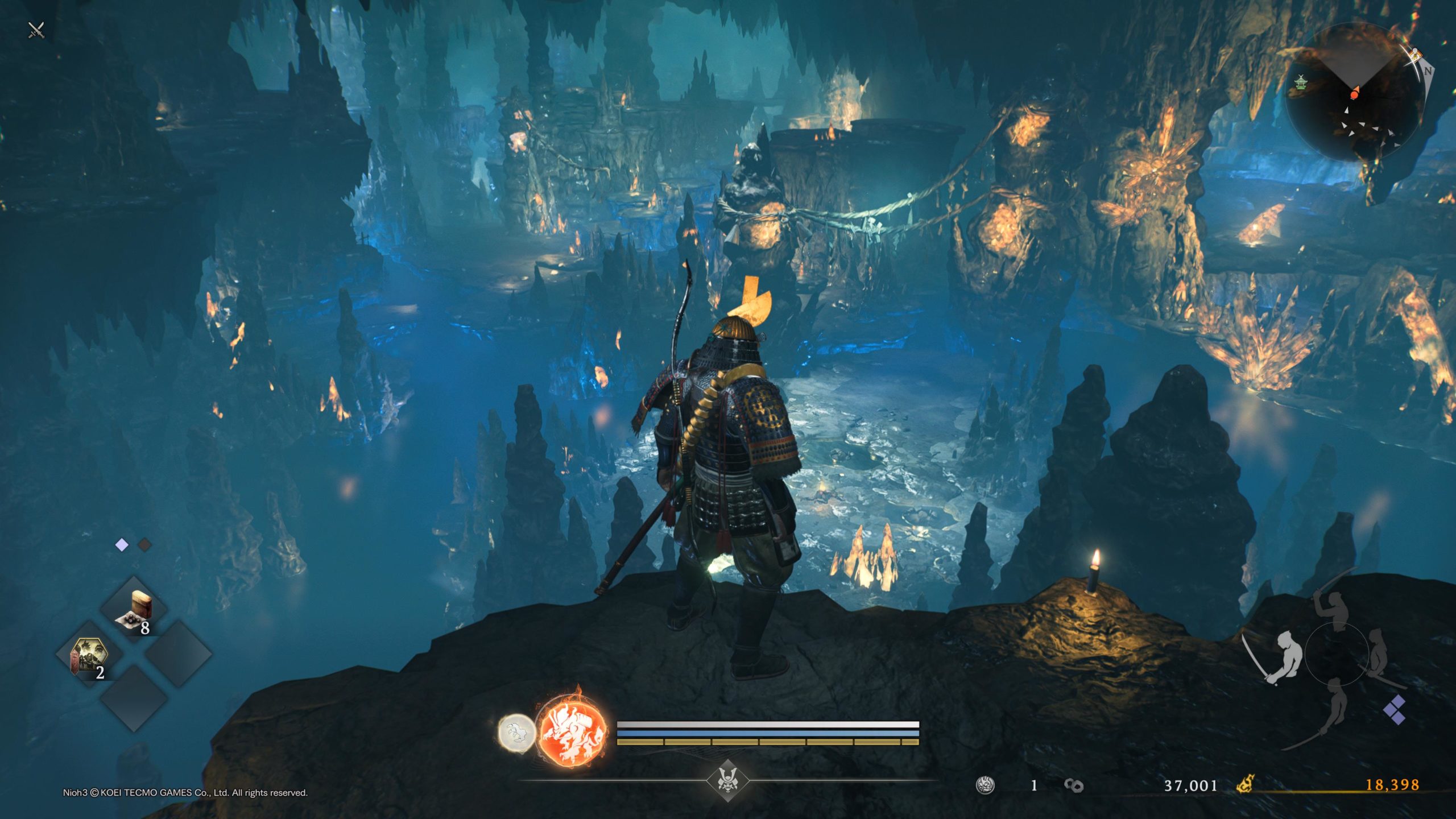
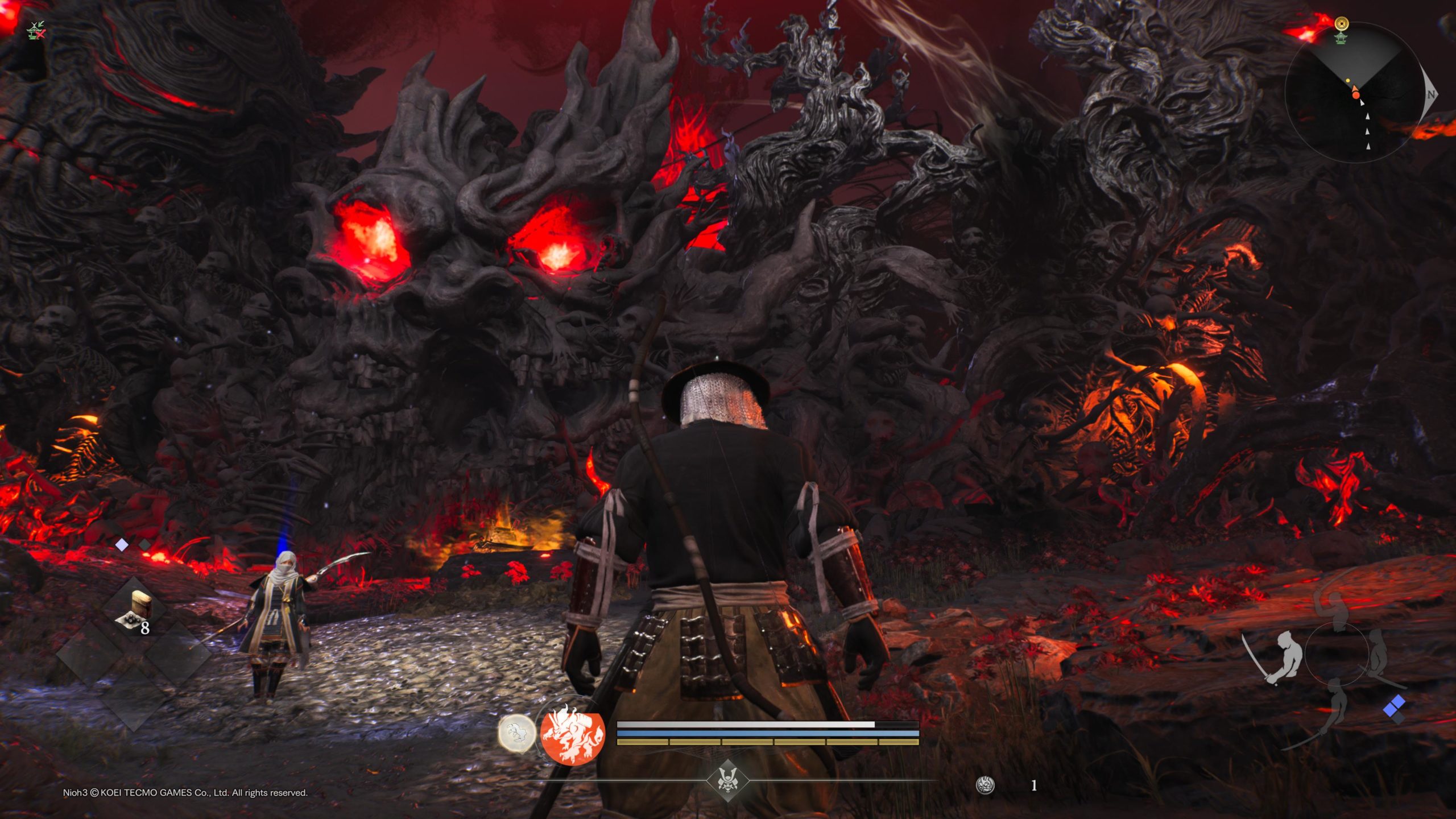
Sound and graphics in Nioh 3 are wonderful – the spirits’ designs especially – and a few times I really did gasp at a brand new boss design. I really appreciated the twisting grand Haunted Caves I found some ten hours in, a real nod back to the caves of the first game that are such enduring memories of it for me. And while I wasn’t really bopping to any particular piece of music, nothing was a problem, all felt fitting and in keeping with the tone, series, and setting.
After Nioh 2 I thought I would lap up another Nioh game like a cat at his milk. But expanding the honed and bite-sized mission design to a sparse open world, lowering the difficulty dramatically, recycling enemy types and bosses, encumbering the control system with ninja style to the point I tried desperately to turn it off, these things just all combined to sap some of the enjoyment out of the experience.
It’s by no means a bad game, and if it is to be your first Nioh experience, these concerns may be largely unconvincing (what would you care if a boss is recycled), but instead of upping the ante, Nioh 3 manages to water down many of the elements that made Nioh 2 such a joyful torture to play.
Nioh 3 is available on the 6th February exclusively on PlayStation 5 (review platform).
Developer: Team Ninja
Publisher: Koei Tecmo
Disclaimer: In order to complete this review, we were provided with a promotional copy of the game. For our full review policy, please go here.
If you enjoyed this article or any more of our content, please consider our Patreon.
Make sure to follow Finger Guns on our social channels –Twitter, Facebook, Twitch, Spotify or Apple Podcasts – to keep up to date on our news, reviews and features.