

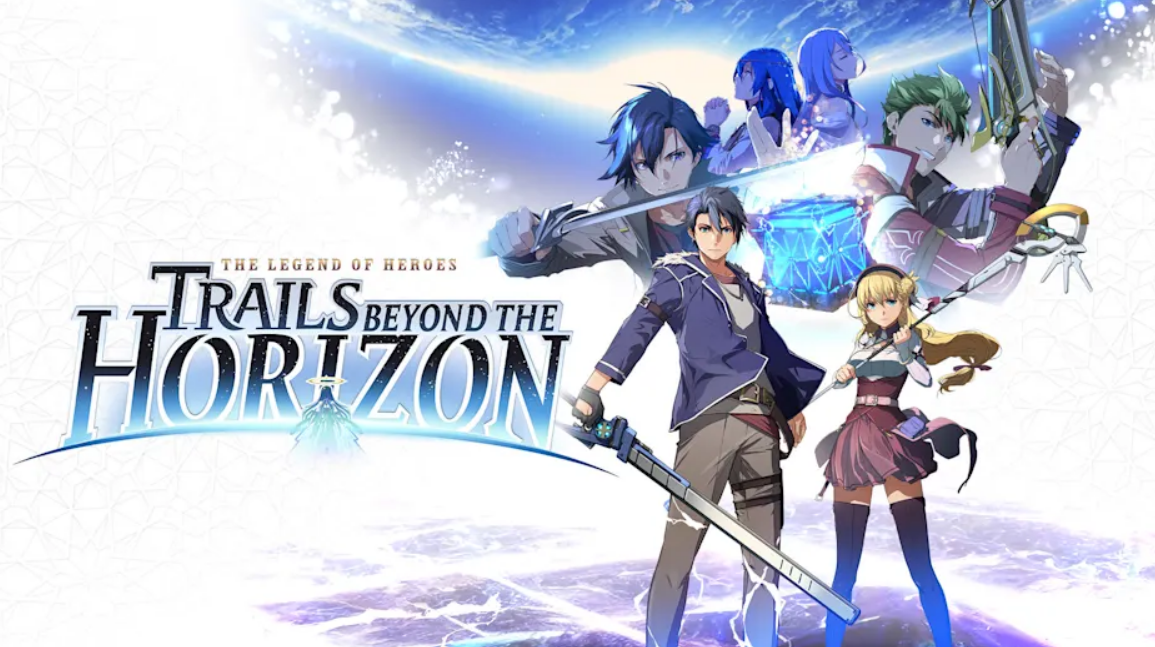
There’s something wonderful about booting up a game that’s third in a trilogy, and something like 13th in a long-running series. There’s a confidence about it, there’s a familiarity. There’s the inherent acknowledgement that Falcom have found a sweet spot between development costs, graphical fidelity, and release frequency, that maintains quality without falling apart under its own weight. If Trails Beyond the Horizon is anything, it’s consistent with the ongoing quality of the series.
And while possibly that can begin to feel a little stale and lack much innovation in each entry, it’s still got some, building on what came before almost every time. It’s got the same lacking graphics, the same overblown conversations and posturing characters overexplaining everything, and the same structure of field quests and dungeons that haven’t changed in over a dozen mainline entries. If this series has never appealed to you, I don’t think there’s anything I can say about this entry that would convince you. The place to start, at least recently, is the beginning of this trilogy with Trails Through Daybreak, or the Remake of Trails In The Sky.
But Trails Beyond the Horizon knows exactly what it is, and is absolutely not trying to reinvent, but it is trying to up the ante just that one notch more. I mean, this is the end of a trilogy, and it wants to go out with a bang, a continent-spanning story that brings in cameos from across the series. Will we get answers to questions spread across the Daybreak games, or even further back? Join me as we look beyond the horizon.
The story in Trails Beyond the Horizon begins just after all the major upheaval, villainy, and catastrophe-averting of the Daybreak II, with a major power play to dominate the continent, disguised as a united national project. Calvard is launching a manned mission into space, and we’re all supposed to get behind it, but Spriggan/Mercenary Van Arkride can only see it as throwing the cat among the pigeons and increasing his workload. Everyone from entrepreneurs to villains, investors to media stars are trying to get a piece of the action.
Initially roped in to test VR combat training software capabilities by Marduk Industries, Van and his team quickly find themselves in just one of three plotlines for three vastly separate groups, who spend most of the game barely in contact with each other. The second lead is a returning Rean Schwarzer from the Cold Steel series, and I had the same uninterested feel from him as I did there or his time in Reverie. The third is Father Kevin Graham, who has been with the series since the second Trails in the Sky. Kevin’s route was the more interesting early on in the game as Van’s can feel a bit long-winded (and for Trails that’s really saying something) – Kevin leans into his rather unconvincing villain persona, hunting down a heretic in order to assassinate them. And while I find Rean dull, his story was great and the most aligned with the space program and rocket launches of the marketing for the game, as he uncovers the conspiracy and true objectives of Startaker.
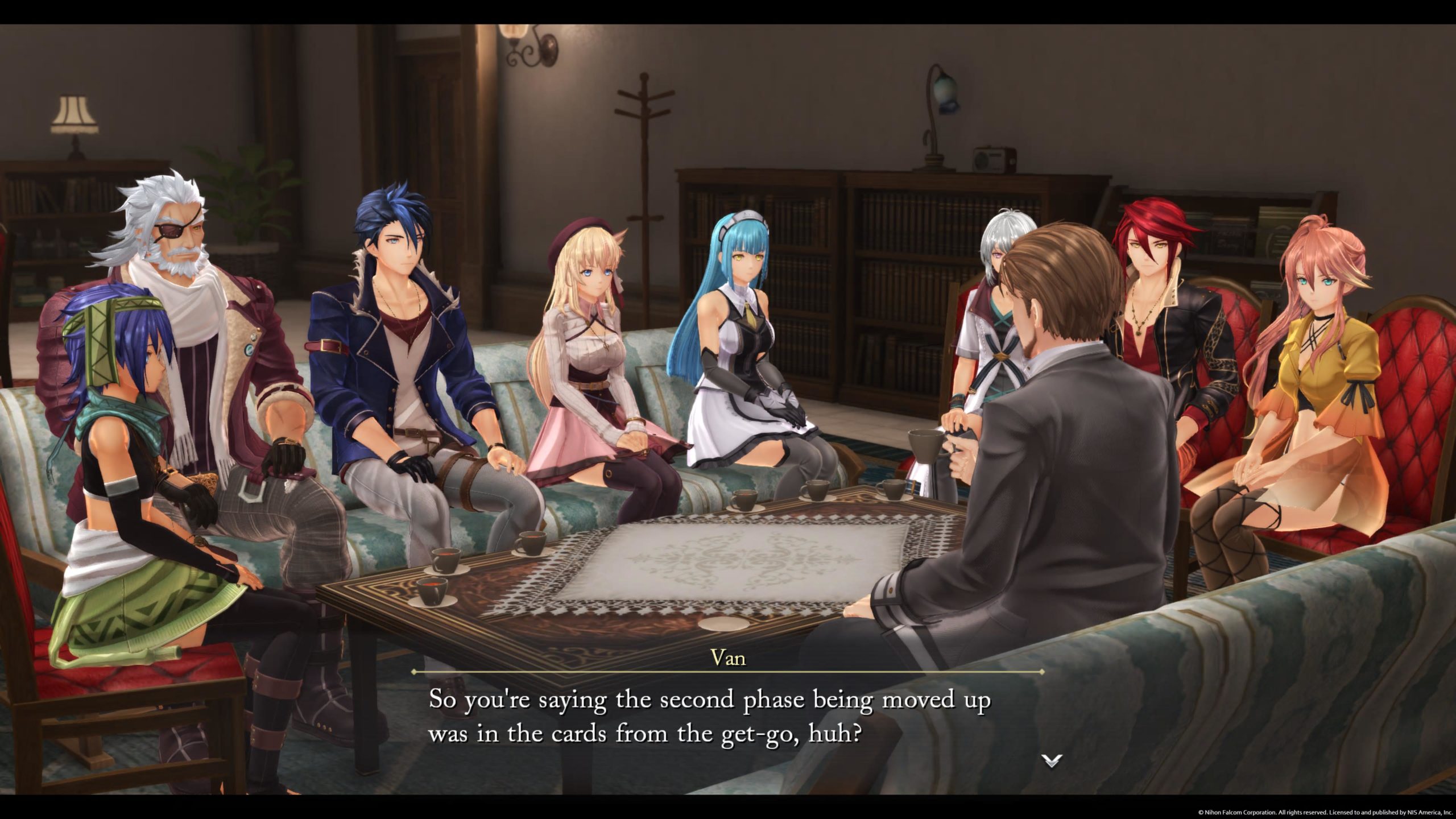
Van’s story brings back together the characters I cared about the most, but the story I cared about the least. The whole team returns from Daybreak II minus Swin and Nadia, who opt to join Kevin’s group, but they are mostly just taking on 4SPGs and having character moments as they face off against what’s called Vestiges and work through the Grim Garten and come up against the Society. And while there are a couple of new villains to get to know (one of which is mute-worthy annoying), there are very few brand new characters on the good side – it’s kept largely to a returning cast this time around. But you’ll still need to be well up on the 12 previous entries to the series to consider them returning.
Having multiple stories and groups means Trails Beyond the Horizon has lots of new locations to keep it fresh, and far more than just Calvard this time. It really branches out globally, as well as upwards into space. Locally in Edith itself, two new locations deserve a quick mention: Levre, which early on, is where Agnes grew up and provides some good character development; and Chardin, which is like a West End with theatres and art museums, much like the theatre districts in previous games like the Crossbell duo.
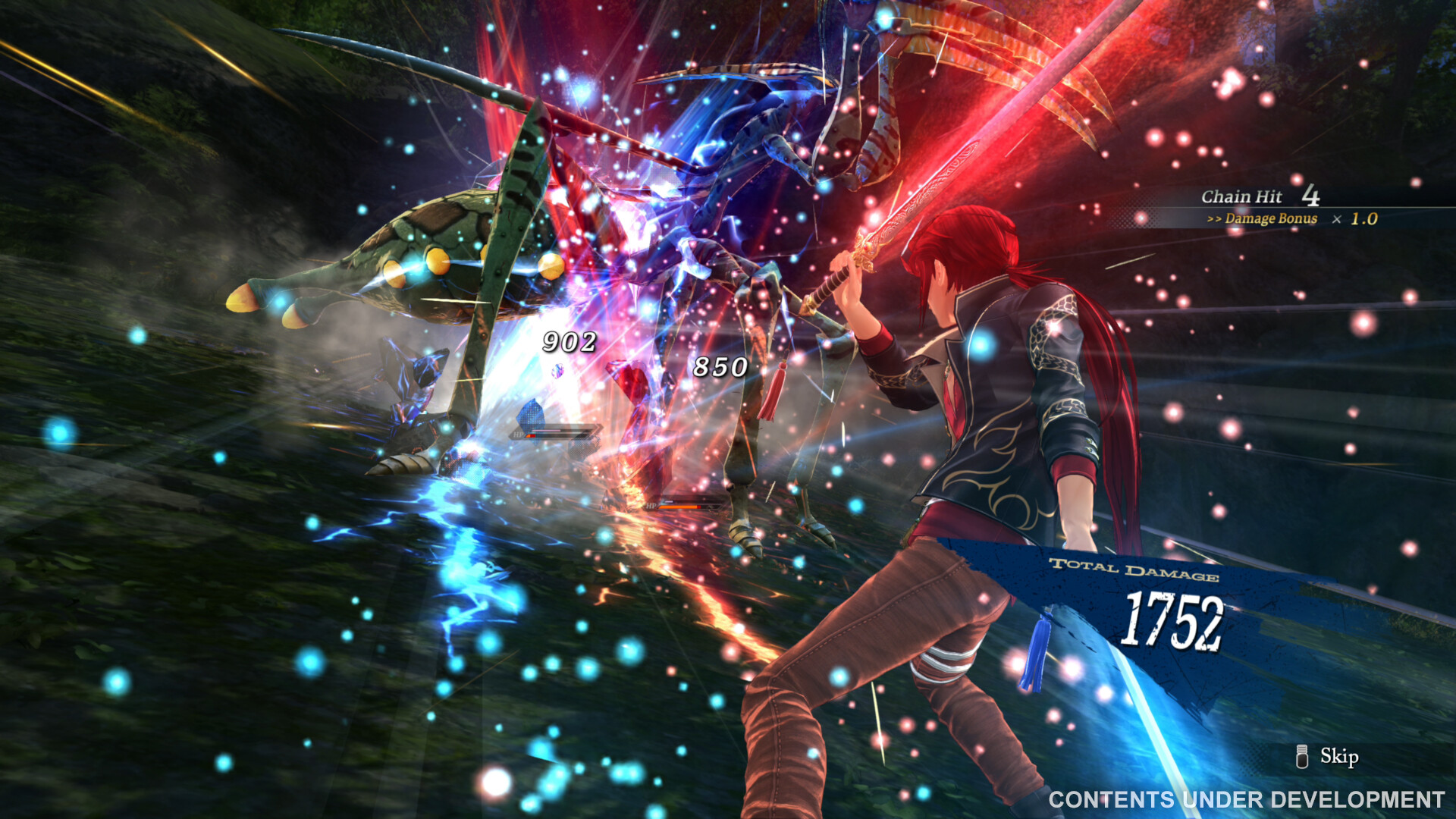
You also have the expansive virtual reality dungeon to explore in addition to the real world, a bit like Mementos in Persona 5. This time around its called the Grim Garten, a redesigned version of the in-game pseudo roguelite Marchen Garten from Daybreak II, but now with a dark, foreboding castle feel, and everything is themed around Grimoires. It’s a fairly good redesign, and I appreciated all the quality of life and sped-up versions of annoying things that were in the previous title – cube analysis was a pain, for example, holding down the button for a lengthy bonus countdown. Now this is dealt with via a simple click of the button, and there’s your items. Much quicker and easier.
I find this happens each time a Trails arc reaches its end – quality of life enhancements are myriad and everything is sped up and streamlined. And that’s great because even with all the boosts, this is still around an 80-hour adventure if you take the time to do 4SPGs and side quests, and probably well over 100 if you are the type to visit every NPC every time you get the chance. Even the prologue and Act 1 – just getting through the first part of each story – can take upwards of 20 hours. Prepare for the long haul folks, I hope you like dialogue.
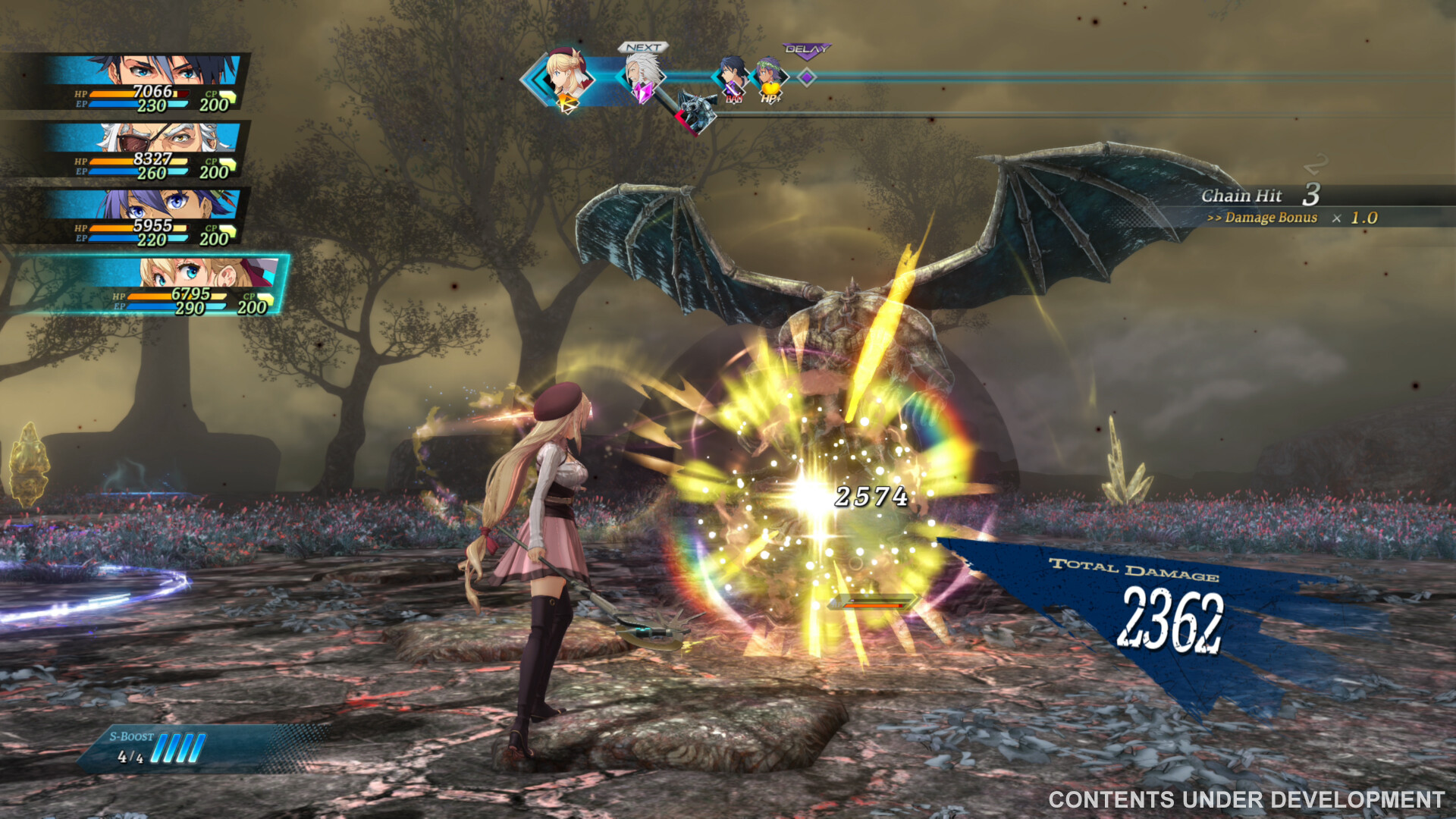
In battle, Trails Beyond the Horizon has largely the same system as Daybreak and Daybreak II, with a few new flourishes. At this point in the series, the combat system is both real-time and turn-based, and you can flip between the two. Turn-based involves every type of Arte, magic, attack, shard tech, dual attack, S-Art, orbment, and SCLM attack from virtually the entire series, and at this point its almost become unwieldy. I can easily imagine coming to this series and in particular this game new, and finding yourself unable to even realise you were missing half the battle systems, and therefore half the available options in battle.
In real-time, Trails Beyond the Horizon adds a powerful but very short lived boost system if you click in the thumbsticks, akin to an S-Art, and the use of the Grendel, and in turn-based there’s now stopping time for a brief moment with the new ZOC power, and a few more passive shard boosts like those in the Cold Steel series, but it’s almost just noise at this point. You can look at the battle system negatively as a thousand buttons and input paralysis, or positively as a thousand options to flip your fortunes in battle whenever you have any trouble. There’s almost always some system you’ve temporarily forgotten that could turn the tide, or your S-Arts have renewed, or you’ve forgotten elemental weaknesses. Something. It’s amazing it all works together at all.
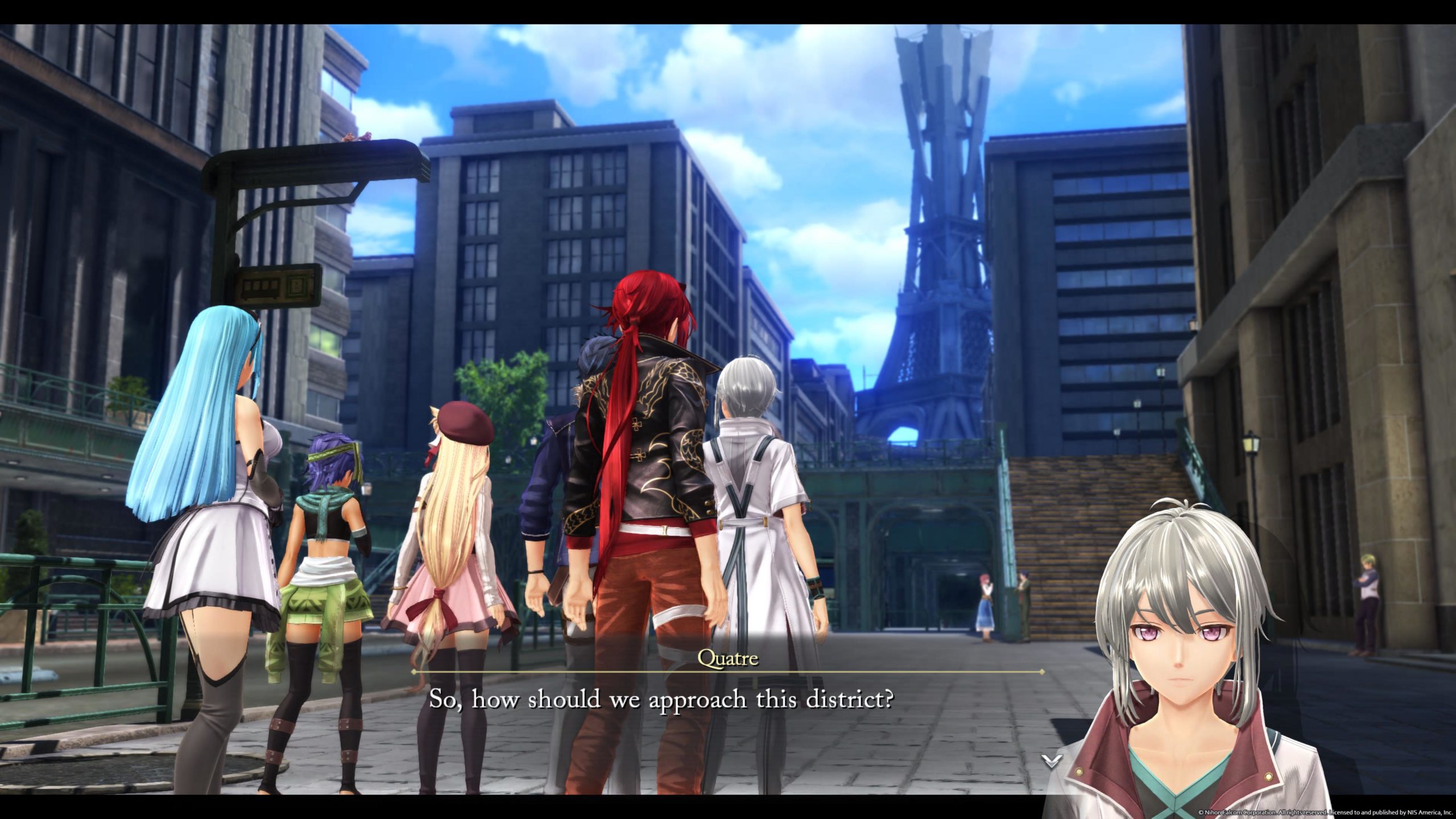
Because little has changed for good or ill at this point, it can feel a little like a lack of innovation. I am getting tired of the wooden character models and NPCs, the laughable walking speed forcing you to use high speed mode most of the time, the overwriting throughout all dialogue scenes, and the battle system creaking under the weight of different systems all happening at once. But at the same time, it’s a compelling story again, with a lovable bunch of characters. The battles do work even if they feel staged to some weird extent now. And I’m used to the rest of it. I can only recommend it to those who are already on board, but for the initiated, this is Trails at the height of its powers.
I maintain the probably unsubstantiated hope that there will be a new engine in use for the last arc of the series, but with Trails in the Sky remake looking largely the same as this and recent Ys games too, I can’t see it happening.
Trails Beyond the Horizon is available January 15th 2026 on PlayStation 5 (review platform), PlayStation 4, Nintendo Switch, Nintendo Switch 2, and PC via Steam.
Developer: Nihon Falcom
Publisher: NIS America
Disclaimer: In order to complete this review, we were provided with a promotional copy of the game. For our full review policy, please go here.
If you enjoyed this article or any more of our content, please consider our Patreon.
Make sure to follow Finger Guns on our social channels. Twitter, Facebook, Twitch, Spotify or Apple Podcasts – to keep up to date on our news, reviews and features.